Kenneth Griffin
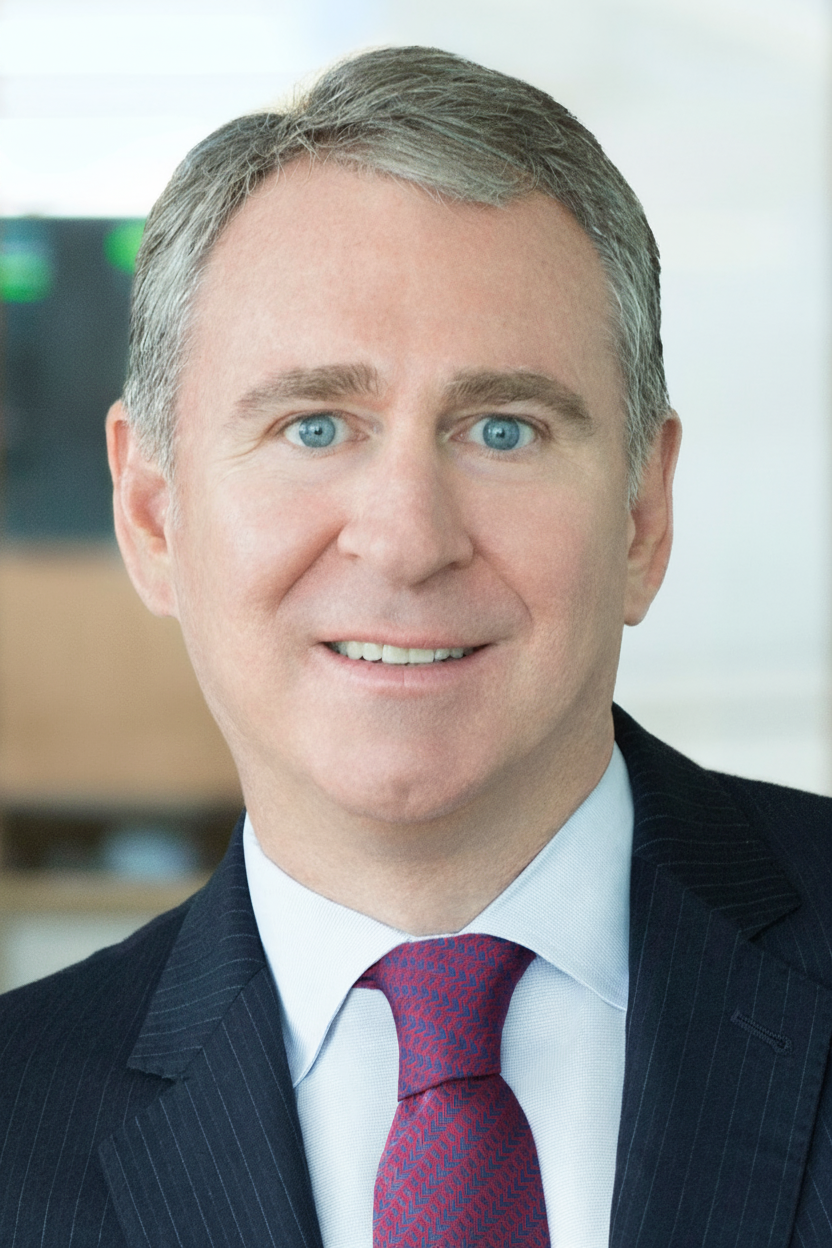
Kenneth Griffin is the founder, CEO, and co-CIO of Citadel, a global financial institution operating across asset management and market making.
Kenneth C. Griffin founded Citadel in 1990, building it into one of the world's largest and most successful hedge funds and a leading market maker through Citadel Securities. He is known for pioneering quantitative strategies, leveraging technology, and maintaining rigorous risk management. Under his leadership, Citadel has expanded globally and consistently delivered strong returns, navigating multiple financial crises.
Biography
Accomplishments
- 01Founded Citadel in 1990 at the age of 22, growing it from $4.6 million in capital to one of the world's largest and most consistently profitable hedge funds, managing over $60 billion as of 2023.
- 02Established Citadel Securities in 2002, which became a leading global market maker, responsible for processing a substantial share of U.S. equity and options trading volume, significantly contributing to market liquidity.
- 03Successfully navigated major financial crises, including the 2008 global financial crisis where Citadel initially faced challenges but quickly recovered and subsequently thrived, outperforming many peers.
- 04Pioneered the integration of advanced quantitative analysis, high-frequency trading technologies, and sophisticated risk management systems across diverse asset classes, setting industry standards.
- 05Diversified Citadel into a multi-strategy platform encompassing equities, fixed income, commodities, and credit, providing consistent returns and reducing reliance on single market factors.
- 06Orchestrated Citadel's global expansion, establishing key offices in major financial centers worldwide, including London, New York, Hong Kong, and Singapore.
Lessons for Operators
Key Takeaways
Practical lessons distilled for operators, investors, C-levels, and capital allocators.
Technology is Not an Option, It's an Imperative
Griffin's early adoption of satellite dishes for real-time data and continuous investment in computing power and algorithms transformed Citadel into a technological powerhouse. For any modern enterprise, leveraging advanced technology is non-negotiable for competitive advantage, efficiency, and data-driven decision-making.
Risk Management as a Strategic Differentiator
Citadel's ability to navigate crises like 2008 and emerge stronger is a testament to its sophisticated, firm-wide risk management system. This isn't just about compliance; it's about embedding risk awareness into every decision, using it to identify opportunities, and protecting capital under stress.
Diversification Builds Resilience
Beyond investment portfolios, Citadel's growth into market making (Citadel Securities) exemplifies strategic diversification. For C-levels and capital allocators, this means exploring complementary business lines, new markets, or different revenue models to reduce systemic risk and ensure stability during downturns.
Talent as the Ultimate Asset
Griffin consistently highlights the importance of intellectual capital. His firm recruits top university graduates and seasoned professionals, fostering an environment of intense performance. Operators must focus on attracting, developing, and retaining elite talent, aligning incentives with organizational goals.
Unwavering Focus on Performance
Citadel operates with a culture of relentless pursuit of excellence and measurable outcomes. This demands clear objectives, accountability, and continuous evaluation of strategies and personnel, ensuring that all efforts contribute to top-tier performance.
Proactive Adaptation to Market Shifts
Griffin demonstrated foresight by evolving Citadel's strategies from niche arbitrage to a broad multi-strategy platform. Enterprise leaders should cultivate an organizational agility that allows for rapid, data-informed pivots in strategy, product development, or market approach.
Frameworks & Principles
Named frameworks and strategic principles they popularized or embodied.
Multi-Strategy Investment Platform
This framework involves deploying capital across a diverse range of uncorrelated or lowly correlated investment strategies (e.g., long/short equity, fixed income, global macro, quantitative strategies, credit, commodities) within a single firm. The goal is to generate consistent returns by offsetting losses in one strategy with gains in another, and to reduce overall portfolio volatility.
When to useApplicable for fund managers and capital allocators aiming to build resilient portfolios, hedge against specific market risks, and smooth out returns. It requires robust risk management and sophisticated allocation models to optimize capital across different teams and strategies.
Quantitative-Driven Market Making
This framework leverages advanced algorithms, high-speed computing, and extensive data analysis to provide liquidity to financial markets. Market makers like Citadel Securities use quantitative models to price securities, manage inventory risk, and execute trades with minimal latency, profiting from bid-ask spreads.
When to useRelevant for financial institutions looking to enhance market efficiency, reduce transaction costs for clients, and generate consistent revenue streams through high-volume, low-margin trading. It requires significant investment in technology infrastructure, data science capabilities, and risk management systems.
Centralized Risk Management System
A comprehensive system where risk across all strategies and business units is aggregated, monitored, and managed centrally. This includes real-time position monitoring, stress testing, scenario analysis, and a clear chain of command for risk limits and capital allocation decisions. It ensures consistent risk parameters across the entire organization.
When to useEssential for any complex financial institution, enterprise with diverse business units, or investment fund. It should be implemented when managing multiple, potentially correlated risks, ensuring that no single exposure can disproportionately threaten the entire entity. It requires significant data integration and analytical capabilities.
Culture of Meritocracy and Intellectual Curiosity
An organizational culture that prioritizes and rewards intellectual rigor, data-driven decision-making, and high performance, with less emphasis on hierarchy or tenure. It fosters an environment where diverse perspectives are encouraged, and ideas are judged on their merits, leading to continuous innovation and improvement.
When to useApplicable for any organization seeking to attract and retain top-tier talent, drive innovation, and maintain a competitive edge in rapidly evolving industries. It requires strong leadership commitment to transparent performance metrics, continuous learning, and fostering a challenging yet supportive intellectual environment.
Recent Appearances
Latest interviews, keynotes, and press from the past half year.
 youtube.com
 youtube.com
 youtube.com
 youtube.com
 youtube.com
 youtube.com
 youtube.comyoutube.com
 youtube.com
 youtube.com
 youtube.com
 youtube.com
 youtube.com
 youtube.com
 youtube.com
 youtube.com
 youtube.com
 youtube.com
 youtube.com
 youtube.com
 youtube.com
 youtube.com
 youtube.com
 youtube.com
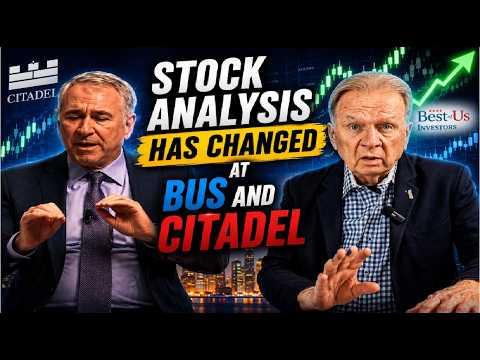 youtube.com
 m.youtube.com
 youtube.com
 youtube.com
 youtube.com
Explore Related Titans
Other figures in the archive who share Kenneth Griffin's domain, geography, or era.
More in Finance & Investing






From United States







Contemporaries — born 1960s