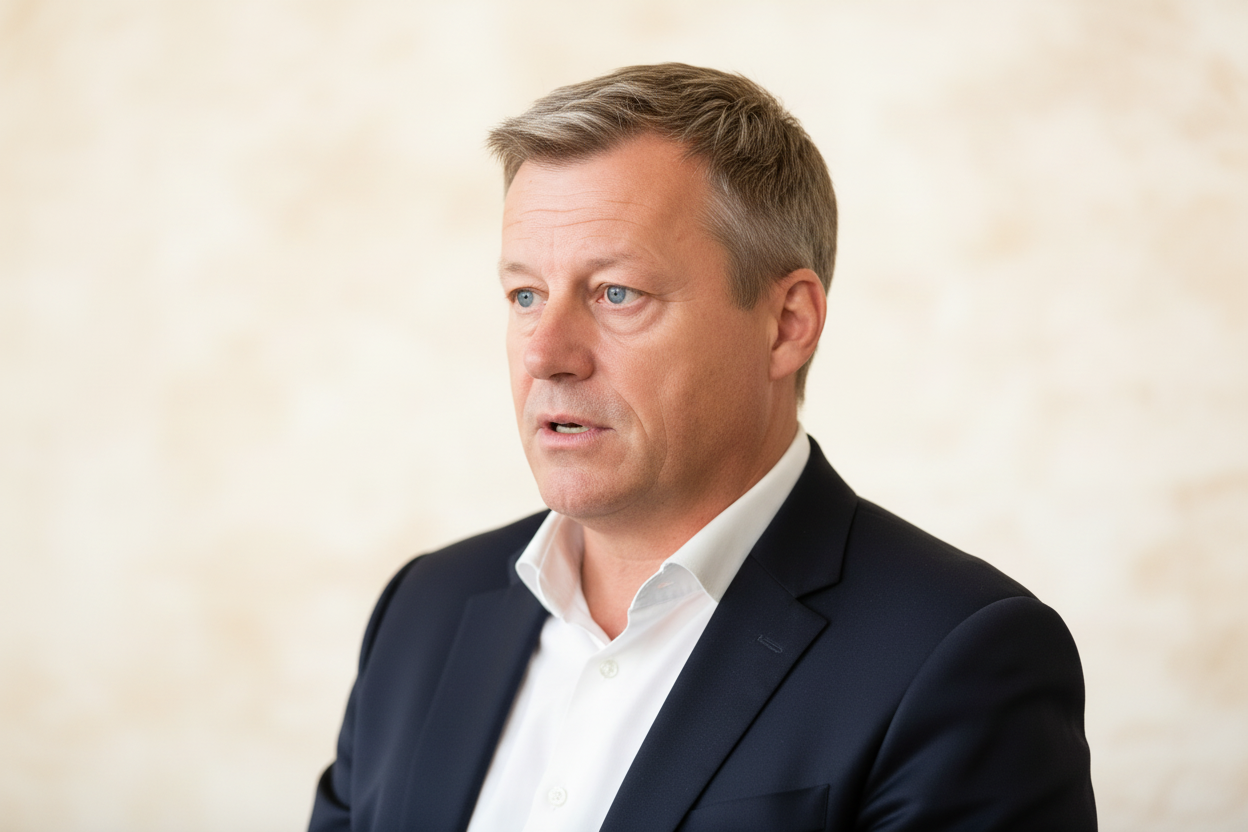
Jesper Brodin
Jesper Brodin: Driving IKEA's global retail operations and sustainability agenda through decentralized leadership and digital transformation.
Jesper Brodin, born 1968, is the Chief Executive Officer of Ingka Group (formerly IKEA Group), the largest franchisee of IKEA stores globally, a position he assumed in September 2017. With a career spanning over three decades at IKEA, Brodin has held various leadership roles, including assistant to IKEA founder Ingvar Kamprad, supply chain manager, and managing director of IKEA of Sweden. His tenure as CEO is marked by a strategic focus on digitalization, urban expansion, and an ambitious sustainability agenda, transforming IKEA's operational model in a rapidly evolving retail landscape.
Biography
Accomplishments
- 01Orchestrated Ingka Group's digital transformation, significantly expanding e-commerce penetration and enabling an omnichannel retail experience.
- 02Led the strategic shift towards urban presence, introducing new store formats (e.g., city stores, planning studios) in major metropolitan areas globally (e.g., Paris, London, New York).
- 03Committed Ingka Group to an ambitious climate-positive target by 2030, investing billions in renewable energy and circular business models.
- 04Successfully navigated the operational challenges of the COVID-19 pandemic, adapting supply chains and accelerating digital service offerings.
- 05Spearheaded the 'People & Planet Positive' strategy, integrating sustainability deeply into business operations and product development.
- 06Oversaw the expansion of Ingka Group's service offerings, including assembly, delivery, and 'buy back' programs for used furniture.
- 07Maintained Ingka Group's financial stability and growth trajectory amidst global economic shifts and intense retail competition.
Lessons for Operators
Key Takeaways
Practical lessons distilled for operators, investors, C-levels, and capital allocators.
Omnichannel Imperative
Modern retail demands a seamless integration of digital and physical channels. Brodin's strategy illustrates how to leverage both large-format stores and urban centers, supported by robust e-commerce and logistics, to meet evolving customer expectations.
Sustainability as Core Strategy
Sustainability is no longer merely CSR; it's a fundamental business driver. Ingka's commitment to circularity and climate positivity demonstrates how environmental stewardship can reduce operational costs, enhance brand value, and foster innovation.
Agile Organizational Structure
In a dynamic global environment, a decentralized leadership model empowers local teams to adapt quickly to regional nuances and market shifts, fostering innovation and resilience. Brodin's approach encourages local autonomy within a global framework.
Customer-Centric Evolution
Understand and anticipate changing customer lifestyles. Brodin's move to urban stores, enhanced services, and digital platforms directly addresses the demand for convenience and accessibility, critical for maintaining relevance in a competitive market.
Purpose-Driven Leadership
Leading with a clear purpose beyond profit, such as 'creating a better everyday life for the many people,' can inspire employees, attract talent, and resonate with a growing segment of conscious consumers, building long-term brand equity.
Innovation Through Iteration
Rather than seeking 'big bang' transformations, Brodin's strategy emphasizes continuous experimentation and iterative improvements across digital, physical, and service offerings. This pragmatic approach allows for learning and adaptation.
Frameworks & Principles
Named frameworks and strategic principles they popularized or embodied.
Circular Business Model Integration
This framework involves designing products and services to eliminate waste and pollution, circulate products and materials at their highest value, and regenerate natural systems. Brodin applied this by launching buy-back programs, increasing recycled content, and extending product lifespans.
When to useApplicable for businesses seeking to reduce environmental impact, enhance resource efficiency, create new revenue streams from secondary materials, and appeal to sustainability-conscious consumers. Requires rethinking product design, supply chain, and end-of-life management.
Omnichannel Retail Strategy
An approach that provides customers with a seamless and integrated shopping experience across all available channels, including physical stores, online platforms, mobile apps, and social media. Brodin implemented this through unified inventory, varied store formats (city stores, planning studios), and enhanced e-commerce capabilities.
When to useEssential for any retail business facing evolving consumer behaviors and heightened expectations for convenience and flexibility. Crucial for companies needing to bridge the gap between digital and physical interactions, drive customer loyalty, and expand market reach.
Decentralized Empowerment Model
A leadership and organizational structure where decision-making authority and operational autonomy are delegated to lower levels or local entities, fostering agility and local relevance. Brodin's leadership allows regional Ingka teams significant latitude in tailoring offerings and operations.
When to useEffective for large, global organizations operating in diverse markets with unique cultural nuances and consumer demands. Best applied when speed of decision-making is critical and when local innovation can provide a competitive advantage, balanced with central strategic alignment.
Purpose-Driven Investment
This framework involves allocating capital not only for financial returns but also to achieve specific environmental, social, and governance (ESG) objectives. Ingka Group's multi-billion euro investments in renewable energy and climate-positive initiatives exemplify this.
When to useRelevant for organizations looking to integrate sustainability into their capital allocation decisions, drive long-term value beyond profit, enhance brand reputation, and mitigate future risks associated with climate change or social inequity. Requires a long-term strategic outlook.
Recent Appearances
Latest interviews, keynotes, and press from the past half year.
 youtube.com
 youtube.com
 youtube.com
 youtube.com
 youtube.com
 youtube.com
 youtube.com
 youtube.com
 youtube.com
 youtube.com
 youtube.com
 m.youtube.com
 youtube.com
 youtube.com
 youtube.com
Sources & Further Reading
Profiles, interviews, podcasts, and articles used to compile and verify this entry. Each link opens at the original publisher.
Explore Related Titans
Other figures in the archive who share Jesper Brodin's domain, geography, or era.
More in Technology







From Sweden


Contemporaries — born 1960s