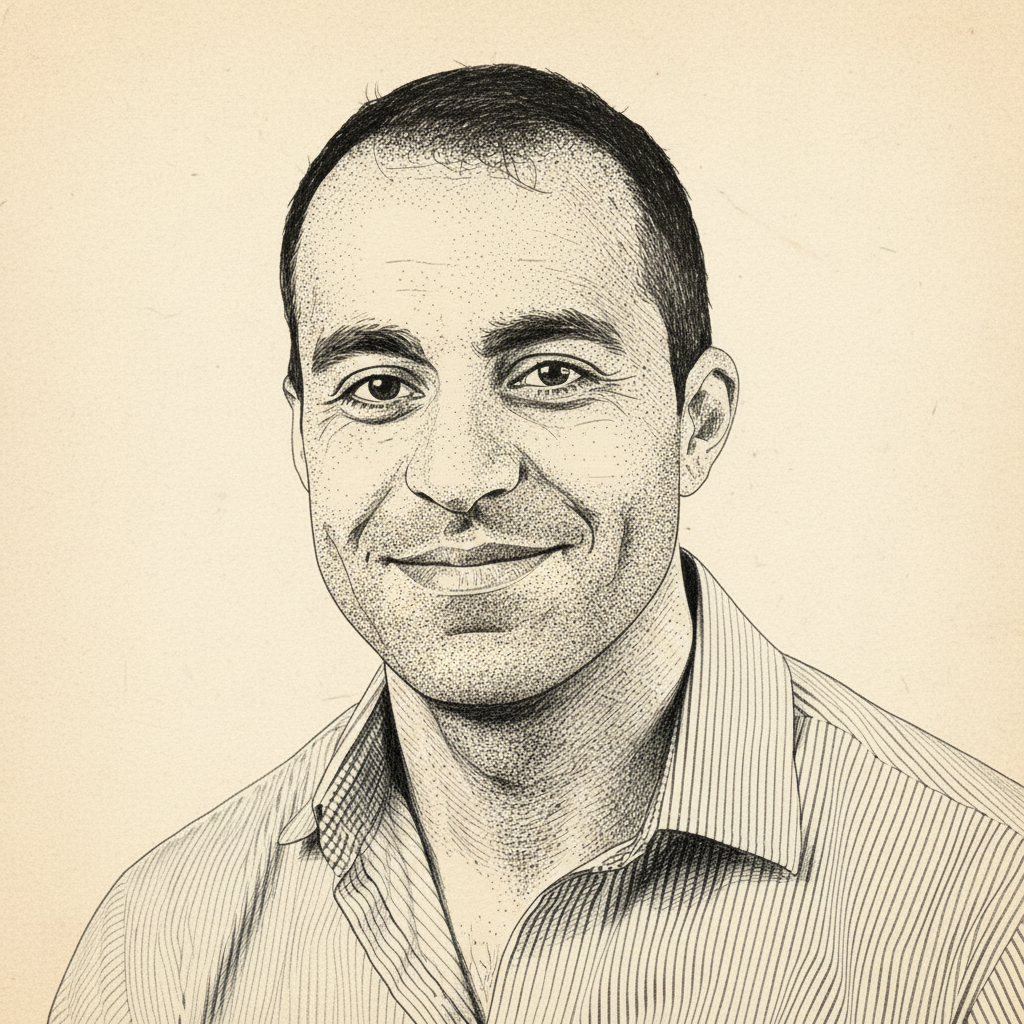
Ali Ghodsi
Architect of the Lakehouse, co-founder and CEO of Databricks, revolutionizing data processing and AI integration.
Ali Ghodsi is a prominent computer scientist and entrepreneur, best known as the co-founder and CEO of Databricks. He played a pivotal role in the development of Apache Spark, a widely adopted open-source data processing engine, and co-created the 'Lakehouse' architecture. Under his leadership, Databricks has grown into a multi-billion dollar enterprise, enabling organizations globally to unify their data, analytics, and AI workloads.
Biography
Accomplishments
- 01Co-founded Databricks in 2013, growing it into a multi-billion dollar company (reportedly valued at $134B in recent podcasts, though public valuation stands closer to $43B as of late 2023).
- 02Co-created Apache Spark, an open-source distributed computing framework now widely used for big data processing and analytics, emerging from the UC Berkeley AMPLab.
- 03Pioneered and evangelized the 'Lakehouse' architecture, integrating the best features of data lakes and data warehouses to unify data, analytics, and AI workloads.
- 04Led Databricks to acquire strategic companies like Arcion (data replication and integration) and MosaicML (generative AI foundation models), expanding its platform capabilities.
- 05Secured substantial venture capital funding, including a 2021 Series H round at a $38 billion valuation and subsequent rounds reaffirming significant growth.
- 06Guided Databricks to become a critical infrastructure provider for enterprise AI, powering data strategies for thousands of organizations worldwide.
Lessons for Operators
Key Takeaways
Practical lessons distilled for operators, investors, C-levels, and capital allocators.
The Lakehouse Paradigm
The Lakehouse architecture, championed by Ghodsi, unifies data lakes and data warehouses. It leverages the low-cost storage and flexibility of data lakes with the ACID transactions, data governance, and performance of data warehouses. This is crucial for AI workloads that require both raw, unstructured data and structured, high-performance querying.
Open Source as a Commercial Catalyst
Apache Spark's broad adoption, driven by its open-source nature and robust community, provided Databricks with a significant market advantage. Commercial entities can successfully build proprietary platforms by offering managed services and value-added features on top of widely used open-source projects.
AI's Data Foundation
Ghodsi consistently emphasizes that successful AI initiatives are predicated on a strong, unified data foundation. Organizations struggling with AI adoption often face underlying data fragmentation, quality, or accessibility issues. The 'lakehouse where raw data becomes the fuel of AI' (as highlighted in recent social media discussions) addresses this directly.
Strategic Acquisition for Growth
Databricks' recent acquisitions, such as MosaicML for generative AI, demonstrate a clear strategy to expand platform capabilities and address emerging technology trends. Investors and operators should watch for targeted acquisitions that fill critical gaps or significantly enhance a core offering.
Operationalizing AI
The focus for Databricks and Ghodsi is not just on building AI models, but on operationalizing them at scale within enterprises. This involves robust MLOps, governance, and seamless integration with existing data pipelines. Enterprise leaders must focus on the entire AI lifecycle, not just model development.
Scaling a Billion-Dollar Business
Insights from Ghodsi on how to run a billion-dollar business (from podcasts with Ben Horowitz) often revolve around relentless focus on customer value, strategic product development, and building a high-performing team. These elements are critical for any organization aiming for significant growth and market leadership.
Frameworks & Principles
Named frameworks and strategic principles they popularized or embodied.
The Lakehouse Architecture
A data management paradigm that combines the advantages of data lakes (cost-effective storage, flexibility for unstructured data) and data warehouses (data structure, ACID transactions, data governance, performance). It aims to provide a single platform for all data workloads, from raw ingestion to AI/ML applications.
When to useWhen an organization needs to unify disparate data sources, support a wide range of data types (structured, semi-structured, unstructured), require strong data governance and ACID compliance for analytics, and build scalable machine learning and AI applications on a single platform.
Apache Spark
An open-source, distributed general-purpose cluster-computing framework for large-scale data processing. It provides high-level APIs in Java, Scala, Python, and R, and an optimized engine that supports general execution graphs. It excels at batch processing, stream processing, SQL queries, and machine learning.
When to useFor processing large datasets that exceed the capacity of a single machine, performing complex analytics, running machine learning workloads, building real-time data streaming applications, and executing interactive data exploration on big data environments.
Data Intelligence Platform
Ghodsi and Databricks advocate for a 'Data Intelligence Platform' that unifies data, analytics, and AI. This goes beyond traditional data platforms by deeply integrating generative AI capabilities and a universal governance model directly into the data layer, making data 'AI-ready' and enabling data teams to collaborate more effectively.
When to useWhen an enterprise aims to integrate generative AI and other AI applications deeply into its operational workflows, seeks to democratize data access while maintaining strong governance, and needs to accelerate the entire data-to-AI lifecycle from raw data to actionable insights.
Recent Appearances
Latest interviews, keynotes, and press from the past half year.
 youtube.com
 youtube.com
 youtube.com
 youtube.com
 youtube.com
 youtube.com
 youtube.com
 youtube.com
 youtube.com
 youtube.com
 youtube.com
 youtube.com
 youtube.com
 youtube.com
 youtube.com
 youtube.com
 youtube.com
 youtube.com
 youtube.com
 youtube.com
 youtube.com
 youtube.com
 youtube.com
 youtube.com
 youtube.com
 youtube.com
 youtube.com
 youtube.com
 youtube.com
 youtube.com
 youtube.com
 youtube.com
 youtube.com
 youtube.com
 youtube.com
 youtube.com
 youtube.com
 youtube.com
 youtube.com
 youtube.com
 youtube.com
 youtube.com
 youtube.com
 youtube.com
 youtube.com
 youtube.com
 youtube.com
 youtube.com
 youtube.com
 youtube.com
 youtube.com
 youtube.comyoutube.com
 youtube.com
 youtube.com
 youtube.com
 youtube.com
 youtube.com
 youtube.com
 youtube.com
 youtube.com
 youtube.com
 youtube.com
 youtube.com
 youtube.com
 youtube.com
 youtube.com
 youtube.com
 youtube.com
 youtube.com
 youtube.com
 youtube.com
 youtube.com
 youtube.com
 youtube.com
 youtube.com
 youtube.com
 youtube.com
 m.youtube.com
 youtube.com
 youtube.com
 youtube.com
 youtube.com
 youtube.com
 youtube.com
 youtube.com
 youtube.com
 youtube.com
 youtube.com
 youtube.com
 youtube.com
 youtube.com
 youtube.com
 m.youtube.comm.youtube.com
 youtube.com
 youtube.comyoutube.com
 youtube.com
 youtube.comyoutube.com
Sources & Further Reading
Profiles, interviews, podcasts, and articles used to compile and verify this entry. Each link opens at the original publisher.
- interviewConversation with Databricks CEO Ali Ghodsi on Lakewatch, Genie ...linkedin.com→
- interviewDATABRICKS CEO ALI GHODSI: A Costly AI Training ... - Newcomernewcomer.co→
- interviewUnder the hood of the AI economy with Databricks CEO Ali Ghodsicnbc.com→
- interviewDatabricks CEO Plans to Avoid IPO During Year of Huge Offeringsbloomberg.com→
- interviewWatch Databricks CEO on Unifying Data & AI Agents - Bloomberg.combloomberg.com→
- interviewDatabricks CEO Says Companies Erred With Focus on 'Chatbots ...bloomberg.com→
- interviewDatabricks Launches AI Assistant for Technical Talent - Bloombergbloomberg.com→
- interviewDatabricks Sales Double for Product Rivaling Snowflake - Bloombergbloomberg.com→
- interviewDatabricks Is Eyeing a $175 Billion Valuation. Its CRO Says They're ...inc.com→
- interviewWhy Is Databricks Valued at $134 Billion and Headed for a Massive ...inc.com→
- interviewForbes Cloud 100 2025 List - Largest Cloud Computing Companies ...forbes.com→
- interviewDatabricks Releases General AI Agents for Businesses - WSJwsj.com→
- interviewDatabricks Crosses $4 Billion in Annual Revenue Rate - WSJwsj.com→
- interviewDatabricks Raising Funds at $100 Billion Valuation - WSJwsj.com→
- interviewDatabricks Is Raising Funds at $134 Billion Valuation - WSJwsj.com→
- interviewThese AI-Skilled 20-Somethings Are Making Hundreds of ... - WSJwsj.com→
- interviewOpenAI and Databricks Strike $100 Million Deal to Sell AI Agentswsj.com→
- interviewStartup Valuations Blast Beyond Historic IPO Market Caps - WSJwsj.com→
- podcastDatabricks: The Story of the Data Intelligence Platform - Spotifyopen.spotify.com→
- podcast$46B of hard truths from Ben Horowitz: Why founders fail ... - Spotifyopen.spotify.com→
- podcastEpisode 49: Yoni Assia - Co-Founder and CEO of eToro - Spotifyopen.spotify.com→
- podcastBen Horowitz and Ali Ghodsi: How to Run a Billion-Dollar Businessa16z.com→
- podcastAli Ghodsi & Ben Horowitz's RSA 2026 Keynote Replay | Databricksdatabricks.com→
- podcastYou can just read 25 books | Andreessen Horowitza16z.com→
- podcastSarah Wang's Post - LinkedInlinkedin.com→
- podcastAli Ghodsi, CEO of Databricks explains how the teams that win have ...instagram.com→
- podcastAli Ghodsi - Databricks on Instagraminstagram.com→
- podcastThe Besties react to Brad Gerstner's shoutout at the State of the Unio...tiktok.com→
- podcastAli Ghodsi on Why Keyboards Will Disappear "I think ... - TikToktiktok.com→
- podcastNvidia CEO Lauds Trump's AI Appointments | TikToktiktok.com→
- podcastThe Economic Club of New York on Instagram: "What happens if AI ...instagram.com→
- podcastBehind the Scenes of Brad Gerstner's shoutout at the State ... - TikToktiktok.com→
- podcastOpenAI's Revenue Surge Explained by Brad Gerstner - TikToktiktok.com→
- podcastG7 AI lunch highlights private labs' power in shaping geopolitical ...facebook.com→
- podcastBoris Cherny spent years at tech giants like Meta, where ... - Instagraminstagram.com→
- podcasta16z: The Power Brokers - Not Boring by Packy McCormicknotboring.co→
- podcasta16z Raises $15 Billion in New Fund: Long Criticized, Why Has It ...weex.com→
- podcast再募150 亿美元,拿走全美18%的风投资金,3 万字长文聊聊a16z 是 ...hub.baai.ac.cn→
- podcasta16z(Andreessen Horowitz)深度研究报告:硅谷权力掮客的崛起 ...unifuncs.com→
- podcastI Listened to 50 Tech Leaders Talk About AI. Here's What I Learned.businessinsider.com→
- podcast4 thông điệp lớn về AI mà giới lãnh đạo công nghệ nhắc đi nhắc lại ...viettimes.vn→
- podcast從黃仁勳到李飛飛:一次看完2025 年50 位AI 科技領袖金句businessinsider.tw→
- podcastAli Ghodsi on the evolution of AI agents | BG2 Guest Interview ...instagram.com→
- podcastDatabricks CEO Ali Ghodsi sat down with theCUBE, to talk about AI ...facebook.com→
- podcastDatabricks CEO Ali Ghodsi discusses why current AI agents struggle ...instagram.com→
- podcast"We've already achieved AGI." Ali Ghodsi, CEO of @databricks, says ...instagram.com→
- podcastLaura Boderck - CEC Manager at Snowflake - LinkedInlinkedin.com→
- podcastNvidia CEO Jensen Huang told Lex Fridman that AGI has already ...facebook.com→
- podcastAli Ghodsi of Databricks on AGI today | BG2 Guest Interview ...instagram.com→
- podcastWhat's you favorite use cases for Notebooklm? - Redditreddit.com→
- podcastMeet the New Wave of Iranian-Americans Powering Silicon Valleylinkedin.com→
- podcastSkild AI, founded in 2023 by Deepak Pathak and Abhinav Gupta, is ...instagram.com→
- podcastSierra's Growth Playbook: $0 to $165M ARR in 26 monthsstartupriders.com→
- podcast348.a16z成长投资合伙人David George:构建AI投资帝国 - 小宇宙xiaoyuzhoufm.com→
- podcastSpecific prediction from Baker: xAI releases the first Blackwell ...threads.com→
- podcastOpenAI Alumni Founders More Likely to Create Unicorns - LinkedInlinkedin.com→
- podcastEntrepreneur Types: Die-Hard vs Fair-Weather - LinkedInlinkedin.com→
- podcastDatabricks' Ari Kaplan breaks down the origins of big data in sports ...instagram.com→
- podcastOne Goldman Sachs and Moody's Veteran ... - Instagraminstagram.com→
- podcastIn this video Mustafa Bağdatlı speaks on how different AI agents ...instagram.com→
- podcastWhy Pushing the "Impossible" is the Only Way to Win in AI. Ben Cera ...instagram.com→
- podcastThese insights are inspired by comments from Marc C. Ganzi, CEO ...instagram.com→
- podcastBlackRock didn't just become the world's largest asset manager ...instagram.com→
- podcastSatya Nadella, Chairman and CEO of @Microsoft, on the importance ...instagram.com→
- podcastDatabricks Data AI Summit 2026: Moving from AI experimentation to ...facebook.com→
- podcastEnjoy this clip from my conversation with Amit Zavery, President ...instagram.com→
- podcastAdobe's Leadership Transition: What Shantanu Narayen's ...instagram.com→
- podcastPYMNTS.com: What's Next in Payments - Facebookfacebook.com→
- podcastDid a private show recently in Mumbai on AI in advertising. Had to ...instagram.com→
- podcastThe implications of generative AI for junior lawyers - Facebookfacebook.com→
- podcastThe panic about billable hours? Nonsense. Stephanie Clerkin from ...instagram.com→
- podcastDatabricks CEO and co-founder Ali Ghodsi joined @Bloomberg ...instagram.com→
- podcast20VC x SaaStr This Week: The $5 Billion Exit That Felt Weird, Why ...saastr.com→
- podcastThe Twenty Minute VC (20VC): Venture Capital | Startup Fundingpodcastrepublic.net→
- podcastDatabricks' Smartest Move: Insights from CRO Ron Gabrisko | TikToktiktok.com→
- podcastVenture Capital on Instagram: "DataLane, a NYC-based identity ...instagram.com→
- podcastAli Ghodsi on how AI is a commodity | BG2 Guest Interview ...instagram.com→
- podcastWhy do first impressions matter? When you join a new ... - Instagraminstagram.com→
- podcastAli Ghodsi, founder and CEO of Databricks, shares four simple rules ...instagram.com→
- podcastAli Ghodsi, a computer scientist and business executive. Instagram ...instagram.com→
- podcastI was just talking about this today in Jacksonville to a ... - Instagraminstagram.com→
- podcastOvercoming Career Plateaus: Embracing Entrepreneurial Spiritlinkedin.com→
- podcastPalo Alto Networks CEO Nikesh Arora on the Virtues of Being an ...sequoiacap.com→
- podcastWhat matters here is not just faster reports, but who is ... - Instagraminstagram.com→
- podcastWhile everyone watches the ChatGPT and Claude wars, Databricks ...instagram.com→
- podcastThe next technological revolution may not be led where most people ...instagram.com→
- podcastNatalie Fratto | Databricks is on every list of hot companies, but ...instagram.com→
- podcastDatabricks Raises $1 Billion at a $100 ... - Instagraminstagram.com→
- podcastAre the downsides to AI worth it? | That's Business with Alan Kohlerfacebook.com→
- podcast18 hours ago - Instagraminstagram.com→
- podcastWhy Your Data Matters More Than LLMs - TikToktiktok.com→
- podcastBrad Gerstner explains how the Fed F'd up - TikToktiktok.com→
- podcastSam Altman on whether there's enough compute | BG2 Ep39 ...tiktok.com→
- podcastBrad Gerstner on AI in 2025 | Ep37 #bradgerstner ... - TikToktiktok.com→
- podcastBrad Gerstner's Journey into Venture Capital | TikToktiktok.com→
- podcastBen Horowitz and Ali Ghodsi: How to Run a Billion-Dollar Businessopen.spotify.com→
- podcastAI Enterprise - Databricks & Glean | BG2 Guest Interviewpodcasts.apple.com→
- podcastDeirdre Bosa Live | Podcast on Spotifyopen.spotify.com→
- podcastComment 'Founder' and we'll send you the full convo! The journey of ...instagram.com→
- podcastWe met with Jack Diamond the other week. He told us about how AI ...instagram.com→
- podcastThe a16z Show - Ben Horowitz and Ali Ghodsi: How to Run a Billion ...podscripts.co→
- podcastThe story of how Databricks became a $134B company. - Instagraminstagram.com→
- podcasta “lakehouse” where raw data becomes the fuel of AI ... - Instagraminstagram.com→
- podcastBrad Gerstner Explains AI's Unpopularity in America | TikToktiktok.com→
- podcastAI development slowed by speed bumps - Facebookfacebook.com→
- podcastJulius, an AI-powered data analysis platform founded ... - Instagraminstagram.com→
- podcastMark Cuban's Poker Rule for Evaluating High Stakes Investmentslinkedin.com→
- podcastMeet Utkarsh Goklani, Co-Founder & CBO of Wyzr. A strategist by ...instagram.com→
- podcastAditya Oza: Sales Hustler's Fire on Risk, Scale & Global Impactinstagram.com→
- podcastTech-Führungskräfte: Diese 4 Dinge müsst ihr über KI wissenbusinessinsider.de→
- podcastDatabricks co-founder and CEO Ali Ghodsi joined Ed Ludlow on ...facebook.com→
- podcastAli Ghodsi on whether AI is in a bubble | BG2 Guest Interview ...instagram.com→
- podcastSir Demis Hassabis, #데미스하사비스 founder and CEO of Google ...instagram.com→
- podcast81% of queries hitting Databricks now come from AI agents, not ...instagram.com→
- podcastDatabricks CEO Ali Ghodsi joined CNBC's Jon Fortt to ... - Facebookfacebook.com→
- podcastLeda Braga, Systematica Investments CEO, explains how the ...facebook.com→
- podcastWhy Shipping AI to Production in 2026 Has Almost Nothing to Do ...linkedin.com→
- podcastAnthropic及AI Native组织最佳实践总结(附30页PPT+万字长文)news.qq.com→
- podcastBrad Gerstner on the future of the AI stack | BG2 Ep39 #bradgerstner ...instagram.com→
- podcastJohn Carmack on Fabrice Bellard — Top on Hacker News: John ...instagram.com→
- podcastBlue Owl Capital is preparing to launch a sale process ... - Instagraminstagram.com→
- podcastAI leaders and startup founders gathered in McKinney Tuesday for ...facebook.com→
- podcastMay 13 - Instagraminstagram.com→
- podcastRunway raises $315M Series to accelerate world models and ...facebook.com→
- podcastLATimes Studios Business - Facebookfacebook.com→
- podcastAre marketers using technologies like AI ethically and responsibly ...instagram.com→
- podcastThe latest Azumo AI Intelligence Brief is out. Silicon, security, and ...facebook.com→
- podcastInnovation, infrastructure and global investments are accelerating ...facebook.com→
- podcast20VC x SaaStr Are Back: If Figma Isn't Good Enough, What Hope Is ...saastr.com→
- podcastDatabricks CEO Ali Ghodsi explains why the LLM you're using ...instagram.com→
- podcastDatabricks CEO says fresh $1B will help him attack a new AI ...techcrunch.com→
- podcastDatabricks CEO Ali Ghodsi says LLMs are becoming a commodity. If ...instagram.com→
- podcastTop Business Mistakes from Snowflake's Former CRO - TikToktiktok.com→
- podcastDavid Senra | Elon Musk hired a machinist, negotiated his salary ...instagram.com→
- podcastit's collapsing timelines. ⚡️ Ali Ghodsi explains how AI agents are ...instagram.com→
- podcastLearning from Multi-Millionaires on Mindset, Systems, and AIlinkedin.com→
- podcastComing to you live from the Nasdaq in NYC! Had an ... - Instagraminstagram.com→
- podcastGraybar's David Meyer shares insights in The Wall Street Journal on ...instagram.com→
- podcastBrad Gerstner y Meta: Dominando la Tecnología | TikToktiktok.com→
- podcastBG2 Clips (@61575025936147) - Videos - Facebookfacebook.com→
Explore Related Titans
Other figures in the archive who share Ali Ghodsi's domain, geography, or era.
More in Technology

From United States