
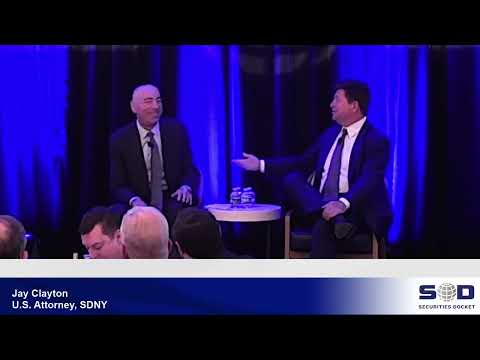
Jay Clayton
Former SEC Chairman known for market modernization, retail investor protection, and navigating regulatory challenges in digital assets.
Jay Clayton served as the 32nd Chairman of the U.S. Securities and Exchange Commission (SEC) from May 2017 to December 2020. A former Wall Street lawyer, he focused on protecting retail investors, facilitating capital formation, and modernizing market regulation, notably addressing issues in cybersecurity and digital assets.
Biography
Accomplishments
- 01Adopted Regulation Best Interest (Reg BI) in 2019, fundamentally changing the standard of conduct for broker-dealers when recommending securities to retail customers, impacting all wealth management firms.
- 02Streamlined capital raising rules by making amendments to the 'Accredited Investor' definition and updating various offering exemptions (e.g., Reg A, Reg D), expanding access to private capital markets for both issuers and investors.
- 03Navigated the initial regulatory approach to cryptocurrencies and Initial Coin Offerings (ICOs), providing essential clarity through enforcement actions and guidance, such as the DAO Report (2017) and subsequent public statements, framing many digital assets as 'securities'.
- 04Modernized disclosure requirements for public companies, including amendments to MD&A and business description disclosures, aiming to reduce compliance burdens while improving material information for investors.
- 05Enhanced focus on cybersecurity, establishing the Cyber Unit within the Division of Enforcement and issuing guidance on public company disclosure of cybersecurity risks and incidents, impacting corporate governance and risk management practices.
- 06Facilitated market structure improvements, including leading the SEC's efforts on the Consolidated Audit Trail (CAT) and addressing issues in the proxy processing system, aiming for greater market efficiency and transparency.
Lessons for Operators
Key Takeaways
Practical lessons distilled for operators, investors, C-levels, and capital allocators.
Adapt to Regulatory Evolution
Clayton's SEC demonstrated that regulatory stances on novel areas (like crypto) evolve. Businesses in innovative sectors should maintain dynamic compliance strategies, anticipate regulatory shifts, and be prepared for potential shifts from enforcement-led clarity to formal rulemaking.
Prioritize Retail Investor Safeguards
The implementation of Reg BI underscores that regardless of market shifts, safeguarding individual investors is a consistent regulatory priority. Any business engaging with retail capital must embed robust investor protection principles into their operations and product design.
Leverage Capital Formation Pathways
Amendments to 'Accredited Investor' definitions and offering exemptions opened new avenues for capital. Fund managers and startup founders should deeply understand and strategically utilize these modernized frameworks to efficiently raise capital while staying compliant.
Integrate Cybersecurity into Governance
Clayton's emphasis on cybersecurity disclosure and enforcement highlights its critical importance. C-level executives must view cybersecurity not just as an IT function, but as a core component of enterprise risk management and corporate governance, impacting disclosure and investor confidence.
Understand the SEC's View on Digital Assets
Clayton's tenure established the SEC's foundational view that many digital assets are securities. Operators in the crypto space must apply strict securities law analysis to their offerings and operations to avoid enforcement actions, recognizing the 'Howey Test' as a primary determinant.
Frameworks & Principles
Named frameworks and strategic principles they popularized or embodied.
Regulation Best Interest (Reg BI)
A rule mandating broker-dealers to act in the 'best interest' of their retail customers when making recommendations, mitigating conflicts of interest.
When to useApplicable for wealth managers, broker-dealers, and financial advisors interacting with retail investors. Use to structure client engagement, product recommendations, and internal conflict-of-interest policies.
Howey Test for Digital Assets (via Enforcement)
Although not a new framework, the SEC under Clayton heavily applied the 1946 'Howey Test' (derived from SEC v. W.J. Howey Co.) to determine if a digital asset constitutes an 'investment contract' and thus a 'security'.
When to useEssential for founders and investors in the blockchain and crypto space. Use to assess the legal classification of tokens, ICOs, and other digital asset offerings before launch or investment, ensuring compliance with securities laws.
Modernized Disclosure Principles
Clayton's SEC updated disclosure rules (e.g., MD&A) emphasizing materiality, conciseness, and relevant forward-looking information, aiming to reduce 'boilerplate' and focus on investor-centric disclosures.
When to usePublic company executives, legal teams, and investor relations professionals should use this framework to refine SEC filings, annual reports, and investor communications, ensuring disclosures are material, readable, and compliant with current SEC expectations.
Recent Appearances
Latest interviews, keynotes, and press from the past half year.
 youtube.com
 youtube.com
 youtube.com
 youtube.com
 youtube.com
 youtube.com
 youtube.com
 youtube.com
 youtube.com
 youtube.com
 youtube.com
 youtube.com
 youtube.com
 youtube.com
 youtube.com
 youtube.com
 youtube.com
 youtube.com
 youtube.com
 youtube.com
 youtube.com
 youtube.com
 youtube.com
 youtube.com
 youtube.com
 youtube.com
Explore Related Titans
Other figures in the archive who share Jay Clayton's domain, geography, or era.
More in Finance & Investing










From United States








Contemporaries — born 1960s