
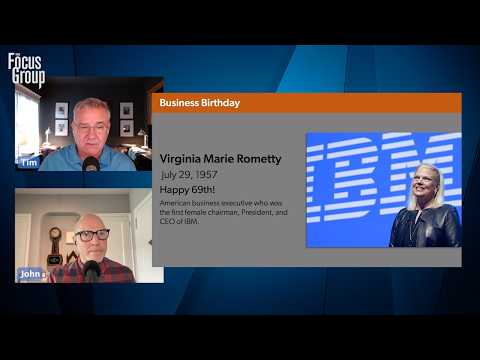
Ginny Rometty
Architect of IBM's cognitive computing and hybrid cloud transformation.
Virginia 'Ginny' Rometty served as Chairman, President, and CEO of IBM from 2012 to 2020. She led IBM's strategic shift towards cognitive computing, cloud, analytics, and AI, divesting legacy businesses and investing in new growth areas. Her tenure was marked by significant acquisitions, notably the $34 billion purchase of Red Hat, establishing IBM as a major hybrid cloud provider.
Biography
Accomplishments
- 01Led IBM's strategic transformation, shifting revenue focus from legacy hardware to cognitive solutions, cloud, analytics, and AI.
- 02Orchestrated the $34 billion acquisition of Red Hat (2019), positioning IBM as a hybrid cloud leader and significantly enhancing its open-source capabilities.
- 03Grew IBM's 'strategic imperatives' (cloud, analytics, mobile, social, security) from 22% of revenue in 2012 to over 50% by the end of her tenure.
- 04Expanded IBM Watson's capabilities and commercial adoption in sectors like healthcare (e.g., partnerships with hospitals for oncology) and finance.
- 05Oversaw the divestiture of non-core assets, including the x86 server business to Lenovo (2014) and semiconductor manufacturing to GlobalFoundries (2015), streamlining IBM's portfolio.
- 06Championed STEM education and workforce skills development, launching initiatives like P-TECH (Pathways in Technology Early College High School) to address the tech skills gap.
- 07Maintained IBM's position as a top patent producer for 27 consecutive years during her leadership, demonstrating continued innovation.
Lessons for Operators
Key Takeaways
Practical lessons distilled for operators, investors, C-levels, and capital allocators.
Transformation is a Marathon, Not a Sprint
Rometty's tenure demonstrated that transforming a legacy enterprise requires sustained effort over many years, often with interim periods of financial headwinds. The strategic pivot from traditional IT to AI and cloud was a decade-long endeavor.
Hybrid Cloud as the Enterprise Future
Her strategic vision, culminating in the Red Hat acquisition, validated the belief that hybrid cloud — a mix of public cloud, private cloud, and on-premises infrastructure — would be the dominant architecture for large enterprises seeking flexibility, security, and control.
The Power of Strategic Acquisitions
Large, well-integrated acquisitions (like PwC Consulting early in her career and Red Hat later) can fundamentally reshape an organization's capabilities and market positioning, provided there is a clear strategic rationale and effective integration plan.
Divestiture as a Strategic Tool
Letting go of profitable but non-strategic or declining businesses is critical for refocusing resources. Rometty's divestments of x86 servers and semiconductor manufacturing, though difficult, streamlined IBM for its new direction.
Workforce Reskilling is Imperative
In an era of rapid technological change, continuous investment in employee training and reskilling is not an option but a necessity to maintain competitiveness and internal capacity for innovation.
Leadership Through Disruption
Rometty's leadership at IBM exemplifies navigating a mature technology company through profound industry disruption by making bold, long-term strategic bets despite short-term market pressures.
Frameworks & Principles
Named frameworks and strategic principles they popularized or embodied.
Strategic Imperatives Focus
A framework for identifying and prioritizing high-growth areas (e.g., cloud, AI, data analytics) to drive future revenue and innovation, while systematically de-emphasizing legacy businesses. This requires clear metrics and resource allocation shifts.
When to useWhen an organization needs to pivot from declining core businesses to emerging growth markets, requiring a clear articulation of strategic priorities and a disciplined approach to investment and divestment.
Hybrid Cloud Strategy
A comprehensive approach to IT infrastructure that integrates public cloud services, private cloud environments, and on-premises data centers. It emphasizes interoperability, workload portability, and consistent management across diverse environments, often leveraging open-source technologies.
When to useFor enterprises seeking to modernize their IT infrastructure, optimize costs, enhance agility, and maintain control over sensitive data and applications, particularly when a full migration to a single public cloud is not feasible or desirable.
Portfolio Rationalization for Growth
A systematic process of evaluating an organization's business units, products, and assets to identify those that align with future strategic direction and those that should be divested or de-emphasized. The goal is to free up capital and management focus for growth areas.
When to useWhen an organization has a diverse portfolio, some parts of which are mature or declining, and needs to reallocate resources to invest in emerging opportunities or strengthen core competencies.
Recent Appearances
Latest interviews, keynotes, and press from the past half year.
 youtube.com
 youtube.com
 youtube.com
 youtube.com
 youtube.com
 youtube.com
 youtube.com
 youtube.com
 youtube.com
 youtube.com
 youtube.com
 youtube.com
Explore Related Titans
Other figures in the archive who share Ginny Rometty's domain, geography, or era.
More in Technology









From United States



Contemporaries — born 1950s