Brian Cornell
Architect of Target's modern retail transformation, Brian Cornell led a decade of strategic reorientation, digital integration, and supply chain modernization for the retail giant.
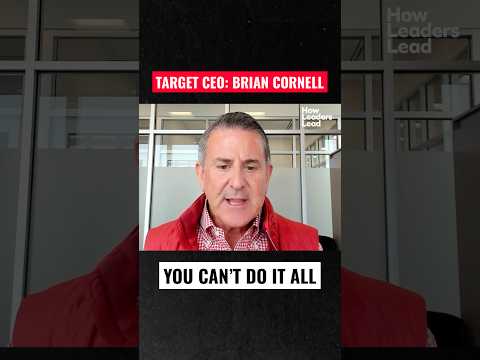
Brian C. Cornell is an American business executive recognized for his transformative leadership as the Chairman and Chief Executive Officer of Target Corporation from 2014 to 2026. He spearheaded a major strategic overhaul, investing heavily in e-commerce, private brands, and supply chain efficiencies. Following his CEO tenure, he transitioned to Executive Chair of Target's board, and also serves as Non-Executive Chairman for Yum! Brands.
Biography
Accomplishments
- 01Led Target's 'reimagining' strategy, involving over $7 billion in capital investments to remodel hundreds of stores and expand digital fulfillment options like Drive Up and Shipt.
- 02Engineered the acquisition of Shipt in 2017 for $550 million, significantly boosting Target's same-day delivery capabilities and competitive stance against Amazon and Walmart.
- 03Successfully revitalized Target's private-label brand portfolio, introducing and expanding popular brands such as Cat & Jack, Good & Gather, and Threshold, which generated billions in sales.
- 04Oversaw Target's digital sales growth, consistently outperforming competitors by investing in e-commerce infrastructure, personalized marketing, and omnichannel integration.
- 05Navigated Target through the complexities of the COVID-19 pandemic, leveraging prior investments in e-commerce and supply chain to meet surging demand and maintain operational stability.
- 06Improved Target's market capitalization and shareholder value through consistent execution of strategic initiatives and resilient financial performance, despite retail headwinds.
- 07Transitioned Target's leadership seamlessly in 2026, stepping down as CEO and becoming Executive Chair of the board, ensuring continuity while bringing in a new CEO, Michael Fiddelke.
- 08Chaired the board of Yum! Brands as Non-Executive Chairman, guiding strategic direction for a major global restaurant company.
Lessons for Operators
Key Takeaways
Practical lessons distilled for operators, investors, C-levels, and capital allocators.
The Power of Private Brands
Target's success under Cornell was significantly fueled by its revitalized private-label portfolio. These brands offer higher margins, exclusivity, and a unique selling proposition, differentiating Target from commodity retailers.
Omnichannel as a Non-Negotiable
Cornell's tenure demonstrated that a retailer's future hinges on its ability to offer customers multiple, integrated ways to shop—online, in-store, pickup, and delivery. This requires continuous investment in technology and logistics.
Supply Chain as a Strategic Asset
Recognizing the supply chain as a competitive advantage, Target under Cornell invested heavily in optimizing its network for speed, efficiency, and last-mile delivery, which proved crucial during periods of high demand.
Strategic Leadership Transitions
The planned transition of Cornell from CEO to Executive Chair, paving the way for Michael Fiddelke, highlights the importance of thoughtful succession planning to ensure stability and continued strategic momentum.
Resilience in Disruption
Cornell's leadership saw Target navigate the seismic shifts in retail and global events like the pandemic, demonstrating the value of a flexible strategy and robust digital infrastructure to withstand and adapt to disruption.
Balancing Growth and Profitability
Despite significant investments in new capabilities and store remodels, Target largely maintained a healthy balance sheet and continued to generate strong cash flows, underscoring the importance of financial discipline during periods of aggressive expansion.
Customer-Centricity Drives Loyalty
Target's focus on enhancing the customer experience through convenient fulfillment options, engaging private brands, and well-designed stores fostered a loyal customer base, contributing to consistent sales growth.
Continuous Reimagining is Essential
The retail landscape is constantly evolving. Cornell's 'reimagining' strategy serves as a blueprint for companies that must be willing to fundamentally reassess and reinvent their business model to remain relevant.
Frameworks & Principles
Named frameworks and strategic principles they popularized or embodied.
Omnichannel Retail Strategy
A business model that integrates all available shopping channels and customer touchpoints (physical stores, e-commerce, mobile apps, social media) to provide a seamless and consistent customer experience.
When to useWhen customer expectations demand flexible shopping options, and a unified brand experience across all interaction points is crucial for competitive differentiation and loyalty.
Private Label Brand Development
The strategy of creating and marketing a retailer's own brands, often offering similar quality to national brands at a lower price, or unique products to differentiate the retailer.
When to useTo improve profit margins, build brand loyalty, differentiate from competitors, and gain control over product development and supply chain for specific product categories.
Supply Chain Modernization
The process of updating and optimizing logistics, inventory management, warehousing, and distribution networks using technology and strategic partnerships to improve efficiency, speed, and responsiveness.
When to useWhen facing increasing e-commerce demand, pressure for faster delivery times, rising operational costs, or a need to improve inventory accuracy and reduce stockouts.
Customer Experience (CX) Transformation
A holistic approach to redesigning and improving every interaction a customer has with a company, aiming to create positive, memorable, and consistent experiences that drive satisfaction and loyalty.
When to useWhen customer satisfaction is declining, competitive pressures are high, or there's a strategic imperative to elevate brand perception and increase customer retention and advocacy.
Strategic Acquisition for Capability Building
The process of acquiring other companies not primarily for market share, but for specific capabilities, technologies, or expertise that enhance the acquirer's strategic objectives.
When to useWhen internal development of a critical capability (e.g., last-mile delivery, specific technology) is too slow or costly, and a market-leading solution can be integrated rapidly.
Recent Appearances
Latest interviews, keynotes, and press from the past half year.
 youtube.com
 youtube.com
 youtube.com
 youtube.com
 youtube.com
 youtube.com
 youtube.com
 youtube.com
 youtube.com
 youtube.com
 youtube.com
 youtube.com
 youtube.com
 youtube.com
 youtube.com
 youtube.com
 youtube.com
 youtube.com
 youtube.com
 youtube.com
 youtube.com
 youtube.com
 youtube.com
 youtube.com
 youtube.com
 youtube.com
 youtube.com
 youtube.com
 youtube.com
 youtube.com
 youtube.com
 youtube.com
 youtube.com
 youtube.com
 youtube.com
 youtube.com
 youtube.com
 youtube.com
 youtube.com
 youtube.com
 youtube.com
 youtube.com
 youtube.com
 youtube.com
 youtube.com
 youtube.com
 youtube.com
 youtube.com
 youtube.com
 youtube.com
 youtube.com
 youtube.com
 youtube.com
 youtube.com
 youtube.com
 youtube.com
 youtube.com
 youtube.com
 youtube.com
 youtube.com
 youtube.com
 youtube.com
 youtube.com
 youtube.com
 youtube.com
 youtube.com
 youtube.com
 youtube.com
 m.youtube.com
 youtube.com
 youtube.com
 youtube.com
 youtube.com
 youtube.com
 youtube.com
 youtube.com
 youtube.com
 m.youtube.com
 youtube.com
 youtube.com
 m.youtube.com
 youtube.com
 m.youtube.com
 youtube.com
 m.youtube.com
 youtube.com
 youtube.com
 youtube.com
 youtube.com
 youtube.com
 youtube.com
 youtube.comyoutube.com
 youtube.com
 m.youtube.com
 youtube.com
 youtube.com
 youtube.com
 youtube.com
 youtube.com
 youtube.com
 youtube.com
 youtube.com
 youtube.com
 youtube.com
 youtube.com
 youtube.com
 youtube.com
 youtube.com
 youtube.com
Sources & Further Reading
Profiles, interviews, podcasts, and articles used to compile and verify this entry. Each link opens at the original publisher.
- interviewTarget CEO Brian Cornell is stepping down after 11 years ... - TikToktiktok.com→
- interviewThis executive could become the next CEO of Target with Brian ...modernretail.co→
- interviewTarget names new CEO as retailer fights to reverse sales slumpfoxbusiness.com→
- interviewCNBC this morning from an interview with Target's outgoing CEO ...x.com→
- interviewTwo years ago I posted a tweet to Target's CEO, Brian Cornell ...facebook.com→
- interviewTarget faces serious challenges as CEO Cornell's retirement nearsstartribune.com→
- interviewTarget picks Michael Fiddelke as CEO to replace Brian Cornellcnbc.com→
- interviewNew Target CEO Michael Fiddelke faces challenges - CNBCcnbc.com→
- interviewTarget stock and sales fall as CEO Brian Cornell contract ends - CNBCcnbc.com→
- interviewInside Target's plan to get back its fashion sense — and its shopperscnbc.com→
- interviewWalmart, Target earnings put focus on new CEOs Furner, Fiddelkecnbc.com→
- interviewTarget (TGT) Q2 2025 earnings - CNBCcnbc.com→
- interviewAlex Pretti shooting: Target incoming CEO Fiddelke calls violence ...cnbc.com→
- interviewTarget cuts 1800 corporate jobs in its first major layoffs in a decadecnbc.com→
- interviewTarget Just Made an Announcement That Investors Hate. It Did the ...inc.com→
- interviewTarget Picked A New CEO. Here's Why He Must Be Transformativeforbes.com→
- interviewTarget Picks Insider as CEO to Lead Turnaround; Shares Dropbloomberg.com→
- interviewAs Target Names New CEO, Stock Tumbles 10% As DEI Hit And ...forbes.com→
- interviewThe Quiet Part Out Loud: Target Ditching DEI Cost The CEO His Job ...forbes.com→
- interviewThe High Cost Of Ditching DEI: What Target's Boycott Fallout Revealsforbes.com→
- interviewICE Minnesota Crackdown Has Target Store Employees Skipping ...bloomberg.com→
- interviewHow CEOs Are Navigating Trump in 2026 - Bloombergbloomberg.com→
- interviewInside Target, Frustrated Employees and Search for New CEO - WSJwsj.com→
- interviewTarget Shares Tumble After Retailer Names a Lifer to Steer Its ... - WSJwsj.com→
- interviewTarget's New CEO Already Has Critics. He Bets He Can Prove Them ...wsj.com→
- interviewWhat CEOs Are—and Are Not—Saying About ICE and Minneapoliswsj.com→
- interviewUlta Beauty, Target to End Partnership - WSJwsj.com→
- interviewCompanies Are Replacing CEOs in Record Numbers—and They're ...wsj.com→
- interviewTarget to Slash Corporate Workforce After Quarters of Stagnant Saleswsj.com→
- interviewTarget Shopper Boycott Over DEI Changes Is Winding Down - WSJwsj.com→
- podcastCharlotte is having a moment — and we were in the room for it. Our ...instagram.com→
- podcastDuring our recent Cooley Talks Life Sciences webinar, Barbara ...instagram.com→
- podcastDive into Ari Block's journey from a teenage entrepreneur to ...instagram.com→
- podcast"We really believe that there is a tectonic shift that is existing right ...instagram.com→
- podcastVerkada - Facebookfacebook.com→
- podcastFrom Spindrift to CoreWeave to Databricks, here's what happened to ...facebook.com→
- podcastAt #FIIPRIORITY Miami, Jared Kushner, Founder & CEO of Affinity ...instagram.com→
- podcastRobert E. Siegel - Exclusive Keynote Speaker and Advisorsternstrategy.com→
- podcastIn a post on Truth Social, U.S. President Donald Trump praised ...facebook.com→
- podcastCEO Brian Niccol's turnaround strategy focuses on efficiency and ...facebook.com→
- podcastMichael Burry, Anthropic co-founder Jack Clark, and Dwarkesh Patel ...facebook.com→
- podcastBusiness Insider's Lee Chong Ming spent a year listening to tech ...facebook.com→
- podcastWhy DTC brands failed in 2025: a business model problem - LinkedInlinkedin.com→
- podcastจากเด็กฝึกงานสู่เก้าอี้ซีอีโอ: เรื่องราวของ Michael Fiddelke กับการเปลี่ยน ...techsauce.co→
- podcastPrincess Sombi Lansana - Student at Elgin Community Collegelinkedin.com→
- podcastIT'S SPARKATHON DAY!!! Come by the Hive at 5 to catch the final ...instagram.com→
- podcastThe core of ARK is people who dare to think differently. Charles ...instagram.com→
- podcastgener8tor Founder Series Spotlight: Rich Sloan, WAVR ... - Instagraminstagram.com→
- podcastKalshi's Regulated Event Contracts for Asset Managers - LinkedInlinkedin.com→
Explore Related Titans
Other figures in the archive who share Brian Cornell's domain, geography, or era.
More in Technology



From United States