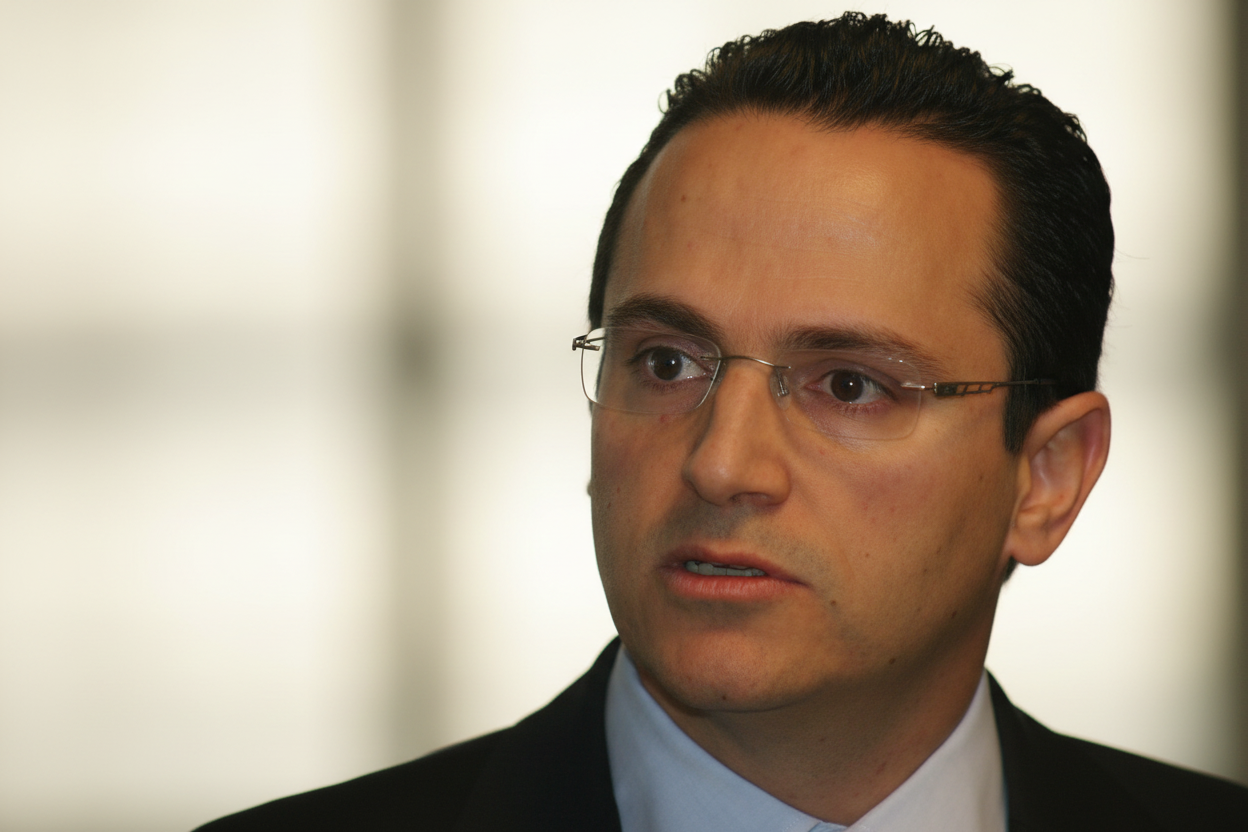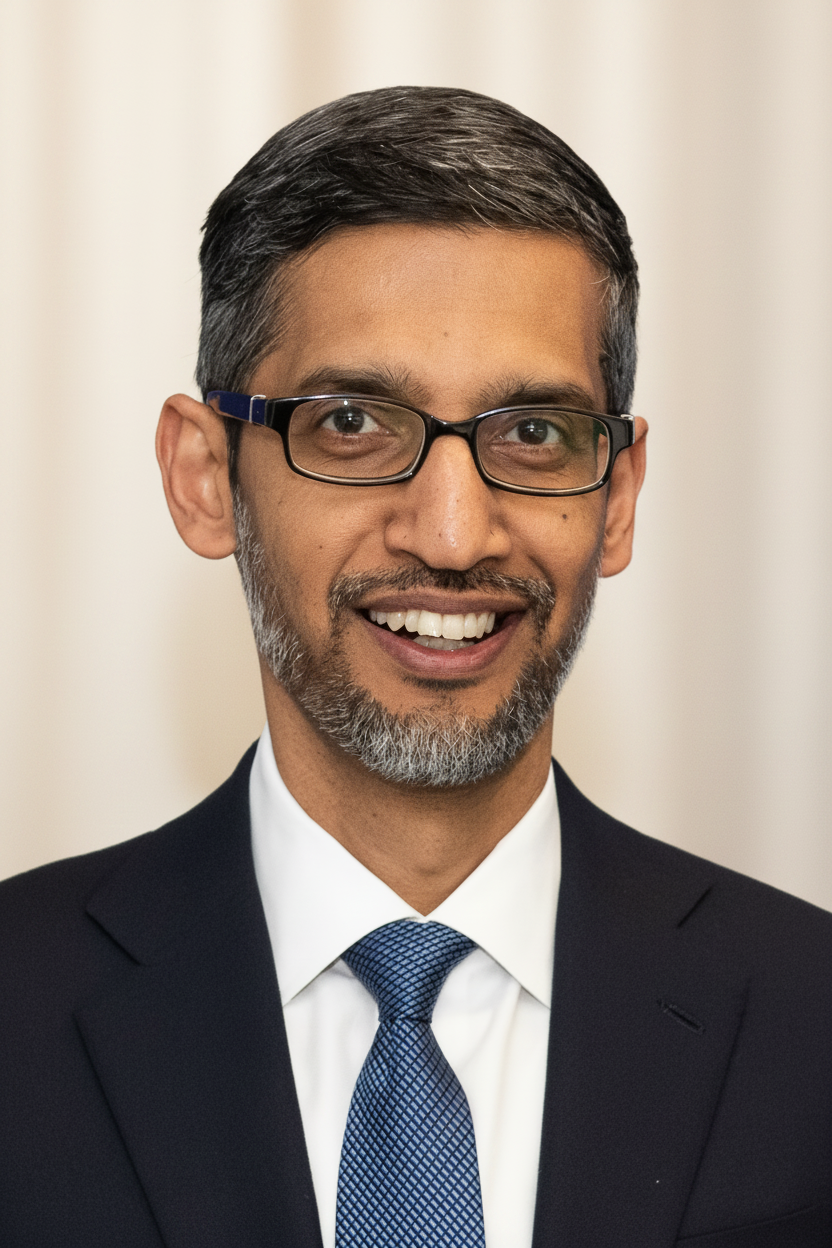
Sundar Pichai
Architect of Google's product unification and strategic expansion into AI, cloud, and hardware.
Sundar Pichai is an Indian-American business executive who has served as the CEO of Google since 2015 and as the CEO of its parent company, Alphabet Inc., since 2019. He was instrumental in the development of Google Chrome and Chrome OS, and steadily rose through the ranks, demonstrating exceptional product leadership and strategic vision, particularly in scaling Google's core products and driving its transition into an AI-first company.
Biography
Accomplishments
- 01Spearheaded the development and launch of Google Chrome (2008) and Chrome OS (2011), transforming Google's presence in the browser and operating system markets.
- 02Led Google's transition to an 'AI-first' company, publicly articulating this strategic shift in 2016, driving significant R&D and product integration of AI capabilities across all Google services.
- 03Drove the significant expansion and growth of Google Cloud Platform, challenging market leaders, particularly since his extended purview to all core products in 2014.
- 04Successfully maintained Google's core search and advertising revenue growth while diversifying into new strategic areas such as hardware (e.g., Pixel phones, Google Home) and autonomous driving (Waymo, under Alphabet).
- 05Navigated Google (and later Alphabet) through periods of intense regulatory scrutiny and heightened public debate over privacy and data governance, developing company-wide strategies for compliance and ethical AI.
Lessons for Operators
Key Takeaways
Practical lessons distilled for operators, investors, C-levels, and capital allocators.
Holistic Product Vision
Pichai's trajectory illustrates that deep understanding of product ecosystems, not just individual products, is crucial for sustained leadership in tech. His ability to integrate Chrome, Android, and Search created a cohesive Google experience, paving the way for further expansion into AI and Cloud. Investors should look for CEOs who articulate and execute on such integrated product strategies.
Strategic Pivot to AI
His 'AI-first' declaration was not a mere slogan; it catalyzed a fundamental reorientation of Google's engineering, product development, and resource allocation. This proactive strategic pivot ensures long-term relevance. Operators should analyze their core competencies against emerging technological waves and commit to similar strategic re-prioritizations with tangible resource shifts.
Effective Decentralization and Centralized Strategy
As CEO of both Google and Alphabet, Pichai manages a decentralized structure ('Other Bets') while maintaining centralized strategic control over Google's massive core business. This balance allows for moonshot exploration without destabilizing core profitability. C-levels should consider similar dual structures that foster innovation while protecting and growing established revenue streams.
Long-Term Value Creation over Short-Term Gains
Pichai often emphasizes Google's long-term investments in areas like quantum computing and autonomous driving, knowing these may not yield immediate returns but are critical for future competitive advantage. Capital allocators should assess leadership's commitment to strategic, patient capital deployment beyond immediate quarters, especially in R&D-intensive industries.
Frameworks & Principles
Named frameworks and strategic principles they popularized or embodied.
AI-First Strategy
A framework for prioritizing and embedding Artificial Intelligence capabilities across all product development, internal operations, and customer-facing services. It involves significant investment in AI research, talent acquisition, and data infrastructure.
When to useWhen a fundamental technological shift is identified that has the potential to redefine competitive advantage in your industry. Requires executive commitment and substantial resource reallocation.
Dual Strategy (Core vs. Bets)
An organizational and strategic framework, exemplified by Alphabet Inc., where a mature, profitable 'core' business generates cash flow while a separate, protected entity (or entities) pursues high-risk, high-reward 'bets' with longer timelines for profitability. This allows for exploration without jeopardizing the core.
When to useFor large enterprises seeking to innovate disruptively while maintaining market leadership in established sectors. Suitable for companies with significant free cash flow and a desire to diversify beyond their current market definition.
Product Ecosystem Integration
A strategic approach focused on ensuring that different products and services within a company's portfolio work together seamlessly, enhancing user experience and creating a 'sticky' interconnected ecosystem, rather than operating as isolated offerings.
When to useWhen managing multiple product lines or considering new product launches. It's crucial for maximizing user engagement, data leverage, and competitive defensibility in platform-driven industries.
Sources & Further Reading
Profiles, interviews, podcasts, and articles used to compile and verify this entry. Each link opens at the original publisher.
Explore Related Titans
Other figures in the archive who share Sundar Pichai's domain, geography, or era.
More in Technology






From India



Contemporaries — born 1970s