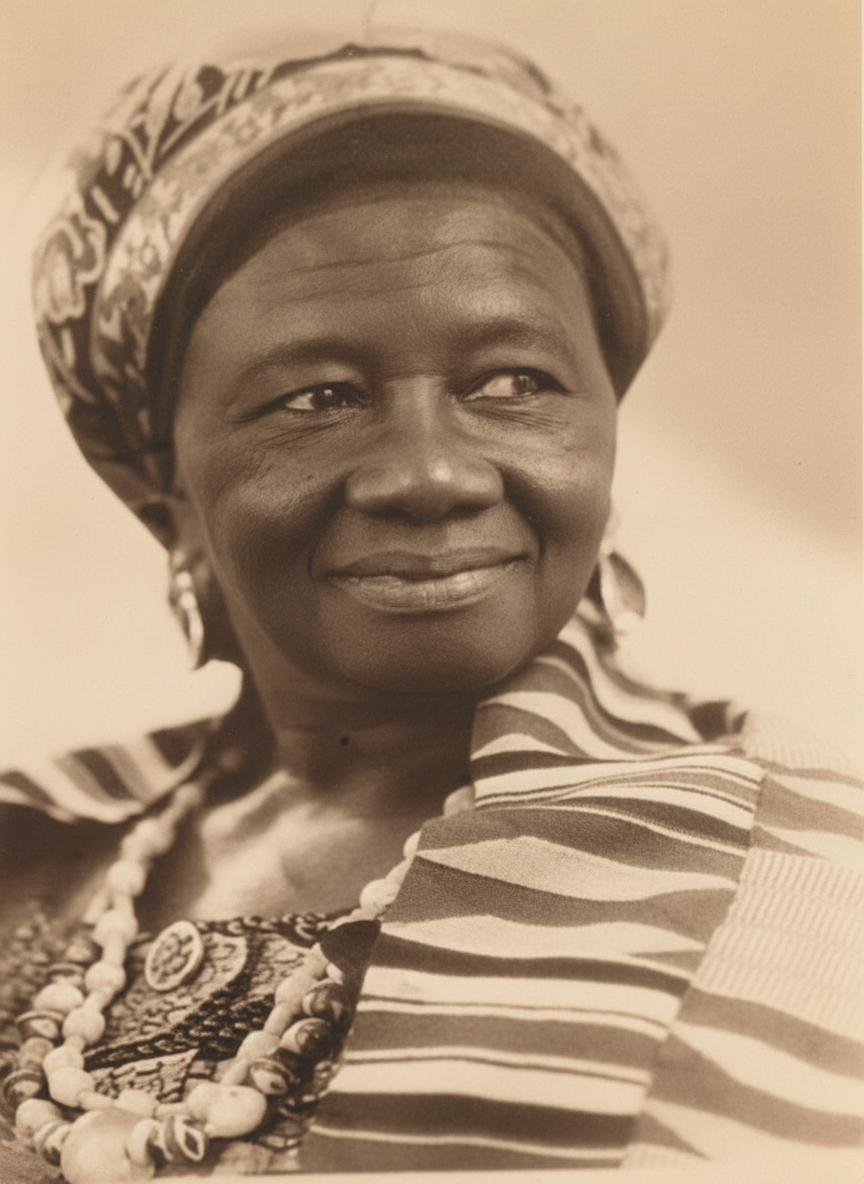
Madam Esther Afua Ocloo
Architect of Microfinance: Empowering Women and Local Economies through Entrepreneurship.
Esther Afua Ocloo was a Ghanaian entrepreneur and pioneer of microfinance. She founded Nkulenu Industries in 1942, a food processing company, demonstrating early principles of value addition and local sourcing. Her advocacy for financial access for women led to her co-founding Women's World Banking (WWB) in 1976, a global microfinance network instrumental in formalizing and scaling economic opportunities for underserved populations.
Biography
Accomplishments
- 01Founded Nkulenu Industries (1942): A pioneering food processing company in Ghana, demonstrating successful indigenous industrialization and value addition through local sourcing and processing of agricultural products.
- 02Co-founded Women's World Banking (WWB) (1976): Served as its first Board Chairperson, establishing a global network that became a cornerstone of the microfinance movement, providing financial services to over 40 million women worldwide.
- 03Secured early commercial bank loan (1940s): Demonstrated the viability of her business to Barclays Bank, securing capital when formal credit was largely inaccessible to African women entrepreneurs.
- 04Advocated for women's economic inclusion: Successfully championed the recognition of women as creditworthy entrepreneurs, shifting paradigms in development economics and financial inclusion.
- 05Developed robust supply chains: Nkulenu Industries established reliable networks with local farmers, ensuring raw material supply and contributing to the agricultural sector's formalization in Ghana.
- 06Received the Africa Prize for Leadership for the Sustainable End of Hunger (1990): Recognition for her holistic approach to economic development, linking food security, entrepreneurship, and financial access.
- 07Global Advisory Roles: Served on the boards of organizations like the African Development Bank, wielding influence over broader development strategies and lending policies.
Lessons for Operators
Key Takeaways
Practical lessons distilled for operators, investors, C-levels, and capital allocators.
Unlocking Untapped Markets
Ocloo identified and served a fundamentally underserved market – women entrepreneurs lacking access to formal credit. Operators should identify similar 'blind spots' in existing financial or commercial systems where demand is high but access is limited due to systemic biases or lack of innovative solutions.
The Power of Proof-of-Concept
Her ability to personally demonstrate the quality of her product (cooked food) to a skeptical bank manager secured initial capital. Investors and fund managers should prioritize tangible proof-of-concept and a clear understanding of a venture's operational reality over solely abstract business plans, especially in emerging markets.
Systemic Approach to Problem Solving
Recognizing that her individual success couldn't address the broader issue of financial exclusion, Ocloo co-founded WWB to create a systemic solution. Leaders should consider addressing root causes and building infrastructure-level solutions rather than merely optimizing individual ventures, especially for challenges with widespread impact.
Sustainable Value Creation
Nkulenu Industries' success was rooted in adding value to local agricultural produce, creating jobs, and fostering local economic self-reliance. Enterprises and capital allocators should prioritize investments that integrate local supply chains, enhance domestic capabilities, and create sustainable economic ecosystems, not just short-term profit.
Investing in Human Capital as a Catalyst
Ocloo's personal investment in her education and her subsequent empowerment of other women through financial literacy and access to capital highlights that developing human capital is a potent driver for economic growth and societal development.
Resilience in the Face of Adversity
Operating in a nascent independent nation with limited infrastructure and societal biases against women entrepreneurs, Ocloo's sustained success and influence underscore the critical role of resilience, adaptability, and unwavering vision for long-term impact.
Frameworks & Principles
Named frameworks and strategic principles they popularized or embodied.
Inclusive Market Development
A strategy focusing on integrating marginalized populations (e.g., smallholder farmers, women entrepreneurs) into value chains and economic systems. It involves designing products, services, and policies that address their specific needs and constraints.
When to useApplicable for fund managers and enterprises seeking to unlock new market segments, create social impact alongside financial returns, and build resilient, locally integrated supply chains in developing economies or underserved domestic markets.
Microfinance Model
Providing small loans, savings facilities, and other financial services to low-income individuals or groups who typically lack access to conventional banking services, often without collateral and employing group lending methodologies.
When to useRelevant for investors and financial institutions targeting financial inclusion, poverty alleviation, and the empowerment of micro-entrepreneurs. It can also inform product development for traditional banks looking to serve unbanked populations.
Value Addition & Local Sourcing Strategy
Focusing on processing raw materials locally to create higher-value products, thereby increasing revenues, creating local employment, and developing indigenous industrial capacity, reducing reliance on imports.
When to useBeneficial for enterprises in manufacturing, agro-processing, and consumer goods aiming to reduce supply chain costs, enhance product distinctiveness, contribute to national economic self-sufficiency, and foster local economic development.
Explore Related Titans
Other figures in the archive who share Madam Esther Afua Ocloo's domain, geography, or era.
More in Finance & Investing










Contemporaries — 20th century