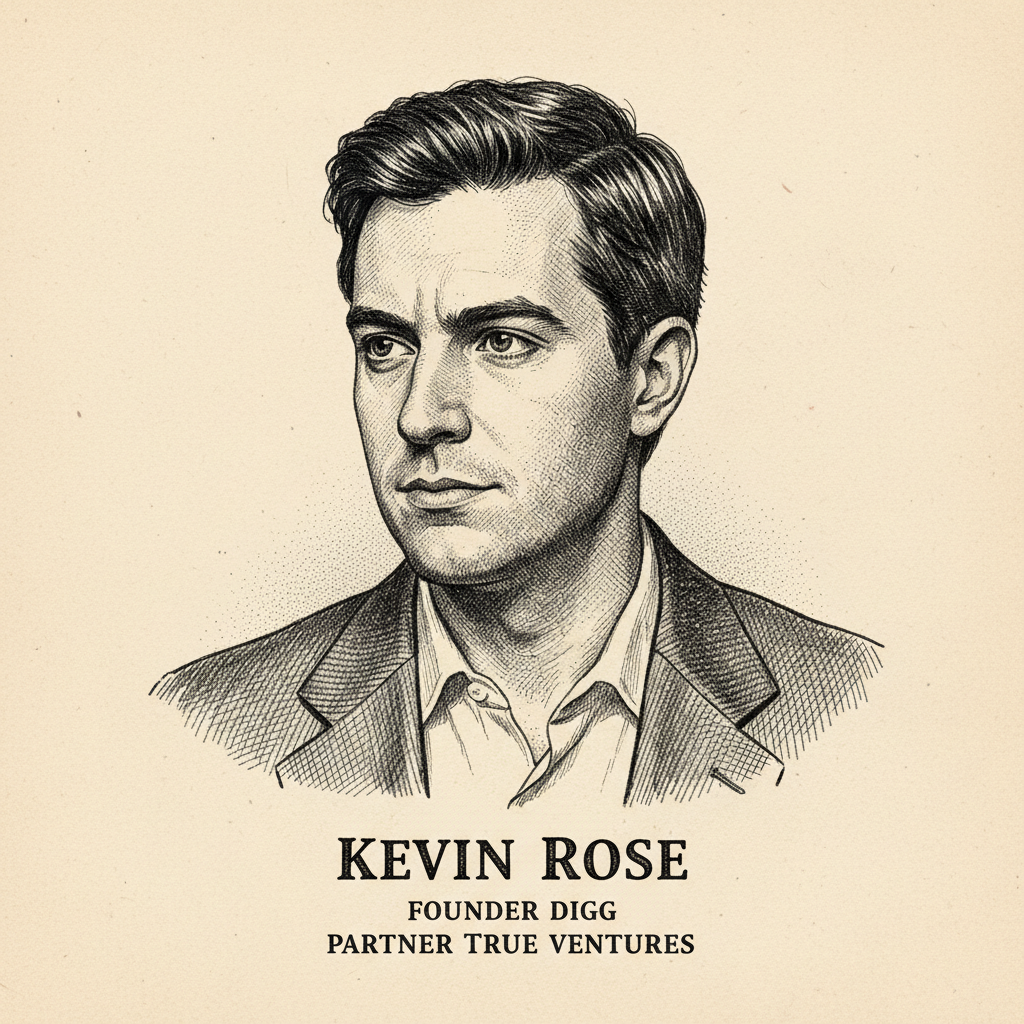
Kevin Rose
Serial entrepreneur and investor, known for pioneering Web 2.0 platforms and early-stage venture capital.
Robert Kevin Rose is an American Internet entrepreneur who co-founded Revision3, Digg, Pownce, and Milk. He also served as production assistant and co-host at TechTV's The Screen Savers. From 2012 to 2015, he was a venture partner at GV. In 2025, Rose re-purchased Digg with Alexis Ohanian and re-launched it initially as a competitor to Reddit, before returning its focus to news aggregation.
Biography
Accomplishments
- 01Co-founded Digg (2004), a pioneering social news aggregation site that democratized content discovery through user upvoting.
- 02Co-founded Revision3 (2005), an early digital television network, demonstrating foresight in online video content distribution.
- 03Co-founded Pownce (2007), a micro-blogging platform, showcasing early experimentation with real-time social communication.
- 04Served as Venture Partner at GV (2012-2015), identifying and funding early-stage technology companies.
- 05Co-founded Milk (2011), a mobile application development company, demonstrating adaptability to emerging technology trends.
- 06Re-purchased and re-launched Digg with Alexis Ohanian in 2025, demonstrating long-term vision and commitment to past ventures.
Lessons for Operators
Key Takeaways
Practical lessons distilled for operators, investors, C-levels, and capital allocators.
The Power of User-Generated Curation
Kevin Rose's success with Digg demonstrated that platforms empowering users to curate content can rapidly gain traction and influence. This model reduces editorial overhead while increasing content relevance for the community.
The Value of Early-Stage Market Exploration
His involvement with early internet television (Revision3) and micro-blogging (Pownce) highlights a willingness to explore nascent technology trends, which can lead to significant first-mover advantages or valuable insights, even if not all ventures achieve massive scale.
Founder's Instinct for Re-Engagement
The 2025 re-purchase of Digg suggests a deep understanding of market needs and an entrepreneurial drive to revisit and revitalize past projects, adapting them to current contexts. This demonstrates a long-term vision for intellectual property.
Transitioning from Operator to Investor
Rose's tenure at GV showcases how direct entrepreneurial experience can provide a valuable lens for venture capital investment, enabling better identification and support of promising startups. Operators transitioning to investors bring a 'been there, done that' perspective.
Strategic Adaptation of Core Product
Digg's evolution from a Reddit competitor to a focused news aggregator post-re-launch underscores the necessity of continuous strategic refinement based on market dynamics and competitive positioning, rather than rigid adherence to initial goals.
Frameworks & Principles
Named frameworks and strategic principles they popularized or embodied.
Community-Driven Content Aggregation
A model where users actively contribute to the discovery, evaluation, and ranking of content, fostering a self-organizing information ecosystem.
When to useWhen building platforms where content relevance is enhanced by collective intelligence, and user engagement is critical for growth and moderation (e.g., social news, review sites, Q&A platforms).
Serial Entrepreneurship & Iteration
The practice of founding multiple companies, often learning from previous ventures and applying those lessons to subsequent projects, or even revisiting and evolving prior ventures.
When to useApplicable for individuals or organizations looking to capitalize on evolving technology landscapes by launching successive products, or for revitalizing established brands with new strategic directions.
Operator-Investor Hybrid Model
Individuals or teams that possess both deep operational experience in building and scaling companies, combined with the strategic foresight and capital allocation skills of an investor.
When to useBeneficial for venture capital firms seeking partners with practical industry knowledge, or for founders seeking investors who can offer mentorship beyond capital, leveraging direct experience.
Recent Appearances
Latest interviews, keynotes, and press from the past half year.
 youtube.com
 youtube.com
 youtube.com
 youtube.com
 youtube.com
 youtube.com
 youtube.com
 youtube.com
 youtube.com
 youtube.com
 youtube.com
 youtube.com
 youtube.com
 youtube.com
 youtube.com
 youtube.com
 youtube.com
 youtube.com
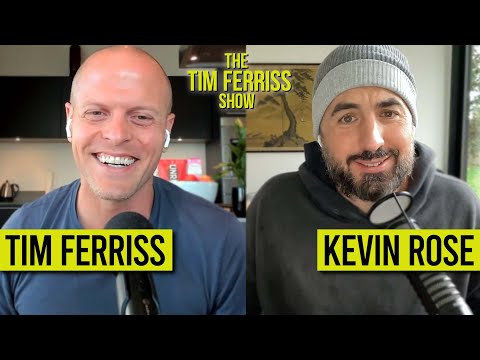 youtube.com
 youtube.com
Sources & Further Reading
Profiles, interviews, podcasts, and articles used to compile and verify this entry. Each link opens at the original publisher.
Explore Related Titans
Other figures in the archive who share Kevin Rose's domain, geography, or era.
More in Technology









From United States




Contemporaries — born 1970s