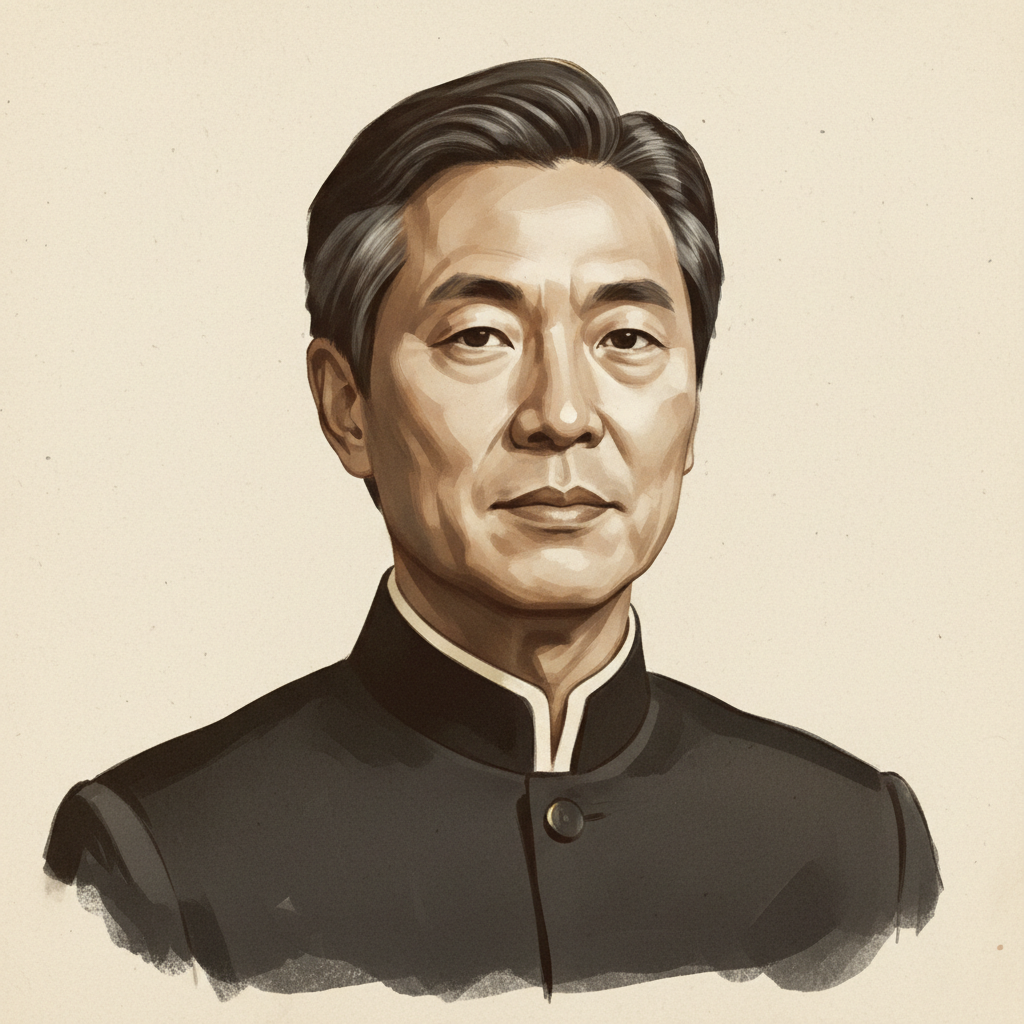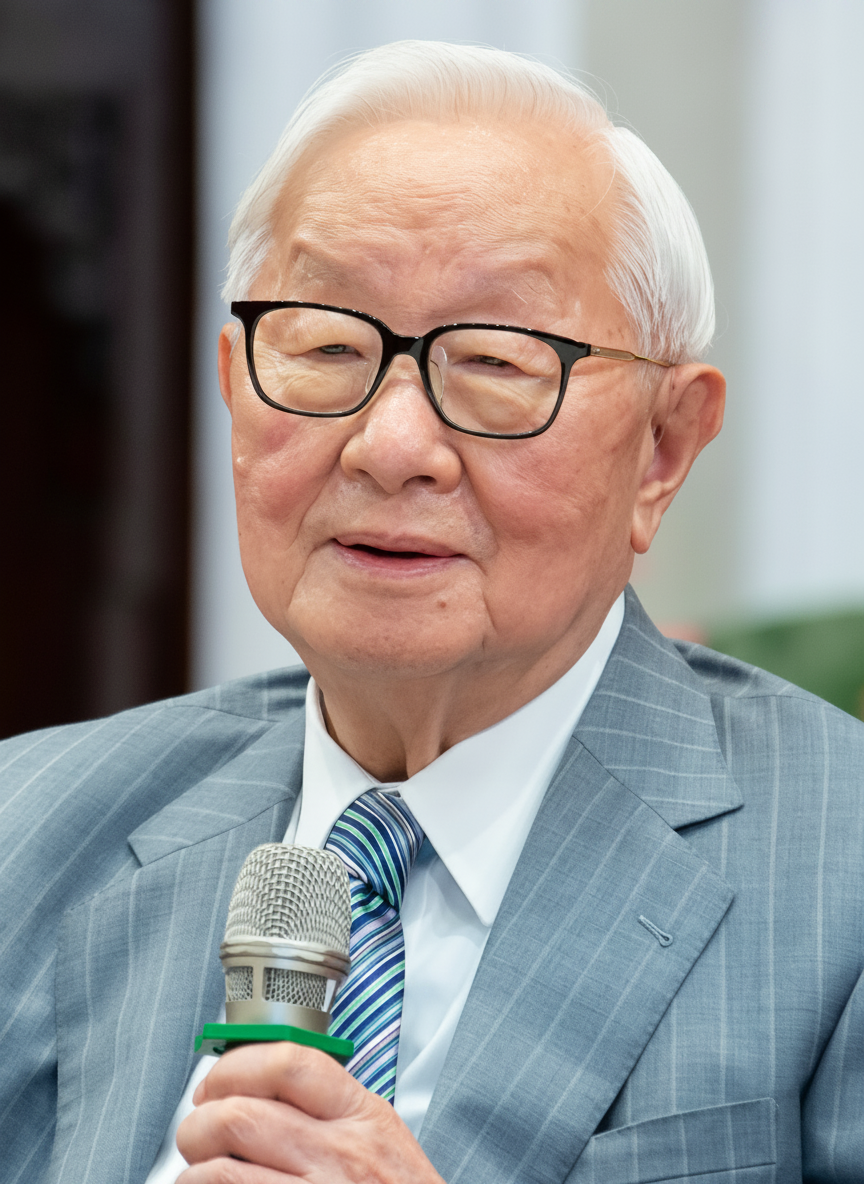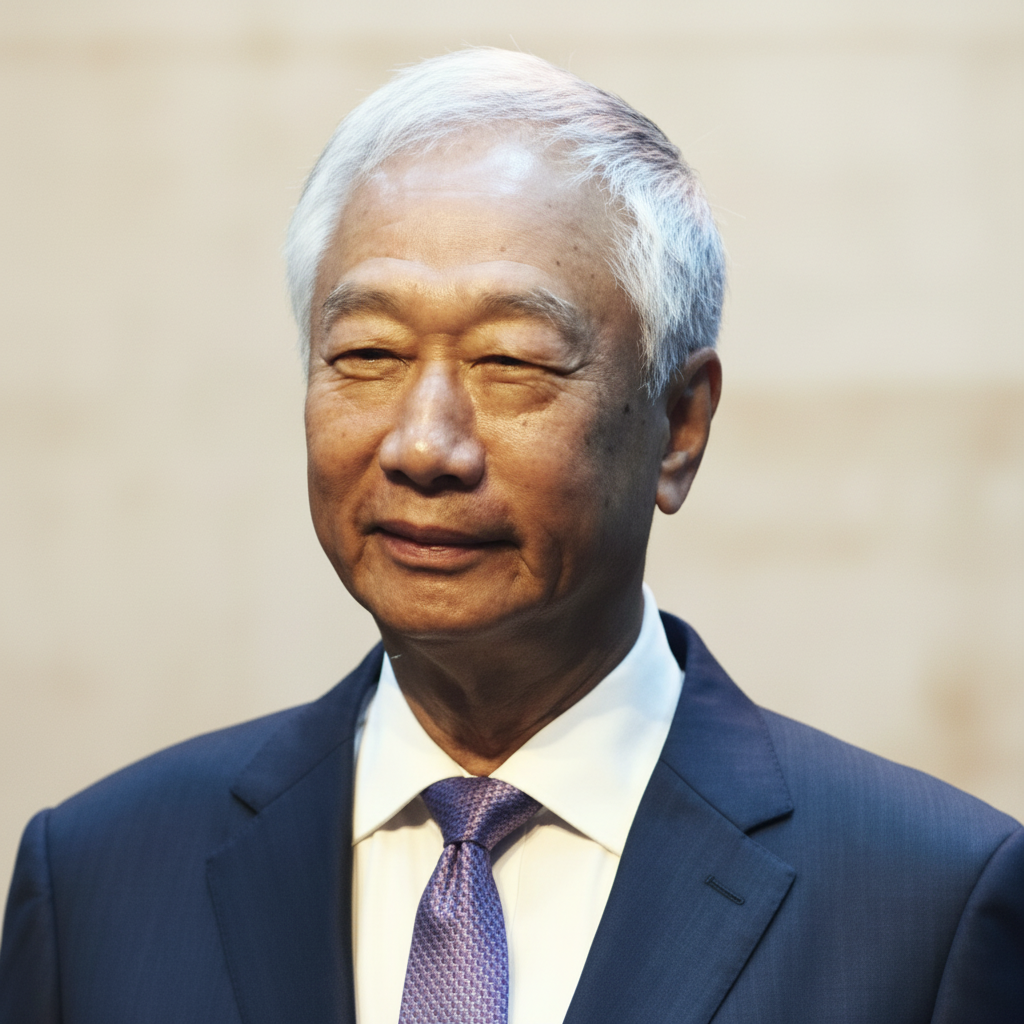
Portrait of Terry Gou
Modern Architect · 1950 — Present

Terry Gou

Architect of modern electronics manufacturing who scaled Foxconn into the world's indispensable hardware supply chain anchor.

Country
Taiwan
Continent
Asia
Industry
Electronics Manufacturing Services / Technology
Role
Founder & Former Chairman, Hon Hai Precision Industry (Foxconn)

Terry Gou transformed a $7,500 plastics workshop founded in 1974 into Hon Hai Precision Industry (Foxconn), the world's largest electronics contract manufacturer. By mastering high-precision tooling, vertical integration, and hyper-scaled manufacturing hubs in mainland China, Gou secured early contracts with Compaq, HP, and Apple. Under his leadership, Foxconn became the foundational production engine behind the personal computer and smartphone revolutions, commanding hundreds of billions of dollars in annual revenue.

Biography

Born in Banqiao, Taiwan, Terry Gou began his career in shipping logistics before founding Hon Hai Plastics Corporation in 1974 with $7,500, initially manufacturing plastic switches for black-and-white television sets. In 1981, Gou recognized that personal computing would drive immense demand for interconnect components, pivoting Hon Hai into proprietary connectors and precision molds. Unlike competitors who outsourced tooling, Gou heavily capitalized in-house mold-making capabilities, enabling faster turnaround times and superior tolerances. In 1988, anticipating mainland China's cost advantages and labor availability, Gou established Foxconn's first mainland facility in Shenzhen (which evolved into the Longhua Science & Technology Park). Longhua became an unprecedented industrial city housing hundreds of thousands of workers, complete with vertically integrated dormitories, dining halls, foundries, and assembly lines. Gou leveraged this unmatched scale to win structural manufacturing mandates, starting with Compaq desktop chassis in 1996, followed by IBM, Dell, and Sony. When Apple sought a manufacturing partner capable of scaling complex industrial designs under strict secrecy and intense volume, Gou positioned Foxconn as the primary builder of the iPod and, starting in 2007, the iPhone. Operating under his proprietary 'eCMMS' (enterprise Computer, Communication, Consumer electronics, Content, Components, Manufacturing and Service) model, Foxconn captured margin across raw materials, tooling, component fabrication, and final box-build assembly. In 2016, Gou orchestrated the $3.5 billion acquisition of struggling Japanese display pioneer Sharp Corporation, rapidly cutting costs and restoring profitability. Gou stepped down as Hon Hai chairman in 2019 to pursue public office, leaving behind an industrial empire responsible for assembling a significant percentage of global consumer electronics.

Accomplishments

  • 01Scaled Hon Hai Precision Industry from a $7,500 television component workshop in 1974 to an enterprise generating over $200 billion in annual revenue.
  • 02Pioneered the 'Foxconn City' operational model at Longhua in 1988, centralizing hundreds of thousands of manufacturing workers within a high-throughput industrial compound.
  • 03Formed the bedrock hardware partnership with Apple beginning in the early 2000s, serving as the primary manufacturing vehicle for the iPod, iPhone, and iPad product lines.
  • 04Executed the 2016 acquisition of Sharp Corporation for approximately $3.5 billion, marking the first foreign takeover of a major Japanese consumer electronics firm and returning it to profitability within a year.
  • 05Engineered the eCMMS business architecture, allowing OEMs to consolidate mechanical, electronic, optical, and logistics supply chains under a single unified balance sheet.
  • 06Acquired consumer networking and peripherals brand Belkin for $866 million in 2018 through Foxconn Interconnect Technology (FIT), accelerating expansion into downstream smart home markets.

Lessons for Operators

Control the tooling to control the market: Early investment in high-precision mold-making allowed Foxconn to undercut competitors on turnaround speed while locking in proprietary component tolerances.
Scale can create an insurmountable operational moat: Concentrating hundreds of thousands of skilled operators and suppliers in a single geographic hub enabled production ramps no competitor could match.
Margins exist in vertical component capture, not just final assembly: Raw final assembly yields low single-digit margins, but manufacturing internal connectors, enclosures, and cables drives superior blended profitability.
Decisive geographic arbitrage creates generational first-mover advantages: Moving aggressively into mainland China in 1988 provided Hon Hai with land, labor, and municipal alignment years ahead of Western and Asian rivals.
Customer alignment requires radical operational transparency and uncompromised execution: Retaining high-value clients like Apple demands matching their industrial engineering rigor with absolute supplier commitment.
The Operator's Playbook

Key Takeaways

Practical lessons distilled for operators, investors, C-levels, and capital allocators.

Lesson 01

Industrial Agility via In-House Tooling

Gou rejected third-party dependency for metal stamping and plastic injection molding early in Hon Hai's lifecycle. By owning the tooling design and fabrication pipeline, Foxconn compressed prototyping timelines from months to days, creating an enterprise pricing advantage.

Lesson 02

Margin Enhancement Through Vertical Internalization

Contract manufacturing box-build margins are historically wafer-thin (2-4%). Gou systematically captured higher gross margins by internally fabricating screws, cables, chassis, heat sinks, and PCB assemblies rather than purchasing them from third parties.

Lesson 03

High-Density Industrial Ecosystems

By constructing full-service manufacturing cities like Shenzhen Longhua and Zhengzhou ('iPhone City'), Foxconn internalized housing, supply feeding, and engineering support, drastically lowering coordination costs and supply chain latency during seasonal demand spikes.

Lesson 04

Aggressive Turnaround Discipline

The 2016 Sharp transaction demonstrated Gou's operational playbook: extract overhead, renegotiate vendor contracts, re-channel manufacturing volume through Foxconn's global procurement engine, and pivot R&D toward immediate commercial applications.

Mental Models

Frameworks & Principles

Named frameworks and strategic principles they popularized or embodied.

01

eCMMS Model (enterprise Computer, Communication, Consumer electronics, Content, Components, Manufacturing and Service)

An integrated contract manufacturing framework where a provider delivers full-lifecycle execution: raw component engineering, mechanical tooling, electronic assembly, software flashing, final packaging, and reverse logistics under one contractual umbrella.

When to useApplicable for hardware enterprises scaling complex physical products requiring unified supply chain ownership, reduced bill-of-materials friction, and tight IP control.

02

The Tooling-First Prototyping Flywheel

A product commercialization strategy where an operator prioritizes proprietary computer numerical control (CNC) machining and precision mold infrastructure prior to pursuing large-scale assembly contracts, using prototype delivery velocity as the primary customer acquisition channel.

When to useIdeal for hardware contract suppliers or vertically integrated industrial firms seeking to win core Tier-1 OEM accounts against entrenched competitors.

Citations

Sources & Further Reading

Profiles, interviews, podcasts, and articles used to compile and verify this entry. Each link opens at the original publisher.

Adjacent Minds

Explore Related Titans

Other figures in the archive who share Terry Gou's domain, geography, or era.

Technology

More in Technology

Browse all →
Portrait of Steve Jobs
USA / TECHNOLOGY
Steve Jobs
Co-founder of Apple Inc. and visionary credited with transforming multiple industries.
Portrait of Jeff Bezos
UNITED STATES / TECHNOLOGY, RETAIL, LOGISTICS, CLOUD COMPUTING, SPACE EXPLORATION
Jeff Bezos
Architect of Amazon, pioneer of e-commerce, and visionary across cloud computing, logistics, and space exploration.
Portrait of Elon Musk
SOUTH AFRICA / AEROSPACE, AUTOMOTIVE, ARTIFICIAL INTELLIGENCE, ENERGY, TELECOMMUNICATIONS
Elon Musk
Elon Reeve Musk: Visionary entrepreneur leading advancements in aerospace, automotive, and artificial intelligence.
Portrait of Jensen Huang
TAIWAN (NATURALIZED AMERICAN CITIZEN) / SEMICONDUCTORS, ARTIFICIAL INTELLIGENCE, COMPUTING
Jensen Huang
Co-founder, President, and CEO of NVIDIA, a pioneering force in graphics processing units (GPUs) and artificial intelligence.
Portrait of Satya Nadella
UNITED STATES / TECHNOLOGY
Satya Nadella
Architect of Microsoft's cloud-first, AI-driven renaissance, shifting culture and strategy to drive sustained growth and market leadership.
Portrait of Bill Gates
UNITED STATES / SOFTWARE, TECHNOLOGY, PHILANTHROPY
Bill Gates
Co-founder of Microsoft, architect of the personal computing revolution, and global philanthropist.
Portrait of Mark Cuban
UNITED STATES / TECHNOLOGY, MEDIA, SPORTS, HEALTHCARE
Mark Cuban
Mark Cuban: The Prolific Disrupter – From Software Startups to Sports Franchises and Pharmaceutical Innovation, Leveraging Technology and Direct-to-Consumer Models.
Portrait of Sam Walton
UNITED STATES / RETAIL
Sam Walton
The architect of modern retail, pioneering discount merchandising and logistical efficiency to establish the world's largest retail corporation.
Portrait of Jack Ma
CHINA / E-COMMERCE, TECHNOLOGY, FINANCE
Jack Ma
Co-founder of Alibaba Group, pioneering e-commerce and digital finance in China.
Portrait of Walt Disney
UNITED STATES / ENTERTAINMENT
Walt Disney
Co-founder of The Walt Disney Company, pioneering animation, theme parks, and diversified entertainment.
Same Era

Contemporaries — born 1950s

Browse all →
Portrait of Steve Jobs
USA / TECHNOLOGY
Steve Jobs
Co-founder of Apple Inc. and visionary credited with transforming multiple industries.
Portrait of Bill Gates
UNITED STATES / SOFTWARE, TECHNOLOGY, PHILANTHROPY
Bill Gates
Co-founder of Microsoft, architect of the personal computing revolution, and global philanthropist.
Portrait of Mark Cuban
UNITED STATES / TECHNOLOGY, MEDIA, SPORTS, HEALTHCARE
Mark Cuban
Mark Cuban: The Prolific Disrupter – From Software Startups to Sports Franchises and Pharmaceutical Innovation, Leveraging Technology and Direct-to-Consumer Models.
Portrait of Aliko Dangote
NIGERIA / DIVERSIFIED CONGLOMERATE (CEMENT, SUGAR, REFINING, FOOD & BEVERAGES, PETROCHEMICALS)
Aliko Dangote
Aliko Dangote: The architect of Africa's largest industrial conglomerate, transforming local resources into global-scale enterprises across cement, sugar, refining, and petrochemicals.
Portrait of Oprah Winfrey
UNITED STATES / MEDIA AND ENTERTAINMENT
Oprah Winfrey
Media proprietor and executive whose multi-platform empire redefined celebrity influence and media ownership.
Portrait of Mukesh Ambani
INDIA / CONGLOMERATE
Mukesh Ambani
India's transformative conglomerate architect, driving digital and retail revolutions.
Portrait of Masayoshi Son
JAPAN / TECHNOLOGY, TELECOMMUNICATIONS, INVESTMENT
Masayoshi Son
Visionary founder of SoftBank, pioneering global technology investing with audacious long-term bets.
Portrait of Richard Branson
UNITED KINGDOM / CONGLOMERATE
Richard Branson
The Maverick Billionaire: Pioneering and Proliferating the Virgin Brand Across Diverse Sectors.
Portrait of Howard Schultz
UNITED STATES / FOOD & BEVERAGE, RETAIL
Howard Schultz
The architect of the modern coffee experience and a pioneer in scaling purpose-driven enterprise.
Portrait of Jim Collins
UNITED STATES / MANAGEMENT CONSULTING & RESEARCH
Jim Collins
Jim Collins is a seminal management researcher, author, and lecturer known for his rigorous, empirically-driven analysis of what makes great companies endure and excel.