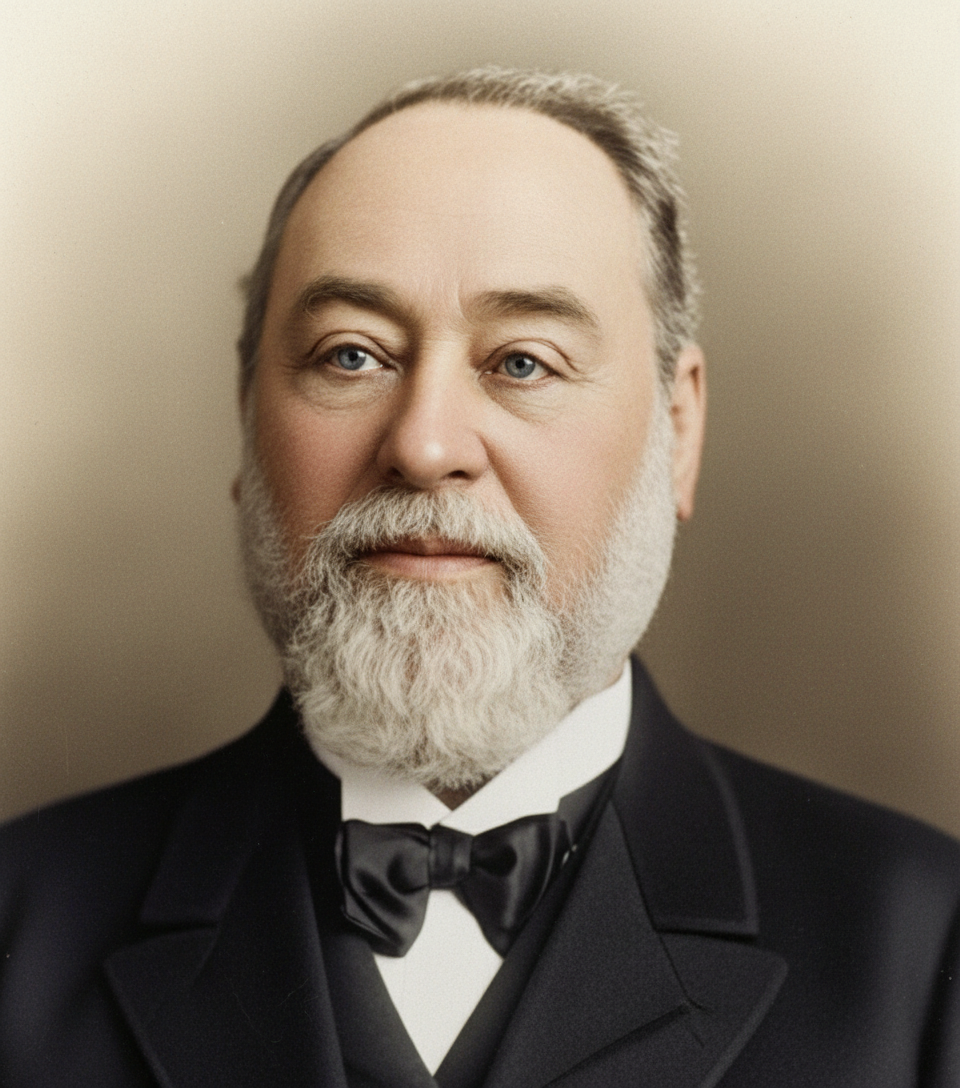
Gerrit Marx
Gerrit Marx: A leader in the heavy vehicle and agricultural equipment industries, known for orchestrating significant corporate separations and strategic transformations.
Gerrit Marx is a German business executive recognized for his leadership in the heavy vehicle and agricultural equipment sectors. He notably led the spin-off of Iveco Group from CNH Industrial in 2022 and served as its inaugural CEO before transitioning to become CEO of CNH Industrial in July 2024.
Biography
Accomplishments
- 01Led the successful spin-off of Iveco Group from CNH Industrial, effective January 1, 2022, establishing an independent publicly traded entity.
- 02Served as the inaugural Chief Executive Officer of Iveco Group, guiding its initial strategic development and market positioning.
- 03Oversaw the strategic direction of Iveco Group, focusing on innovation in alternative fuels, autonomous driving, and connected services for heavy vehicles.
- 04Returned to CNH Industrial as Chief Executive Officer on July 1, 2024, demonstrating his continued strategic value to the broader industrial conglomerate.
- 05Spearheaded initiatives within Iveco Group to enhance operational efficiency and integrate sustainability into product development.
Lessons for Operators
Key Takeaways
Practical lessons distilled for operators, investors, C-levels, and capital allocators.
Strategic Focus through Separation
The decision to spin off Iveco Group enhanced strategic clarity for both entities. Iveco could independently pursue heavy vehicle innovations, while CNH Industrial could sharpen its focus on agriculture and construction. This enabled dedicated investment and market positioning.
CEO Alignment with Corporate Restructuring
Marx's leadership during the spin-off and subsequent transition demonstrates that C-suite appointments following major corporate restructuring are critical. Placing a leader with intimate knowledge of both entities ensures continuity and effective execution of strategic intent.
Innovation as a Post-Divestiture Imperative
Under Marx, Iveco Group prioritized electric, hydrogen, and connected vehicle technologies. This highlights that for newly independent companies, aggressive innovation in their core market is essential to establish competitive defensibility and growth trajectories.
Re-engagement of Proven Leadership
Marx's return to CNH Industrial as CEO signifies the value of retaining proven leadership talent, especially for parent companies navigating post-spin-off strategies. This reduces leadership risk and leverages deep institutional knowledge.
Capital Allocation Optimization
The separation, and Marx's subsequent roles, illustrate how leadership is instrumental in optimizing capital allocation. Both Iveco and CNH Industrial can now deploy capital more efficiently to their respective, distinct strategic priorities, which is critical for investor returns.
Frameworks & Principles
Named frameworks and strategic principles they popularized or embodied.
Portfolio Rationalization
A strategy involving the divestiture or spin-off of non-core business units to allow the parent company to focus on its core strengths and the divested unit to pursue independent growth. This often happens when businesses within a conglomerate have fundamentally different operational models or market cycles.
When to useApplicable when a diversified company identifies business units with distinct strategic paths that could achieve greater value independently, or when market demands necessitate specialized focus.
Strategic Leadership Mobility
The practice of moving key executive talent within or between related corporate entities to leverage specific expertise, ensure strategic continuity, or tackle new challenges. This can involve leaders transitioning from a spun-off entity back to the parent company.
When to useUseful when major corporate restructuring occurs, or when a parent company seeks to reintegrate leadership with deep knowledge of a previously divested or aligned asset, particularly to maintain strategic alignment post-separation.
Innovation-Driven Spin-off Strategy
A spin-off where a key objective for the newly independent entity is to aggressively pursue innovation and disrupt existing markets, unburdened by broader corporate mandates or slower decision-making processes of a larger conglomerate.
When to useAppropriate when the divested unit operates in a rapidly evolving sector (e.g., EV technology, digital services) where agility and focused R&D are paramount for competitive advantage.
Sources & Further Reading
Profiles, interviews, podcasts, and articles used to compile and verify this entry. Each link opens at the original publisher.
Explore Related Titans
Other figures in the archive who share Gerrit Marx's domain, geography, or era.
More in Transportation & Logistics






From Germany