Anita Roddick
Pioneering ethical consumerism and cruelty-free products within the global beauty industry.
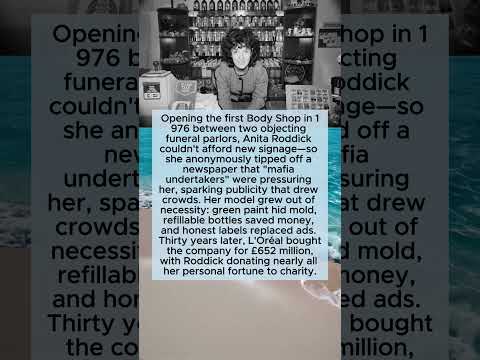
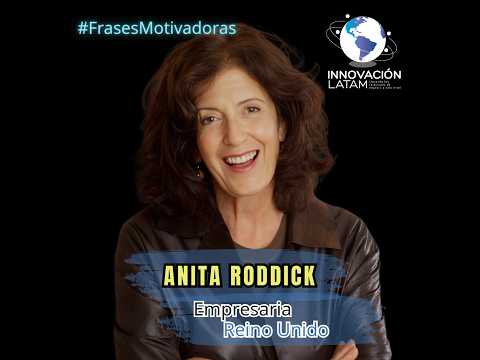
Anita Roddick founded The Body Shop in 1976 in Brighton, UK, building a global beauty retail chain centered on ethical principles, environmental protection, and social activism. She challenged conventional business practices by promoting natural ingredients, opposing animal testing, and championing fair trade.
Biography
Accomplishments
- 01Founded The Body Shop in 1976, growing it into a global enterprise with over 2,000 stores in 50 countries by the time of its sale in 2006.
- 02Pioneered the 'Against Animal Testing' campaign in the cosmetics industry, leading to significant policy changes and increased consumer awareness.
- 03Established the 'Trade Not Aid' program in 1987, formalizing fair trade sourcing relationships with communities in developing countries, predating widespread corporate adoption of fair trade principles.
- 04Successfully listed The Body Shop on the London Stock Exchange in 1984, demonstrating the market viability of an ethically-driven business.
- 05Introduced concepts like refillable packaging and transparent ingredient sourcing, setting precedents for sustainable practices in retail.
- 06Authored 'Body and Soul' (1991), articulating her business philosophy and inspiring others to integrate activism with entrepreneurship.
Lessons for Operators
Key Takeaways
Practical lessons distilled for operators, investors, C-levels, and capital allocators.
Value-Driven Enterprise Creation
Roddick proved that businesses built on strong ethical and environmental values can achieve substantial commercial success. Investors and operators should consider the long-term value creation potential of purpose-driven models, which can attract discerning customers and talent.
Activism as a Business Strategy
Integrating social and environmental activism into core business operations, rather than treating it as mere CSR, can be a powerful differentiator. This approach fosters deep brand loyalty and provides authentic marketing narratives that resonate with consumer values.
Scalability of Ethical Sourcing
The 'Trade Not Aid' program demonstrated the scalability of fair trade and ethical sourcing. Entrepreneurs should investigate supply chain opportunities that not only ensure quality but also deliver social and economic benefits to producers, creating resilient and responsible global networks.
Disruption Through Differentiation
Roddick disrupted the beauty industry by rejecting conventional marketing and product development. Leaders should analyze established industries for practices that are ripe for ethical or sustainable disruption, leading to competitive advantage and new market segments.
Challenges of Legacy and Succession
The sale of The Body Shop highlighted the intricate challenges of preserving a founder's vision and ethical legacy when a company changes ownership. Operators must consider long-term stewardship, potentially through structural mechanisms or robust influence campaigns, to safeguard core values post-acquisition.
The Power of Storytelling and Authenticity
Roddick's personal narrative and the authentic stories behind her products and campaigns forged a strong connection with consumers. Effective leaders leverage genuine storytelling to build trust, communicate purpose, and foster a strong brand identity that transcends mere product features.
Frameworks & Principles
Named frameworks and strategic principles they popularized or embodied.
Triple Bottom Line (TBL)
A framework that expands the traditional reporting framework to include social and environmental performance in addition to financial performance (People, Planet, Profit). Roddick's business philosophy inherently championed the TBL long before it was widely formalized.
When to useApplicable for any organization aiming to measure and manage its holistic impact, guiding strategic decisions to balance financial returns with social equity and environmental responsibility.
Shared Value Creation
Coined by Michael Porter and Mark Kramer, this concept focuses on policies and operating practices that enhance the competitiveness of a company while simultaneously advancing the economic and social conditions in the communities in which it operates. The Body Shop's 'Trade Not Aid' is a prime example.
When to useUseful for strategists and business development teams seeking to identify opportunities where core business activities can generate both economic value for the firm and societal benefits, moving beyond pure philanthropy.
Ethical Sourcing and Supply Chain Auditing
A systematic process of evaluating and managing social, environmental, and ethical risks within a company's supply chain. Roddick's commitment to fair trade and ingredient sourcing demanded such scrutiny.
When to useEssential for businesses in consumer goods, manufacturing, or any industry with complex supply chains, to ensure compliance with ethical standards, mitigate risks, and enhance brand reputation through responsible practices.
Recent Appearances
Latest interviews, keynotes, and press from the past half year.
 youtube.comyoutube.com
 youtube.com
 youtube.com
 youtube.com
 youtube.com
 youtube.com
 youtube.com
 youtube.com
 youtube.com
 youtube.com
 youtube.com
 youtube.com
 youtube.com
 youtube.com
 youtube.com
 youtube.com
 youtube.com
 youtube.com
 youtube.com
 youtube.com
 youtube.com
 youtube.com
 youtube.com
 youtube.com
 m.youtube.com
 youtube.com
 youtube.com
 youtube.com
 youtube.com
 youtube.com
 youtube.com
 youtube.com
 youtube.com
 youtube.com
 youtube.com
 youtube.com
 youtube.com
 youtube.comyoutube.com
 youtube.com
 youtube.com
 youtube.com
 youtube.com
 youtube.com
 youtube.com
 youtube.comm.youtube.com
 youtube.com
 youtube.com
 youtube.com
 youtube.com
 youtube.com
 youtube.com
 youtube.com
 youtube.com
 youtube.com
![Anitta - Envolver [Official Music Video] - YouTube](https://i.ytimg.com/vi/hFCjGiawJi4/hqdefault.jpg) youtube.com
youtube.com youtube.com
 youtube.com
 youtube.com
![Anitta & Kevinho - Terremoto [Official Music Video] - YouTube](https://i.ytimg.com/vi/O65FBF9RamQ/hqdefault.jpg) m.youtube.com
m.youtube.com youtube.com
 youtube.com
 youtube.com
 youtube.com
 youtube.com
 youtube.com
 youtube.com
 youtube.com
 youtube.com
 youtube.com
 youtube.com
 youtube.comyoutube.com
 youtube.com
 youtube.com
 youtube.com
 youtube.com
 youtube.com
 m.youtube.com
 youtube.com
 youtube.com
 youtube.com
 m.youtube.com
 youtube.com
 youtube.com
 youtube.com
 youtube.comm.youtube.com
Sources & Further Reading
Profiles, interviews, podcasts, and articles used to compile and verify this entry. Each link opens at the original publisher.
Explore Related Titans
Other figures in the archive who share Anita Roddick's domain, geography, or era.
More in Technology








From United Kingdom




Contemporaries — 20th century