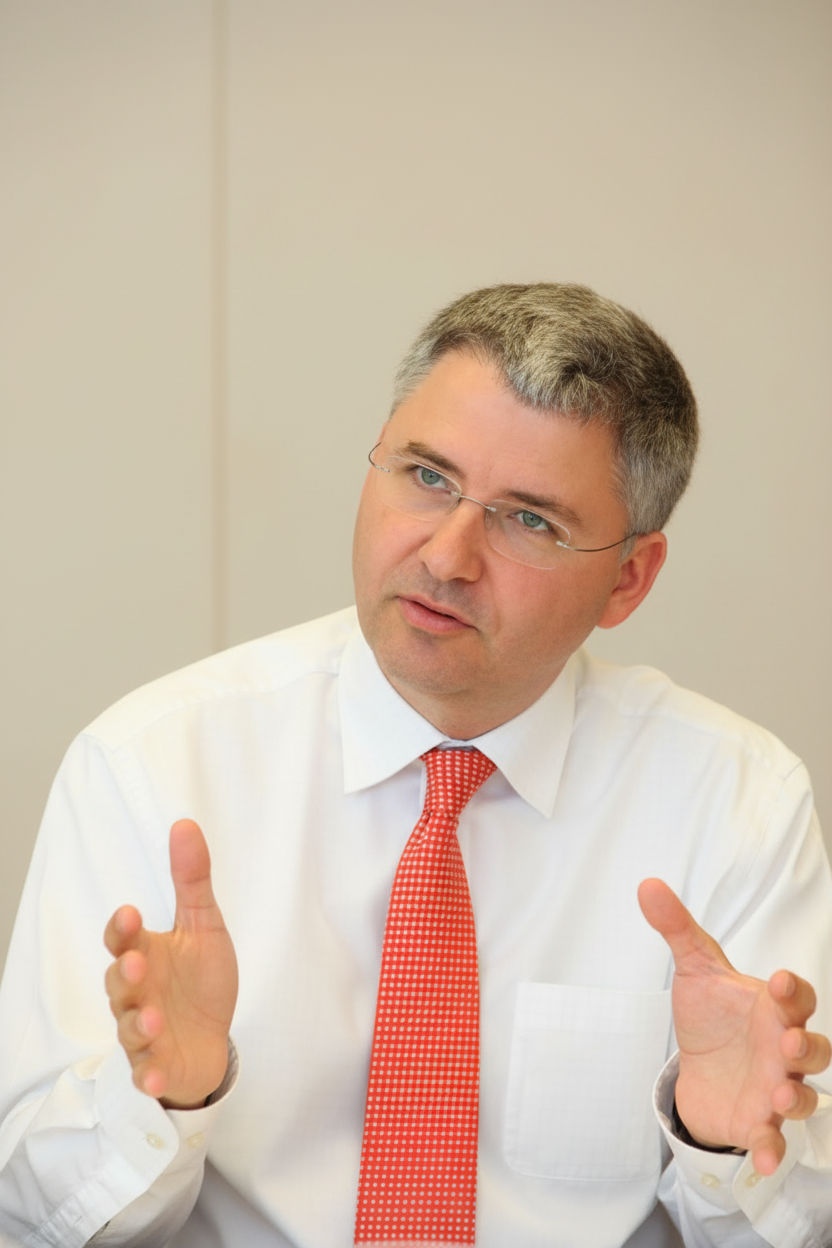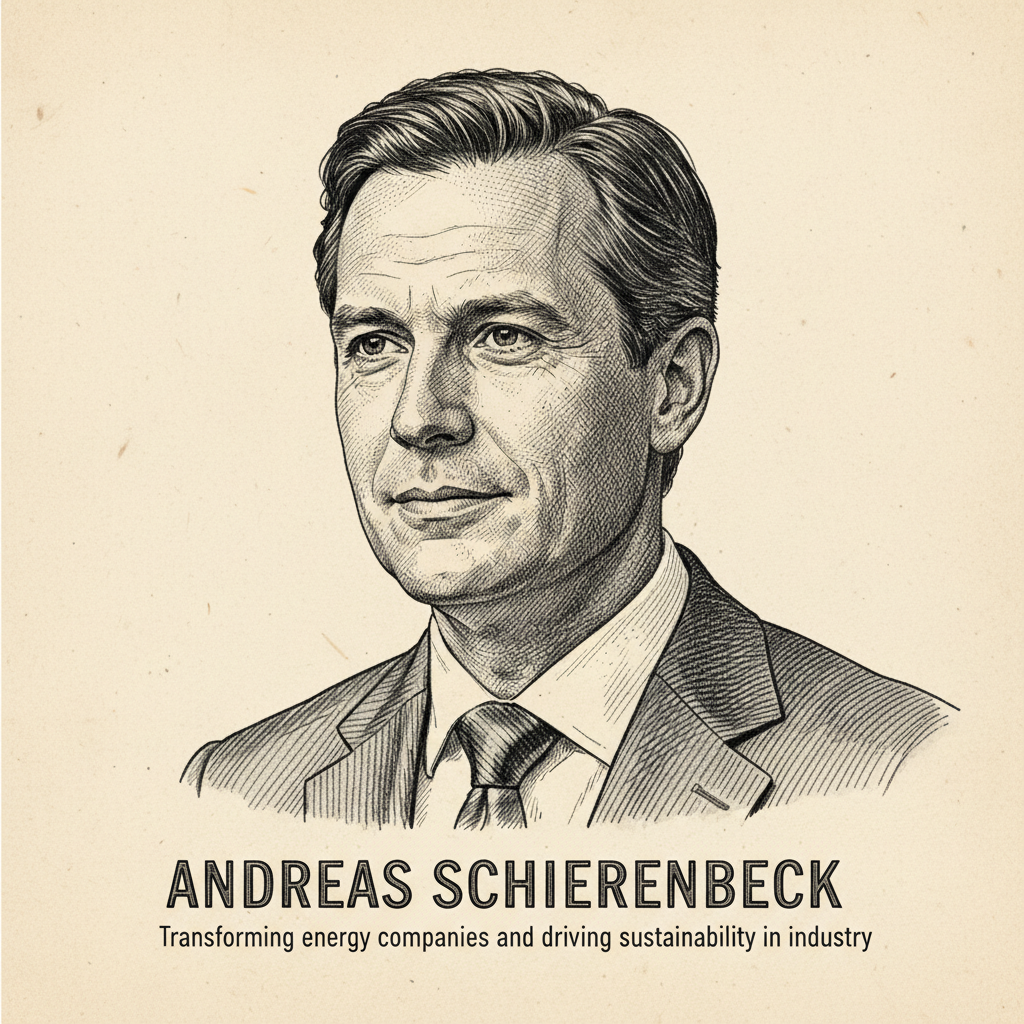
Andreas Schierenbeck
A transformational executive focused on industrial technology, energy, and mobility, known for steering complex organizations through strategic shifts and market disruptions.
Andreas Schierenbeck is a German executive with extensive experience in leading industrial and technology companies. He is recognized for his roles as CEO of thyssenkrupp Elevator AG and later Uniper SE, where he championed digital transformation, strategic restructuring, and sustainable growth initiatives.
Biography
Accomplishments
- 01Led thyssenkrupp Elevator AG as CEO (2014-2018) through a period of significant value creation, introducing predictive maintenance solution MAX, positioning the company for its eventual successful sale.
- 02Spearheaded digital transformation at thyssenkrupp Elevator, integrating IoT and AI into core service offerings, which enhanced operational efficiency and customer value.
- 03As CEO of Uniper SE (2019-2021), navigated the company through the European energy transition, initiating strategic shifts towards decarbonization and future-proof energy solutions.
- 04Successfully managed complex portfolio restructuring at Uniper, including divesting non-core assets and investing in new technologies like hydrogen and renewable energy.
- 05Held multiple international leadership roles at Siemens AG for over two decades, gaining extensive experience in building automation, drives, and mobility sectors globally.
- 06Implemented significant operational efficiency programs across various organizations, resulting in improved profitability and market competitiveness.
Lessons for Operators
Key Takeaways
Practical lessons distilled for operators, investors, C-levels, and capital allocators.
Digital Transformation as a Growth Lever
Schierenbeck's success with MAX at thyssenkrupp Elevator illustrates that digital initiatives are not merely cost-cutting measures but powerful drivers of new revenue, customer engagement, and market differentiation in established industries. Leaders should identify core service areas amenable to digital enhancement for competitive advantage.
Proactive Portfolio Rebalancing
His work at Uniper demonstrates the necessity for continuous portfolio assessment and proactive rebalancing, especially in industries facing significant external pressures like regulatory changes or technological disruption. This includes divesting declining assets and strategically investing in future-proof technologies.
The Strategic Imperative of Operational Independence
Preparing thyssenkrupp Elevator for a spin-off or sale involved creating robust, standalone operations. For large conglomerates, fostering operational independence in business units can unlock hidden value and improve their attractiveness to potential buyers or public markets.
Leadership in Transition
Schierenbeck's career shows a consistent ability to lead organizations through periods of significant change, whether it's digitalizing a traditional business or decarbonizing an energy giant. This requires strong vision, stakeholder management, and the ability to articulate a compelling future state.
Innovation in Service Models
The shift from reactive to predictive maintenance at thyssenkrupp Elevator via MAX fundamentally altered their service model. This highlights the importance of re-imagining how products and services are delivered to create recurring revenue and deepen customer relationships.
Frameworks & Principles
Named frameworks and strategic principles they popularized or embodied.
Digital-First Service Transformation
A strategic approach to re-engineer traditional service offerings by embedding digital technologies (IoT, AI, predictive analytics) to enhance efficiency, create new value, and improve customer experience, exemplified by thyssenkrupp's MAX system.
When to useApplicable for industrial service providers, manufacturers with extensive installed bases, and businesses looking to transition from break-fix models to proactive, data-driven service contracts.
Strategic Portfolio Optimization in Transition
A methodology for evaluating existing business units and assets against future market trends, regulatory landscapes, and sustainability goals. It involves divesting non-core or declining assets while strategically investing in new, growth-oriented technologies or markets.
When to useIdeal for companies in industries undergoing significant disruption (e.g., energy, automotive, manufacturing), conglomerates considering divestitures or acquisitions, and businesses aiming for decarbonization or diversification.
Conglomerate Carve-Out Preparation
A structured process for readying a business unit for independent operation, including establishing standalone financial reporting, IT systems, HR functions, and a distinct strategic identity, often in preparation for a sale or IPO.
When to useRelevant for diversified corporations considering spinning off non-core assets, private equity firms preparing portfolio companies for exit, or business units seeking greater autonomy and market valuation.
Recent Appearances
Latest interviews, keynotes, and press from the past half year.
 youtube.com
 youtube.com
 youtube.com
 youtube.com
 youtube.com
 youtube.com
 youtube.com
 youtube.com
 youtube.com
 youtube.com
 youtube.com
 youtube.com
 youtube.com
 youtube.com
 youtube.com
 youtube.com
 youtube.com
 youtube.com
 youtube.com
 youtube.com
 youtube.com
 youtube.com
 youtube.com
 youtube.com
 youtube.com
 youtube.com
 youtube.com
 youtube.com
 youtube.com
 youtube.com
 youtube.com
 youtube.com
 youtube.com
 youtube.com
 youtube.com
 youtube.com
 youtube.com
 youtube.com
 youtube.com
 youtube.com
 youtube.com
 youtube.com
 m.youtube.com
 youtube.com
 youtube.com
 youtube.com
 youtube.com
 youtube.com
 youtube.com
 youtube.com
 youtube.comyoutube.com
 youtube.com
 youtube.com
 youtube.com
 youtube.com
 youtube.com
 youtube.com
 youtube.com
 youtube.com
Explore Related Titans
Other figures in the archive who share Andreas Schierenbeck's domain, geography, or era.
More in Technology








From Germany



Contemporaries — born 1960s