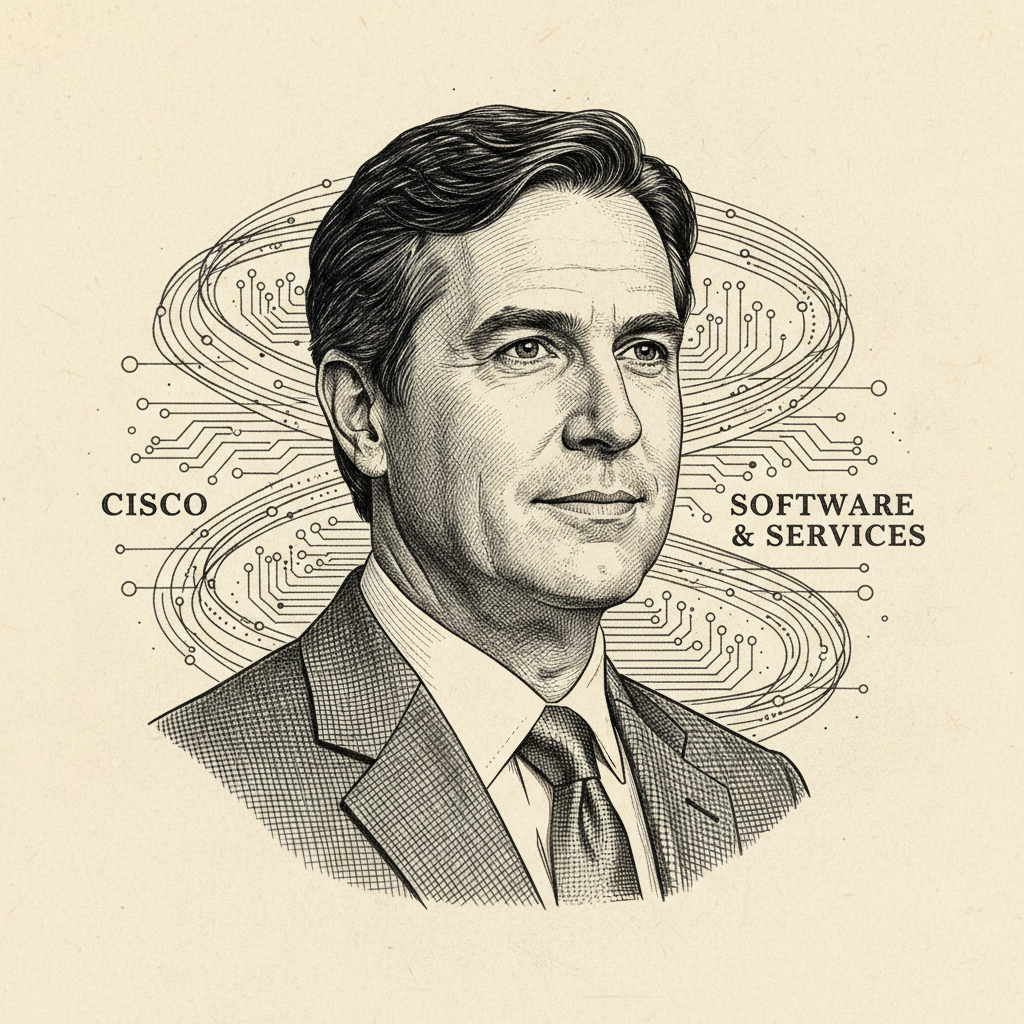
Todd McKinnon
Co-founder and CEO of Okta, a leader in identity and access management, pioneering the shift to cloud-based identity solutions for enterprises.
Todd McKinnon is the co-founder and CEO of Okta, Inc. (NASDAQ: OKTA), a leading independent provider of identity for the enterprise. Prior to founding Okta in 2009 with Frederic Kerrest, McKinnon held significant leadership roles at Salesforce, including Senior Vice President of Development. His vision for a cloud-native identity platform addressed a critical security and operational need for businesses transitioning to cloud applications, leading Okta to a successful IPO in 2017 and establishing it as a dominant player in the identity and access management (IAM) space.
Biography
Accomplishments
- 01Co-founded Okta in 2009, addressing a critical need for cloud-native identity and access management.
- 02Led Okta through a successful Initial Public Offering (IPO) on the NASDAQ in April 2017, raising approximately $187 million.
- 03Grew Okta to become a market leader in Identity and Access Management (IAM), serving over 18,000 customers globally by 2023.
- 04Architected Okta's product strategy to be an independent, neutral identity layer, integrating with thousands of applications and infrastructure providers.
- 05Successfully navigated Okta's acquisition of Auth0 in 2021 for approximately $6.5 billion, significantly expanding its customer identity capabilities.
- 06Cultivated a strong corporate culture recognized for innovation, customer focus, and employee engagement.
- 07Achieved consistent revenue growth, reaching over $1.6 billion in fiscal year 2024, demonstrating strong market penetration and retention.
- 08Played a pivotal role in popularizing and productizing the concept of 'Zero Trust' security by providing foundational identity infrastructure.
Lessons for Operators
Key Takeaways
Practical lessons distilled for operators, investors, C-levels, and capital allocators.
Anticipate Platform Shifts
McKinnon foresaw the complete re-architecture of enterprise IT towards cloud-native applications. Entrepreneurs and investors should identify analogous fundamental shifts (e.g., AI integration, Web3, quantum computing) and build enabling infrastructure rather than just applications atop existing paradigms.
Build 'Picks and Shovels' for a Gold Rush
As more companies moved to the cloud, identity became a universal problem. Okta provided the 'picks and shovels' (identity infrastructure) for this migration. Seek opportunities to provide essential, underlying services that become mission-critical as an industry evolves.
Strategic Independence Drives Trust
Okta's commitment to being a neutral, independent identity platform was a powerful differentiator. For any platform or infrastructure business, maintaining neutrality and interoperability can build trust and unlock broader adoption, especially in competitive ecosystems.
Leverage M&A for Market Expansion
The Auth0 acquisition was not just about scale but about expanding into an adjacent, high-growth segment (CIAM). C-levels should evaluate acquisitions not just for consolidation but for strategic market expansion that leverages existing core competencies.
Cultural Alignment is Key to Growth
McKinnon actively shaped Okta's culture, which supported its rapid scaling. Leaders must define and nurture a culture that aligns with business objectives, as it impacts everything from innovation to customer satisfaction and talent retention.
Customer-Centric Product Development
Okta's success is deeply tied to solving real, complex customer problems. Product teams should be deeply embedded with customers to understand pain points, ensuring solutions are not just innovative but also highly practical and impactful.
The Power of Recurring Revenue (SaaS Model)
Okta's SaaS model provided predictable, scalable revenue streams, attractive to investors. For new ventures, assess how a recurring revenue model can be built or integrated to enhance long-term valuation and stability.
Identity as the New Security Perimeter
McKinnon championed the idea that identity is the new security perimeter, shifting focus from network-centric security. Enterprise leaders must continually re-evaluate outdated paradigms and adapt security strategies to modern infrastructure and threat landscapes.
Frameworks & Principles
Named frameworks and strategic principles they popularized or embodied.
Cloud-Native Identity
A paradigm shift from traditional on-premise identity systems to cloud-based, multi-tenant solutions designed for distributed, hybrid, and multi-cloud environments. It emphasizes API-first design, scalability, and seamless integration with SaaS applications.
When to useApplicable when architecting any new identity system or migrating existing infrastructure to support cloud-first strategies, hybrid workforces, or distributed application landscapes. Essential for securing access across diverse cloud services and SaaS products.
Zero Trust Security Model
A security concept centered on the belief that organizations should not automatically trust anything inside or outside their network perimeters. Every access request is authenticated, authorized, and continuously validated based on context, identity, and device posture.
When to useAdopt when designing enterprise security architecture in a world without traditional network perimeters. Crucial for protecting sensitive data, securing remote workforces, and mitigating risks from increasingly sophisticated cyber threats.
Independent Identity Layer
The strategic positioning of an identity provider as a neutral, vendor-agnostic service that connects users to all applications and services, regardless of underlying cloud or on-premise infrastructure. It avoids vendor lock-in and provides a unified control plane.
When to useEmploy when enterprise IT environments are complex, involving multiple cloud providers, various SaaS applications, and custom on-premise systems. Ideal for organizations seeking maximum flexibility, interoperability, and simplified identity management across a heterogeneous estate.
Recent Appearances
Latest interviews, keynotes, and press from the past half year.
 youtube.com
 youtube.com
 youtube.com
 youtube.com
 youtube.com
 youtube.com
 youtube.com
 youtube.com
 youtube.com
 youtube.com
 youtube.com
 youtube.com
 youtube.com
 youtube.com
 youtube.com
 youtube.com
 youtube.com
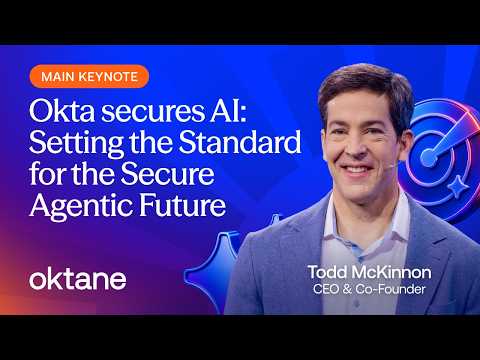 youtube.com
 youtube.com
 youtube.com
 youtube.com
 youtube.com
 youtube.com
 youtube.com
 youtube.com
 youtube.com
 youtube.com
 youtube.com
Explore Related Titans
Other figures in the archive who share Todd McKinnon's domain, geography, or era.
More in Technology










From United States




Contemporaries — born 1960s