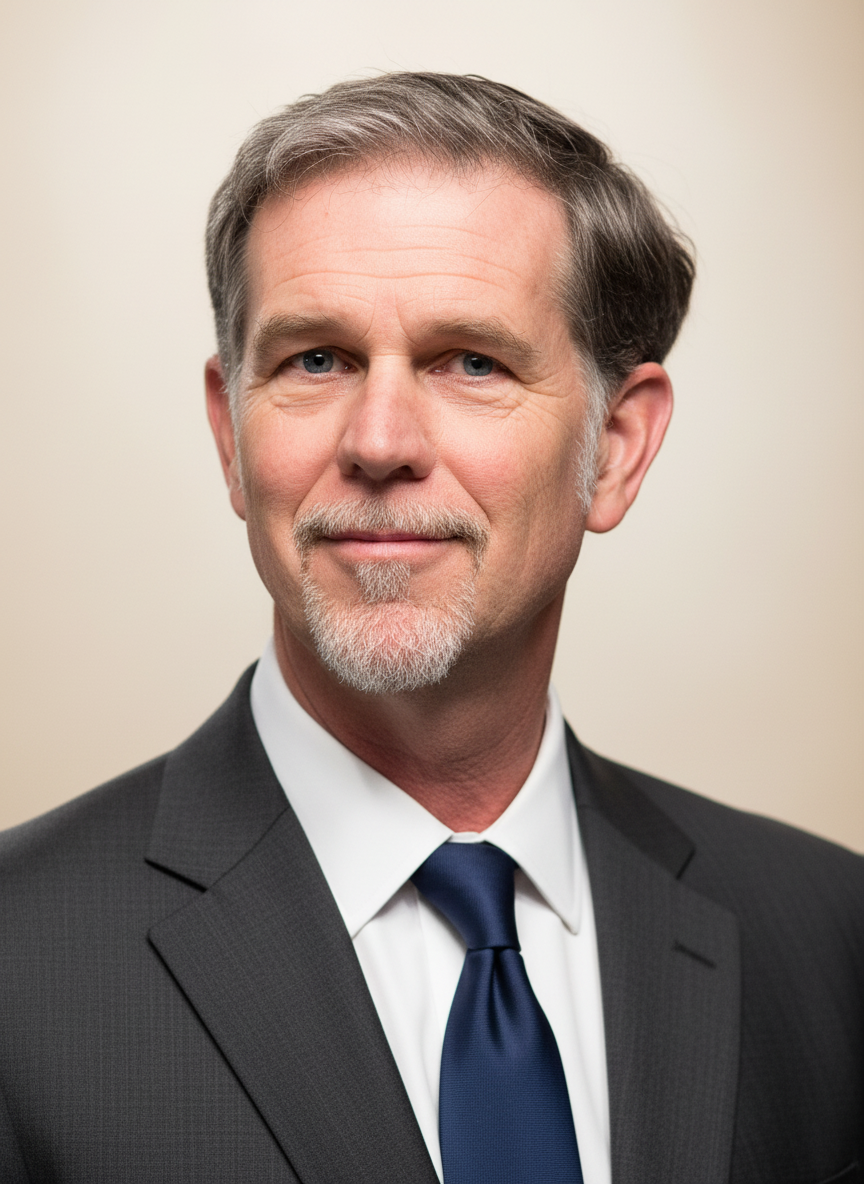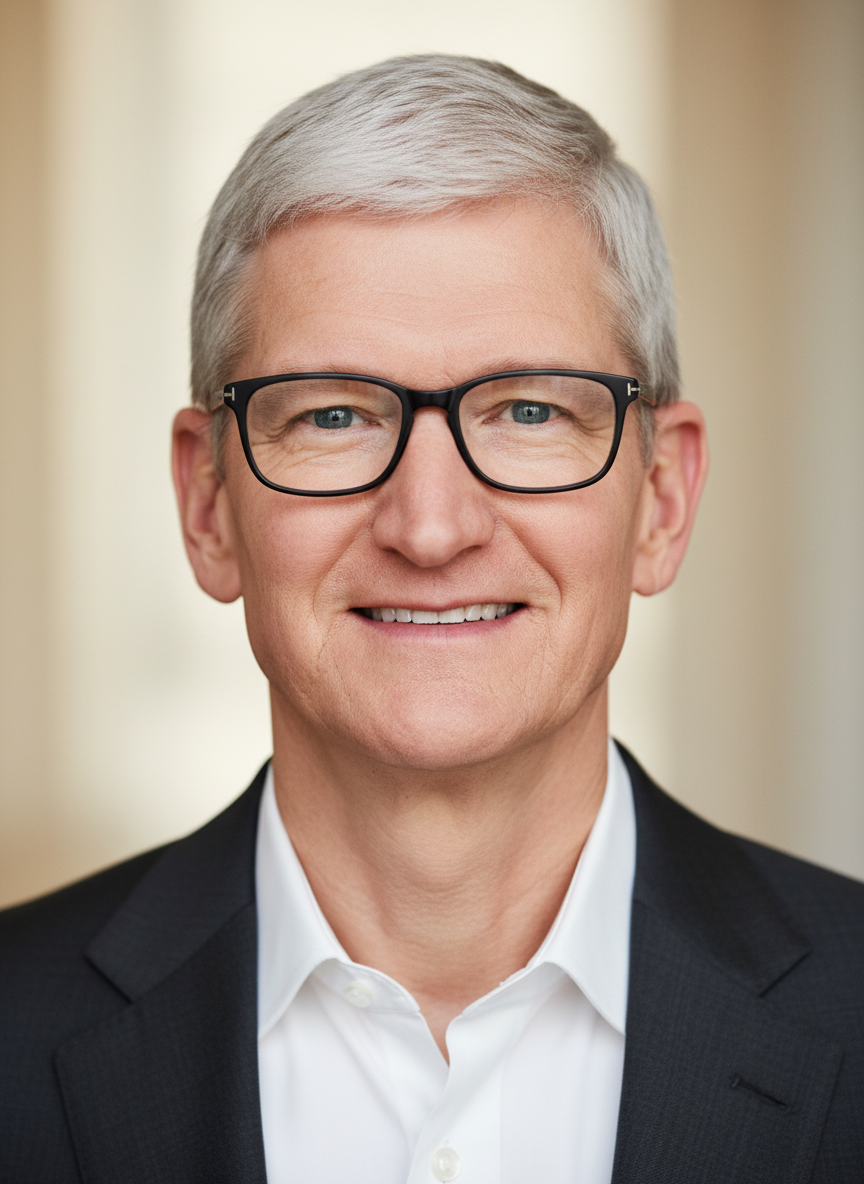
Tim Cook
The operational master who steered Apple's growth into the world's most valuable company and orchestrated a smooth leadership transition.
Timothy Donald Cook, an American business executive, joined Apple Inc. in 1998, rising to COO under Steve Jobs. He became CEO in 2011, leading Apple to unprecedented financial and market growth, culminating in its status as one of the world's most valuable companies. Cook transitioned to Executive Chairman in September 2026, overseeing the succession to John Ternus as CEO.
Biography
Accomplishments
- 01Successfully transitioned Apple's leadership after Steve Jobs' departure in 2011, maintaining and accelerating the company's innovation and growth trajectory.
- 02Grew Apple's market capitalization to become the world's most valuable company, consistently achieving record revenues and profits, with US$416 billion in revenue by 2025.
- 03Diversified Apple's revenue streams through the significant expansion of its Services division, including Apple Music, Apple Pay, and Apple TV+, reducing reliance on hardware sales.
- 04Launched successful new product categories and generations, including the Apple Watch, AirPods, and sustained iPhone innovation, expanding Apple's ecosystem.
- 05Oversaw the strategic and successful CEO succession plan, transitioning to Executive Chairman in September 2026 and installing John Ternus as the new CEO.
- 06Championed corporate social responsibility, including significant investments in renewable energy, supplier responsibility, and user privacy, enhancing Apple's brand reputation.
Lessons for Operators
Key Takeaways
Practical lessons distilled for operators, investors, C-levels, and capital allocators.
The Power of Operational Leadership
Cook's ascent demonstrates that deep operational expertise and supply chain mastery can be as pivotal to a company's success as product vision. His ability to optimize Apple's global operations was critical for its unprecedented growth.
Stewardship Beyond Innovation
While innovation remained central, Cook proved that effective stewardship – managing growth, diversifying revenue, and upholding corporate values – is essential for transforming a revolutionary company into a sustainable, dominant global entity.
Strategic Evolution of Business Models
Apple under Cook successfully evolved its business model by significantly scaling its services division. This demonstrated the importance of adapting revenue strategies to market shifts and building recurring income streams.
Deliberate Succession as a Strategic Imperative
Cook's planned transition from CEO to Executive Chairman and the naming of a successor highlights that leadership continuity is a critical strategic act, ensuring stability and future direction for a multinational corporation.
The Modern CEO's Broader Mandate
Cook's emphasis on privacy, environmental sustainability, and ethical supply chains shows that modern CEOs must manage not just financial performance, but also a company's societal impact and brand reputation.
Frameworks & Principles
Named frameworks and strategic principles they popularized or embodied.
Supply Chain Optimization
A systematic approach to streamlining the entire process of getting a product from raw materials to the customer, focusing on efficiency, cost reduction, and resilience. Cook excelled at this, reducing Apple's inventory significantly.
When to useApplicable for any business dealing with physical products, to reduce costs, improve delivery times, minimize waste, and enhance customer satisfaction.
Ecosystem Strategy
Developing a set of interconnected products and services that mutually reinforce each other, creating a 'sticky' environment for users and fostering strong brand loyalty. Apple's integration of hardware, software, and services is a prime example.
When to useUseful for companies looking to increase customer retention, cross-sell products, and create barriers to entry for competitors by offering comprehensive solutions.
Services-Led Growth
A business strategy focused on expanding revenue streams through subscription-based services, software, and recurring revenue models, often complementing existing hardware or product sales.
When to useIdeal for businesses with an existing customer base where additional value can be provided through ongoing services, enhancing customer lifetime value.
Stakeholder Capitalism (ESG Integration)
A management philosophy where a company focuses on meeting the needs of all its stakeholders – not just shareholders – including employees, customers, suppliers, communities, and the environment. Cook championed this through Apple's privacy and environmental initiatives.
When to useEssential for modern businesses aiming for long-term sustainability, brand trust, and positive societal impact, particularly relevant in highly visible global corporations.
Recent Appearances
Latest interviews, keynotes, and press from the past half year.
 youtube.com
 youtube.com
 youtube.com
 youtube.com
 youtube.com
 youtube.com
 youtube.com
 youtube.com
 youtube.com
 youtube.com
 youtube.com
 youtube.com
 youtube.com
 youtube.com
 youtube.com
 youtube.com
 youtube.com
 youtube.com
 youtube.com
 youtube.com
 youtube.com
 youtube.com
 m.youtube.com
 youtube.com
 youtube.com
 youtube.com
 youtube.com
 youtube.com
 youtube.com
 youtube.com
 youtube.com
 youtube.com
 youtube.com
 youtube.com
 youtube.com
 youtube.com
 youtube.com
 youtube.com
 youtube.com
 youtube.com
 youtube.com
 youtube.com
 youtube.com
 youtube.com
Sources & Further Reading
Profiles, interviews, podcasts, and articles used to compile and verify this entry. Each link opens at the original publisher.
Explore Related Titans
Other figures in the archive who share Tim Cook's domain, geography, or era.
More in Technology




From United States

Contemporaries — born 1960s