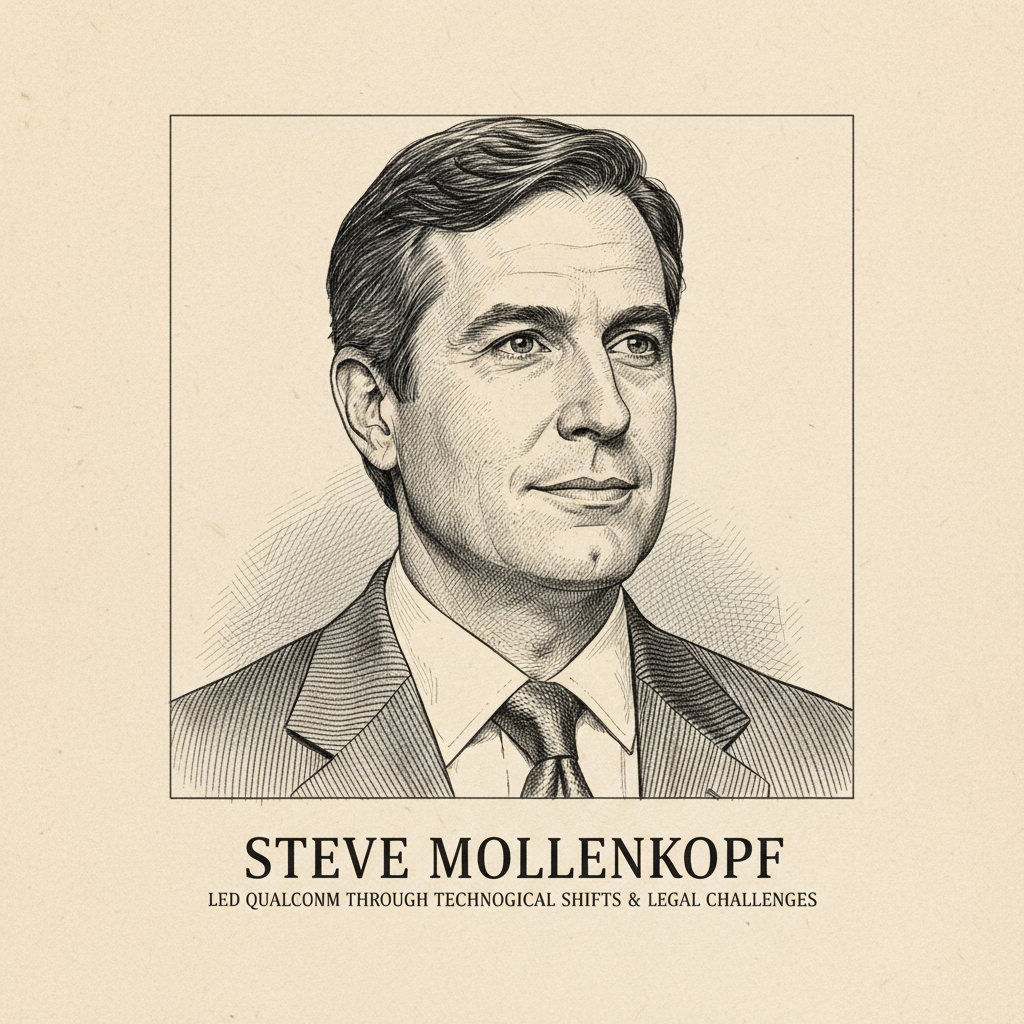
Steve Mollenkopf
Steve Mollenkopf: Architect of Qualcomm's 5G Era and Diversification Strategy.
Steven Mollenkopf served as CEO of Qualcomm Inc. from 2014 to 2021, leading the company through a period of significant technological transition, diversification, and intense intellectual property and antitrust challenges. He was instrumental in positioning Qualcomm at the forefront of 5G development and expanding its addressable markets.
Biography
Accomplishments
- 01Led Qualcomm's strategic shift to prioritize 5G technology, securing a dominant market position evidenced by significant patent licensing and chipset design wins beginning in 2018.
- 02Successfully diversified Qualcomm's business beyond the core smartphone market, expanding into automotive (e.g., Qualcomm Snapdragon Digital Chassis), IoT, and RF front-end solutions, growing these revenue streams substantially under his leadership.
- 03Navigated and ultimately settled complex global antitrust disputes and intellectual property litigation with Apple (April 2019), securing a multi-year licensing agreement and supply commitment.
- 04Successfully defended Qualcomm against Broadcom's $117 billion hostile takeover bid in 2018, preserving the company's independence and strategic direction.
- 05Orchestrated significant acquisitions that bolstered Qualcomm's portfolio, such as the NXP Semiconductors bid (though later terminated) and smaller, targeted technology acquisitions.
- 06Maintained and grew Qualcomm's intellectual property licensing business despite regulatory pressures, ensuring continued revenue generation from its extensive patent portfolio.
Lessons for Operators
Key Takeaways
Practical lessons distilled for operators, investors, C-levels, and capital allocators.
Proactive Industrial Foresight
Mollenkopf's early and aggressive pivot towards 5G development years before its commercialization is a case study in anticipatory strategy. Invest resources heavily in nascent technologies with clear future trajectories to establish an insurmountable lead.
Portfolio De-concentration
Over-reliance on a single product or market segment creates systemic risk. Qualcomm's expansion into automotive and IoT under Mollenkopf demonstrates the strategic imperative of diversifying revenue streams to build resilience and unlock new growth vectors.
Intellectual Property as Strategic Weapon
For technology companies, IP is not just a legal asset but a core business model differentiator. Mollenkopf's staunch defense of Qualcomm's licensing model, even amidst intense regulatory scrutiny and large-scale litigation, underscores its strategic and financial importance.
Leadership Under Fire
Periods of intense external pressure (hostile takeovers, major lawsuits) test executive leadership. Maintaining board cohesion, investor confidence, and a clear strategic message during such crises is critical to corporate survival and success.
Ecosystem Control via Integration
Qualcomm's ability to offer a comprehensive solution – from modem technology to application processors and IP licensing – gives it significant control over the mobile ecosystem. This integrated approach creates high switching costs and robust competitive moats.
Frameworks & Principles
Named frameworks and strategic principles they popularized or embodied.
Platform Strategy (as applied to 5G)
Qualcomm developed 5G as a foundational platform technology, creating chipsets, software, and intellectual property that became essential for virtually all major mobile device manufacturers and network operators. This enabled them to capture value across the entire ecosystem.
When to useApplicable when a company can establish a common technological standard or core component that becomes indispensable for a broad range of products or services in an emerging market.
Litigation as Competitive Strategy
Mollenkopf demonstrated that legal battles, particularly around intellectual property, can be a prolonged, resource-intensive extension of competitive strategy. Qualcomm used litigation to defend its licensing model and maintain market position against both customers and competitors.
When to useConsidered when core business models are threatened by IP infringement or licensing disputes, and when legal action can reinforce competitive moats or extract favorable terms from market participants.
Market Diversification (Core Competency Expansion)
This framework involves leveraging existing technological strengths and R&D investments to enter adjacent, high-growth markets. Qualcomm's move from smartphones into automotive and IoT leveraged its wireless communication and processing power expertise.
When to useAppropriate for companies seeking to de-risk concentration from a dominant market, looking for new growth vectors, or when core technologies have broader applicability than their current use cases.
Recent Appearances
Latest interviews, keynotes, and press from the past half year.



Explore Related Titans
Other figures in the archive who share Steve Mollenkopf's domain, geography, or era.
More in Technology










From United States




Contemporaries — born 1960s