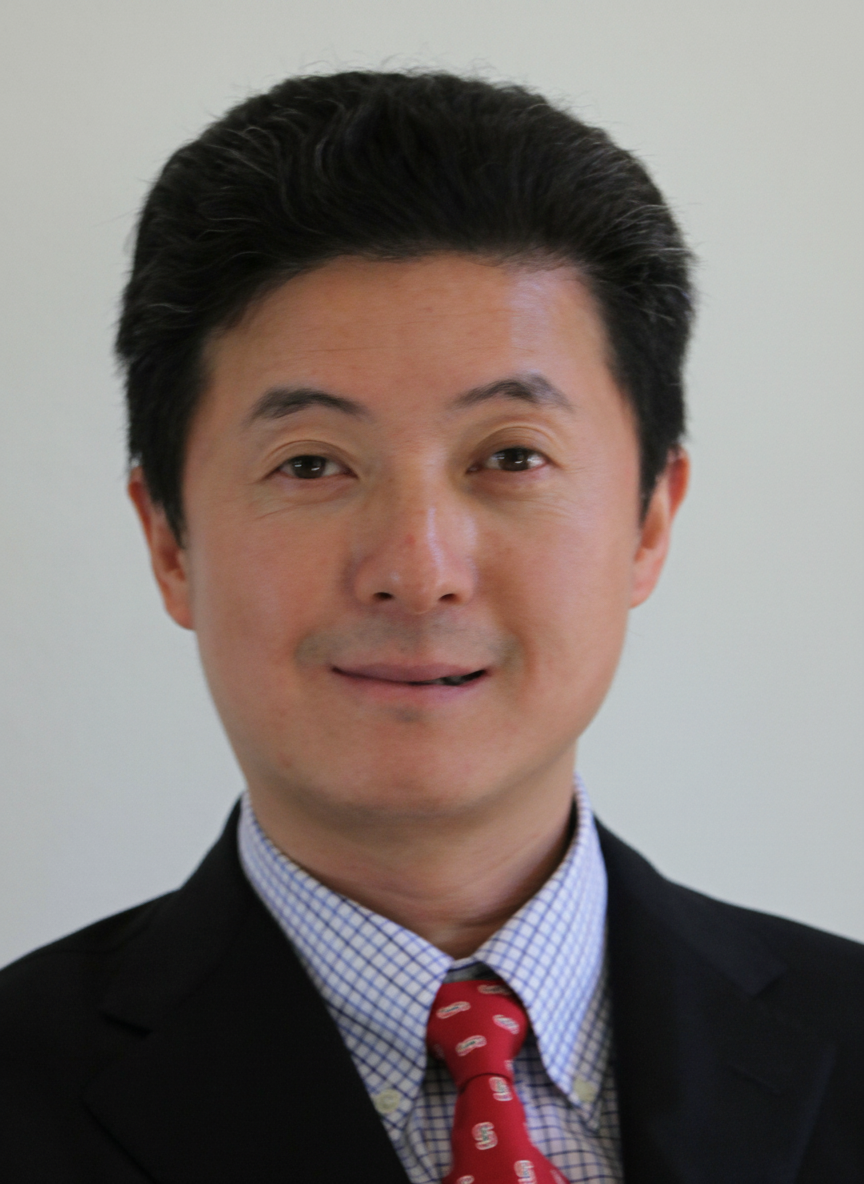
Shou-cheng Zhang
A visionary physicist who bridged fundamental research with entrepreneurial application, shaping quantum computing and topological insulators.
Shou-Cheng Zhang was a prominent theoretical physicist, professor at Stanford University, and a successful venture capitalist. His groundbreaking research on topological insulators and the quantum spin Hall effect laid foundational work for quantum computing and spintronics. He also seamlessly transitioned into venture capital, founding Danhua Capital (DHVC) and investing in deep tech startups, demonstrating an exceptional ability to translate scientific discovery into commercial innovation.
Biography
Accomplishments
- 01Predicted the quantum spin Hall effect in 2D systems, laying the theoretical groundwork for topological insulators in 2006, which was experimentally confirmed in 2007.
- 02Founded Danhua Capital (DHVC) in 2013, a prominent Silicon Valley VC firm that raised over $800 million across multiple funds, investing in over 100 deep tech startups.
- 03Identified and invested early in key AI and blockchain companies through DHVC, demonstrating foresight in emerging technological paradigms.
- 04Received numerous prestigious awards, including the Europhysics Prize (2010), the Buckley Prize (2017), and the Dirac Medal (2017), for his contributions to condensed matter physics.
- 05Held the J.G. Jackson and C.J. Wood Professor of Physics Chair at Stanford University, publishing over 300 papers with over 50,000 citations.
- 06Pioneered the concept of 'chiral anomaly' in condensed matter physics, linking high-energy physics phenomena to solid-state systems.
Lessons for Operators
Key Takeaways
Practical lessons distilled for operators, investors, C-levels, and capital allocators.
Deep Tech as a Commercial Lever
Fundamental scientific discoveries, even those appearing abstract, can unlock immense commercial value over time. Investors and operators should actively scout and fund research that pushes the boundaries of physics, material science, and computer science, as these are the bedrock for future industries like quantum computing, advanced AI, and novel materials. Actionable: Allocate a portion of innovation budgets to 'blue sky' research or early-stage deep tech ventures, even if the payback period is longer than typical.
The Academic-Venture Bridge
Professors and researchers with deep domain expertise can be invaluable assets in venture capital, providing critical insights into the feasibility and potential of nascent technologies. Venture firms should actively recruit or partner with leading academics to enhance their due diligence in technically complex sectors. Actionable: Establish formal advisory boards with leading scientists or create 'venture partner' roles for distinguished academics to co-invest and advise on deep tech deals.
Patience in Pioneering Investments
Investments in foundational technologies often require a longer horizon than typical software investments. The pathway from basic science (like topological insulators) to commercial products (like a topological quantum computer) can span decades. Successful deep tech investors must possess strategic patience. Actionable: Differentiate investment timelines and expected returns for deep tech vs. application-layer tech. Structure funds or investment tranches specifically for long-term, high-risk, high-reward scientific endeavors.
The Power of Interdisciplinary Vision
Zhang's career exemplified the power of connecting disparate fields—theoretical physics, computer science, and finance. His ability to foresee the commercial implications of quantum mechanics for computing or blockchain for data security was unique. Operators and leaders should foster environments that encourage interdisciplinary thinking and collaboration. Actionable: Implement internal hackathons, cross-departmental innovation labs, or 'intrapreneurship' programs that bring together diverse skill sets to tackle grand challenges and explore unconventional solutions.
Founder Scientific Credibility
When evaluating deep tech startups, the scientific credibility and academic rigor of the founding team are paramount. Zhang's approach emphasized backing founders who were not just entrepreneurs but also deep experts and often pioneers in their respective scientific fields. Actionable: Prioritize due diligence on the scientific pedigree of founding teams, including their publication record, peer recognition, and contributions to fundamental research, as much as their business acumen.
Frameworks & Principles
Named frameworks and strategic principles they popularized or embodied.
The Fundamental Thesis Investment Model
Focus investment on companies building upon fundamental scientific or mathematical principles that hold long-term transformative potential, irrespective of immediate market trends. This often involves technologies rooted in physics, advanced mathematics, or core computer science.
When to useWhen evaluating early-stage deep technology companies, especially those in sectors like quantum computing, biotechnology, new materials, or advanced AI infrastructure. Applicable for ventures with long R&D cycles but potentially exponential impact.
Academic-Entrepreneurial Synergy
Leverage connections between leading academic institutions and venture capital to identify and nurture cutting-edge research with commercial viability. This involves active engagement with university tech transfer offices, research labs, and individual professors.
When to useFor venture capital firms seeking to gain an edge in sourcing proprietary deep tech deals. Also, for universities looking to maximize the impact and commercialization of their research output.
First-Principles Due Diligence
Evaluate the underlying scientific or technological basis of a company's claims from first principles, rather than solely relying on market comparisons or business model projections. Requires deep domain expertise and critical thinking about the core innovation.
When to useEssential for any investment or partnership in deep tech where the technology is novel, complex, or potentially disruptive. Prevents investment in 'vaporware' or scientifically unsound ventures.
Explore Related Titans
Other figures in the archive who share Shou-cheng Zhang's domain, geography, or era.
More in Technology








From China





Contemporaries — born 1960s