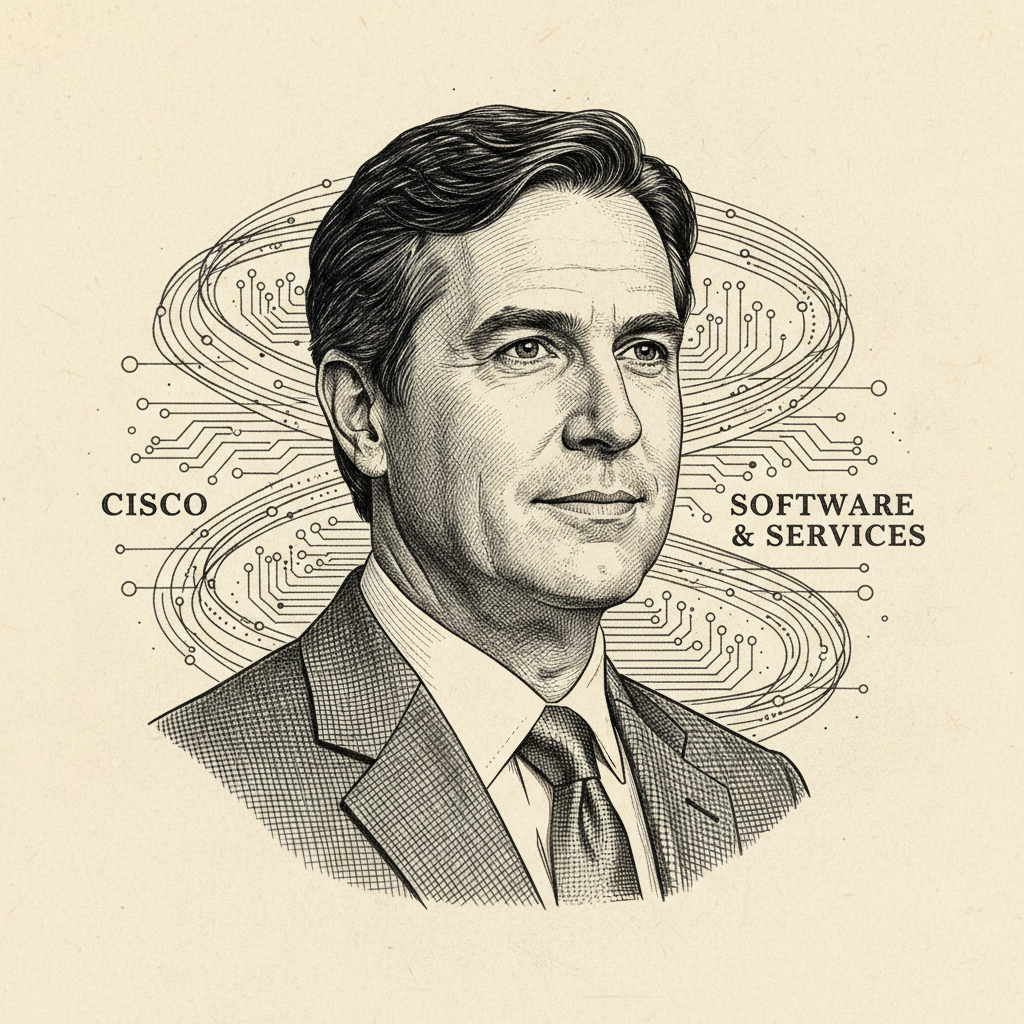
Mike Volpi
From Cisco's Enterprise Catalyst to Accel's Definitive Private Equity Investor: Mike Volpi's Strategic Imperatives in Enterprise Technology.
Mike Volpi is a distinguished venture capitalist and former corporate executive, known for his instrumental role in shaping Cisco Systems' growth strategy and his subsequent impactful career at Accel. His expertise spans enterprise software, networking, and large-scale infrastructure investments.
Biography
Accomplishments
- 01Orchestrated over 70 acquisitions at Cisco Systems, including strategic purchases like Cerent ($6.9B) and Allegro Systems ($185M), significantly expanding Cisco's product portfolio and market dominance (1994-2007).
- 02Led the Routing Technology Group at Cisco Systems as SVP/GM, managing a multi-billion dollar product line and driving innovation in core networking platforms.
- 03Successfully transitioned to venture capital, joining Accel in 2009 and establishing a strong track record with over a dozen successful exits, including IPOs of Arista Networks, Dropbox, PagerDuty, UiPath, and Cloudflare.
- 04Identified and invested in key enterprise technology companies, contributing to their growth and market leadership, demonstrating foresight in critical sectors such as cloud, AI/automation, and cybersecurity.
- 05Served on the boards of numerous impactful technology companies, guiding strategic decisions and providing operational expertise to founders and management teams.
Lessons for Operators
Key Takeaways
Practical lessons distilled for operators, investors, C-levels, and capital allocators.
Build 'Built-to-Last' Enterprise Infrastructure
Focus on investing in or building technologies that form the indispensable backbone of future enterprise operations. These are often less flashy but yield durable competitive advantages and consistent revenue streams. (e.g., Cisco's routing, Arista's switching).
Acquisition as a Growth Engine
For large, established companies, strategic M&A is not just about asset accumulation but about acquiring talent, technology, and market share to accelerate growth and fend off disruption. Develop and institutionalize an efficient integration playbook. (e.g., Cisco's 70+ acquisitions).
Validate with Real-World Problems
As an investor or founder, ensure your solution addresses a critical, non-trivial problem for enterprise customers. Volpi's success stems from backing companies that solve complex business challenges with robust technology. (e.g., PagerDuty for incident management, UiPath for process automation).
Leverage Your Network and Expertise
Transitioning from operator to investor, Volpi's executive network and deep domain knowledge provided a proprietary deal flow and informed conviction. Operators should actively cultivate their networks and expertise for future opportunities.
Patience for Enterprise Returns
Enterprise technology companies often have longer sales cycles and require sustained product development. Investors and founders must be prepared for a longer horizon to achieve significant scale and exits compared to some consumer-facing businesses.
Frameworks & Principles
Named frameworks and strategic principles they popularized or embodied.
The 'Cisco Model' for Strategic M&A
A framework for rapid, high-volume acquisition of smaller companies to integrate technology, talent, and market share, emphasizing quick integration and leveraging the acquired assets within a larger product portfolio.
When to useFor established technology companies seeking to quickly expand into new market segments, acquire critical IP, or neutralize emerging competitors. Requires a robust integration team and clear thesis for each acquisition.
Enterprise Infrastructure Investment Thesis
A structured approach to evaluating private companies based on their potential to become foundational components of the next generation of enterprise IT infrastructure. Criteria include scalability, security, mission-criticality, and high switching costs.
When to useFor venture capitalists and private equity investors seeking long-term value creation in the enterprise technology sector, particularly in areas like cloud computing, networking, cybersecurity, and data management.
Operator-to-Investor Value Creation
A model where an investor's prior operational executive experience in a specific industry provides a distinct advantage in deal sourcing, due diligence, portfolio company guidance, and ultimately, investment returns.
When to useApplicable for founders and executives considering a transition to investment roles, highlighting the importance of leveraging domain expertise and a practical understanding of company building and scaling.
Sources & Further Reading
Profiles, interviews, podcasts, and articles used to compile and verify this entry. Each link opens at the original publisher.
Explore Related Titans
Other figures in the archive who share Mike Volpi's domain, geography, or era.
More in Technology










From United States




Contemporaries — born 1960s