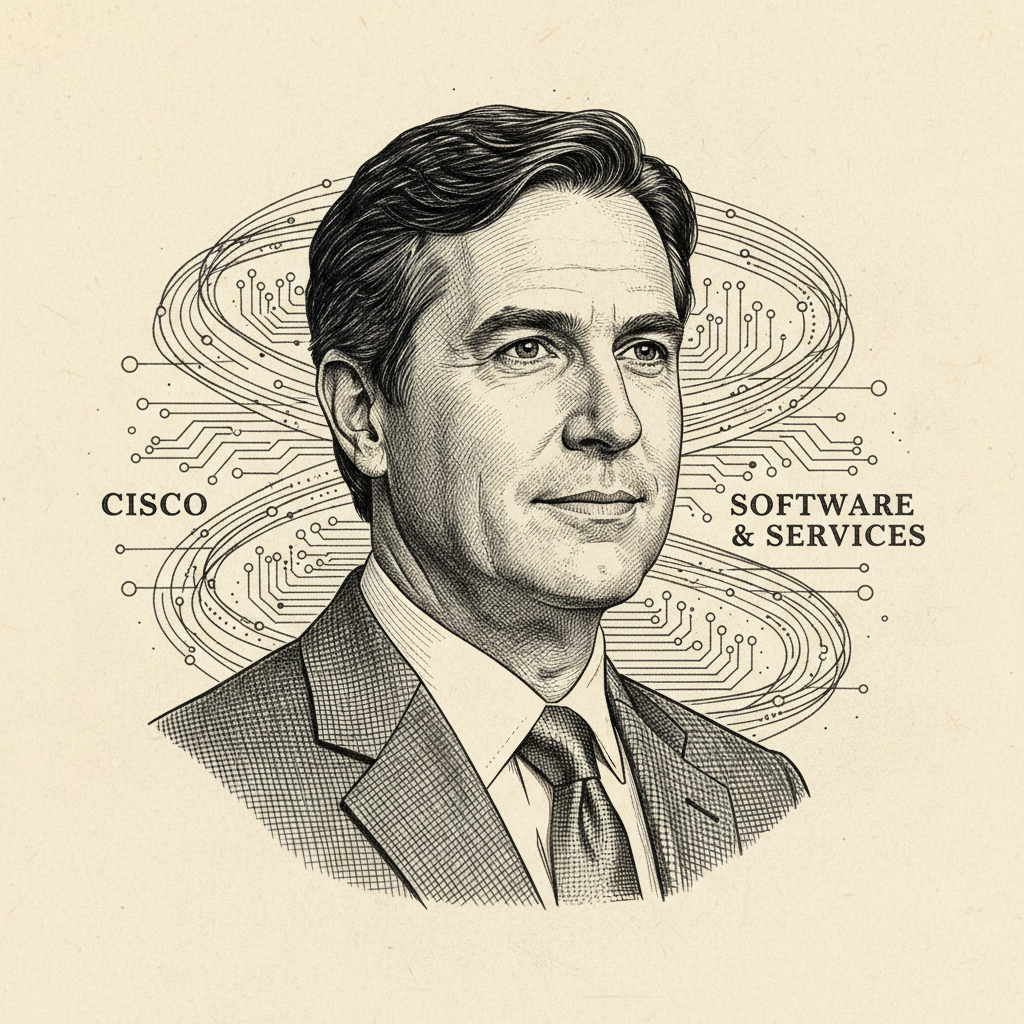
Michael S. Dell
Architect of direct sales and a relentless dealmaker, transforming PC manufacturing into a diversified IT solutions giant.
Michael S. Dell founded PC's Limited (later Dell Inc.) in 1984 while a student at the University of Texas. He pioneered the direct-to-consumer sales model for personal computers, eliminating middlemen, which allowed for lower prices and build-to-order customization. Under his leadership, Dell Inc. became the world's largest PC manufacturer by 2001. He orchestrated one of the largest technology buyouts in history, taking Dell private in 2013, only to return it to public markets through a reverse merger with VMware-tracking stock in 2018, having expanded the company significantly into enterprise IT solutions.
Biography
Accomplishments
- 01Pioneered the direct-to-consumer sales model in the personal computer industry, dramatically impacting distribution and sales strategies (1984 onwards).
- 02Led Dell Inc. to become the world's largest PC manufacturer by 2001, demonstrating unparalleled operational efficiency and supply chain management.
- 03Successfully executed one of the largest technology leveraged buyouts in history ($24.9 billion in 2013), taking Dell Inc. private to facilitate strategic transformation.
- 04Led the acquisition of EMC Corporation for $67 billion in 2016, which significantly expanded Dell's capabilities into enterprise storage, virtualization (VMware), and cybersecurity.
- 05Orchestrated Dell Technologies' return to the public markets in 2018 via a reverse merger with its VMware tracking stock, a novel approach to public listing.
- 06Transformed Dell from a primary PC vendor into a comprehensive end-to-end IT solutions provider for the enterprise market, spanning servers, storage, networking, software, and services.
Lessons for Operators
Key Takeaways
Practical lessons distilled for operators, investors, C-levels, and capital allocators.
Direct Model Superiority
Understand how eliminating intermediaries can reduce costs, improve communication, and enhance customization, thereby creating a sustainable competitive edge. Evaluate your own distribution channels for similar optimization opportunities.
Transformation via Privatization
For mature companies facing significant strategic pivots, consider the advantages of going private to escape quarterly earnings pressure and execute long-term, capital-intensive transitions without immediate public market scrutiny.
Strategic M&A for Diversification
Large-scale acquisitions, even those requiring significant debt, can be transformative if they provide access to new markets, essential technologies, and a robust talent base. Evaluate whether inorganic growth is necessary to move beyond core competencies.
Operational Excellence as Foundation
Even in an evolving tech landscape, core operational efficiency, supply chain management, and build-to-order capabilities remain critical for maintaining profitability and responsiveness, regardless of product focus.
Resilience of Founder's Vision
A founder's deep understanding of the company's ethos and long-term vision can be invaluable in navigating periods of disruption and reinvention. Cultivate and empower leadership that maintains a long-term strategic perspective.
Frameworks & Principles
Named frameworks and strategic principles they popularized or embodied.
Direct-to-Customer (D2C) Model
A business model where products or services are sold directly to consumers, bypassing traditional third-party retailers or distributors. Benefits include cost savings, direct customer relationships, and greater control over branding and customer experience.
When to useApplicable when a product's complexity allows for direct configuration or customization, or when significant cost savings can be achieved by eliminating channel partners, directly impacting price competitiveness and gross margins.
Build-to-Order (BTO) Manufacturing
A production strategy where products are manufactured only after a customer places an order, allowing for customization and reducing inventory holding costs. Often coupled with efficient supply chain management.
When to useIdeal for industries with diverse product configurations, rapidly changing technology, or high inventory costs. Requires robust supply chain integration and efficient manufacturing processes to minimize lead times.
Leveraged Buyout (LBO) for Strategic Reorientation
An acquisition strategy where a company is bought out using a significant amount of borrowed money (leverage). This method can be used to take a public company private, allowing for fundamental restructuring away from public market pressures.
When to useConsider when a public company requires substantial, long-term strategic transformation that may depress short-term earnings, or when undervalued assets can be unlocked through private ownership and operational improvements.
Tracking Stock Issuance
A type of common stock issued by a parent company that tracks the financial performance of a specific division or subsidiary, without giving direct ownership in that division. Used to unlock value or facilitate transactions.
When to useUtilizable when a parent company wishes to monetize or make public a valuable subsidiary without fully divesting it, or as a financing mechanism to return parent company shares to public markets without a traditional IPO, as Dell did with VMware.
Sources & Further Reading
Profiles, interviews, podcasts, and articles used to compile and verify this entry. Each link opens at the original publisher.
Explore Related Titans
Other figures in the archive who share Michael S. Dell's domain, geography, or era.
More in Technology









From United States




Contemporaries — born 1960s