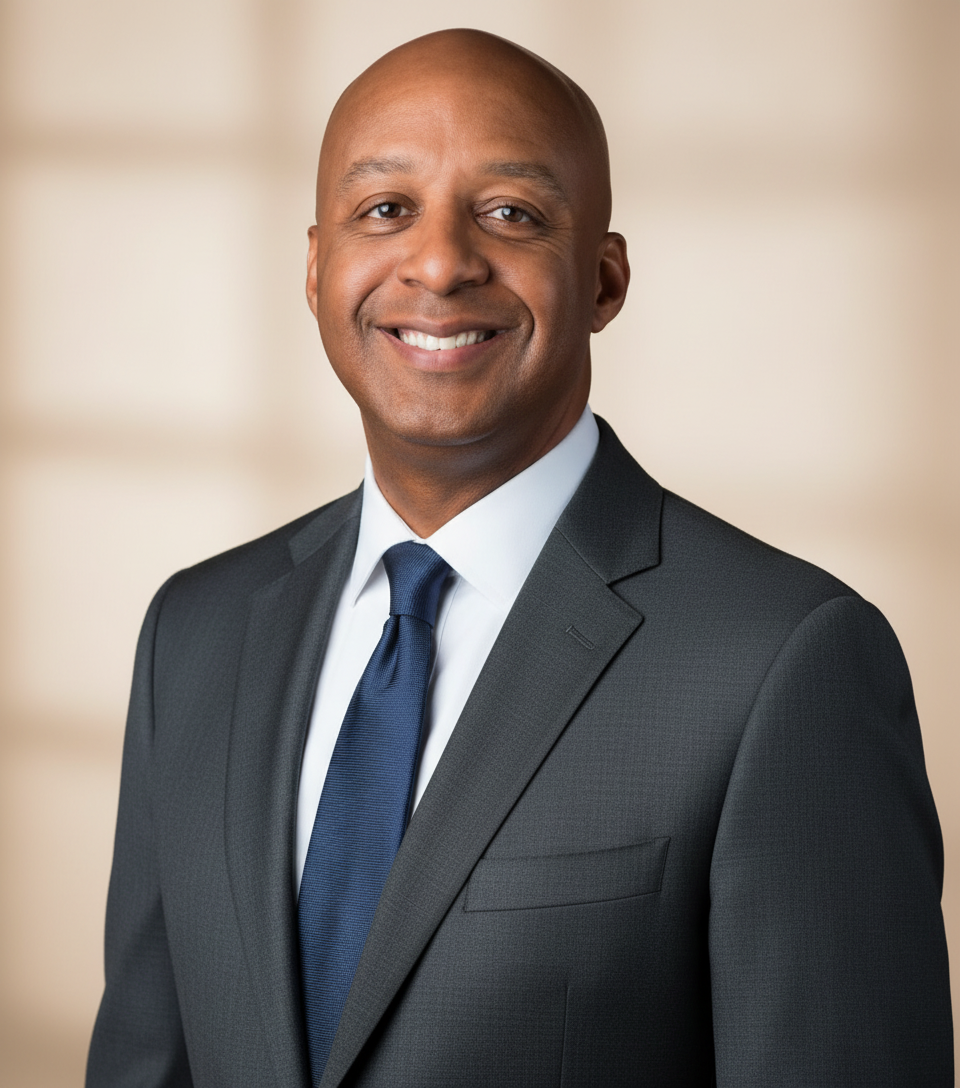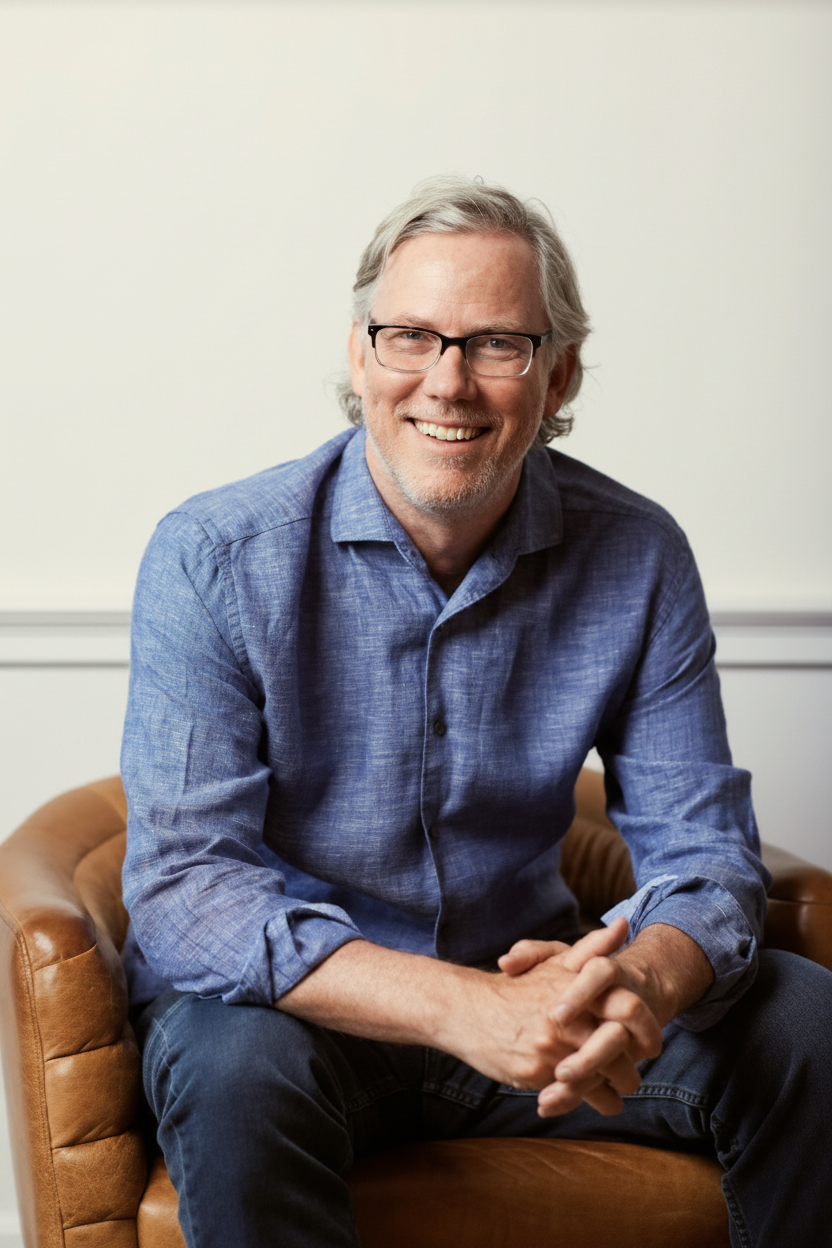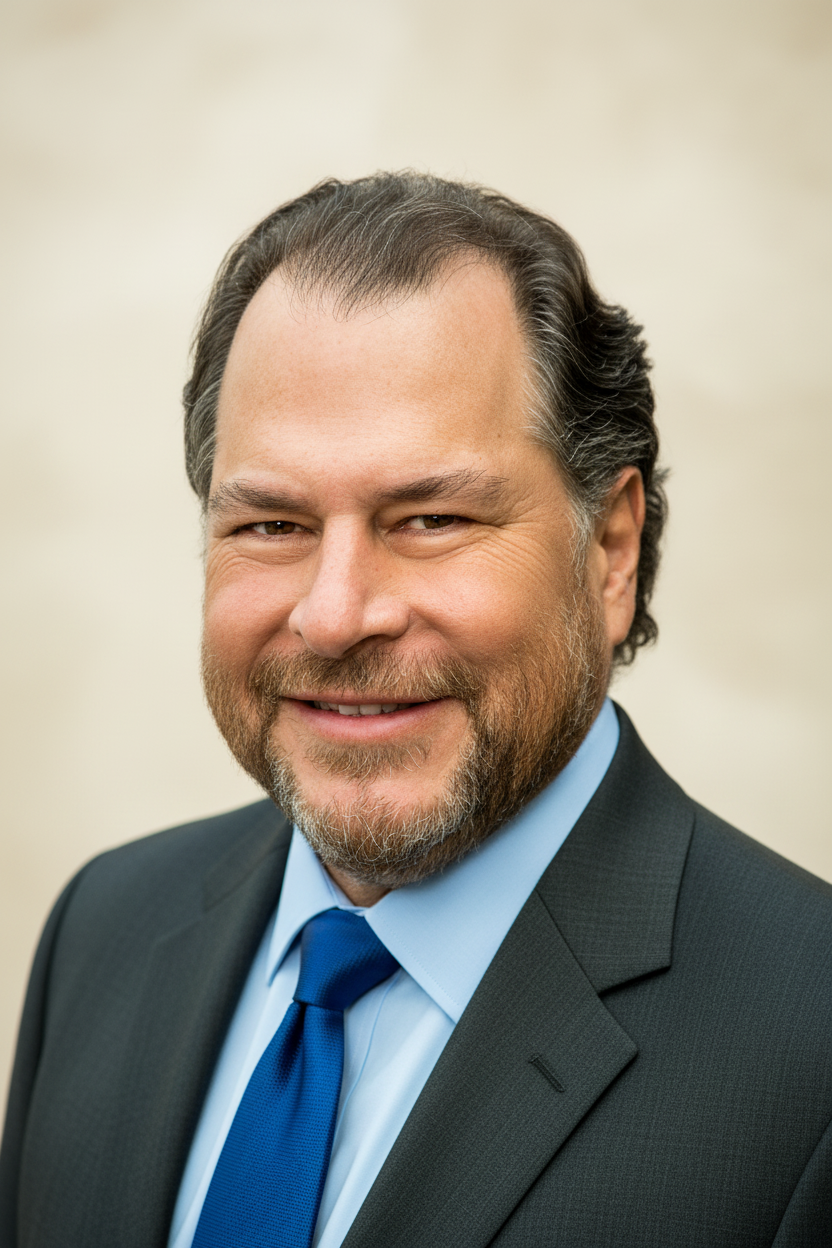
Marc Benioff
Marc Benioff: The Visionary Architect of Cloud Computing and Enterprise Philanthropy.
Marc Benioff is the co-founder, chairman, and CEO of Salesforce, a pioneer in cloud-based software. He is credited with popularizing the Software-as-a-Service (SaaS) model and establishing Salesforce as a global leader in CRM. Benioff is also a prominent philanthropist, advocating for corporate social responsibility through his '1-1-1 model' of integrated philanthropy.
Biography
Accomplishments
- 01Co-founded Salesforce in 1999, pioneering the Software-as-a-Service (SaaS) model for enterprise applications, revolutionizing how businesses consume software.
- 02Led Salesforce's growth from a startup to a multi-billion dollar global leader in CRM, with a market capitalization exceeding hundreds of billions of dollars.
- 03Championed and implemented the '1-1-1 model' of integrated philanthropy, inspiring thousands of other companies to pledge 1% of equity, product, and employee time to charitable causes.
- 04Authored and co-authored several influential books, including 'Behind the Cloud' (2009) and 'Trailblazer' (2019), sharing insights on scaling a company and corporate social responsibility.
- 05Engineered numerous strategic acquisitions, including ExactTarget, Demandware, MuleSoft, Tableau, and Slack, significantly expanding Salesforce's product portfolio and market reach.
- 06Oversaw the expansion of Salesforce into various cloud services beyond CRM, including Sales Cloud, Service Cloud, Marketing Cloud, Analytics Cloud, and the AppExchange platform.
- 07Became a leading voice for ethical technology, data privacy, and corporate responsibility, advocating for business as a platform for change.
Lessons for Operators
Key Takeaways
Practical lessons distilled for operators, investors, C-levels, and capital allocators.
Disruption by Design
Benioff didn't just adapt to the cloud; he built a company specifically to leverage it. This proactive disruption, rather than reactive adaptation, allowed Salesforce to define the new market standard for enterprise software delivery.
The Power of the 1-1-1 Model
Salesforce's integrated philanthropic model demonstrates that businesses can achieve massive commercial success while simultaneously being powerful platforms for social good. This enhances brand reputation, employee engagement, and customer loyalty.
Customer-Centric Innovation
Salesforce's success stems from its relentless focus on customer success and a 'no software' philosophy that made complex enterprise solutions accessible and flexible. This approach built enduring customer relationships and high retention rates.
Strategic Ecosystem Building
Through platforms like AppExchange and numerous key acquisitions, Benioff cultivated an ecosystem that extended Salesforce's reach and cemented its position as a central hub for business operations, showcasing the value of network effects.
Visionary Storytelling and Brand Building
Benioff consistently communicates a compelling vision for Salesforce's role in the world, not just as a software vendor but as a partner in digital transformation and a force for positive change, attracting top talent and customers.
The CEO as an Activist
Benioff uses his platform as CEO to advocate for broader societal issues, from LGBTQ+ rights to ethical AI, demonstrating that corporate leadership extends beyond quarterly earnings and can drive meaningful social discourse and change.
Frameworks & Principles
Named frameworks and strategic principles they popularized or embodied.
The 1-1-1 Model
A philanthropic model where companies pledge 1% of equity, 1% of product, and 1% of employee time to charitable causes. It integrates philanthropy directly into the business model rather than treating it as an afterthought.
When to useAdopt this model early in a company's lifecycle or integrate it as a foundational principle when scaling, to embed corporate social responsibility into the organizational DNA and foster a culture of giving back. Useful for startups and established companies seeking to formalize and amplify their social impact.
Cloud-First/SaaS Business Model
Delivering software applications over the internet as a service, on a subscription basis, rather than as a traditionally installed product. This shifts the focus from one-time sales to recurring revenue and continuous customer value.
When to useApplicable for any software or digital service company considering its delivery model. Ideal for new ventures seeking agility, scalability, and predictable revenue streams, or for existing companies looking to modernize their offerings and reduce customer friction related to maintenance and upgrades.
Ecosystem/Platform Strategy
Building a core product that acts as a platform, enabling third-party developers, partners, and customers to build complementary applications, integrations, and services on top of it, creating network effects and expanding overall utility.
When to useEmploy when your core product has robust APIs and can serve as a foundation for broader innovation. This is effective for companies seeking to scale beyond their internal development capacity, increase stickiness, and create a wider value proposition for users by leveraging external contributions.
V2MOM (Vision, Values, Methods, Obstacles, Measures)
A strategic planning and execution framework developed at Salesforce. It helps align an entire organization around a clear vision (what you want to achieve), shared values (what's important), specific methods (how you'll get it done), anticipated obstacles (what might stand in the way), and measurable results (how you'll know you succeeded).
When to useUtilize for annual or quarterly strategic planning sessions across all organizational levels. It's particularly effective for rapidly growing companies or those undergoing significant change, needing to ensure strong alignment from top-level leadership down to individual contributors on goals and execution.
Recent Appearances
Latest interviews, keynotes, and press from the past half year.
 youtube.com
 youtube.com
 youtube.comyoutube.com
 youtube.com
 youtube.com
 youtube.com
 youtube.com
 youtube.com
 youtube.com
 youtube.com
 youtube.com
 youtube.com
 youtube.com
 youtube.com
 youtube.com
 youtube.com
 youtube.com
 youtube.com
 youtube.com
 youtube.com
 youtube.com
 youtube.com
 youtube.com
 youtube.com
 youtube.com
Sources & Further Reading
Profiles, interviews, podcasts, and articles used to compile and verify this entry. Each link opens at the original publisher.
Explore Related Titans
Other figures in the archive who share Marc Benioff's domain, geography, or era.
More in Technology






From United States

Contemporaries — born 1960s