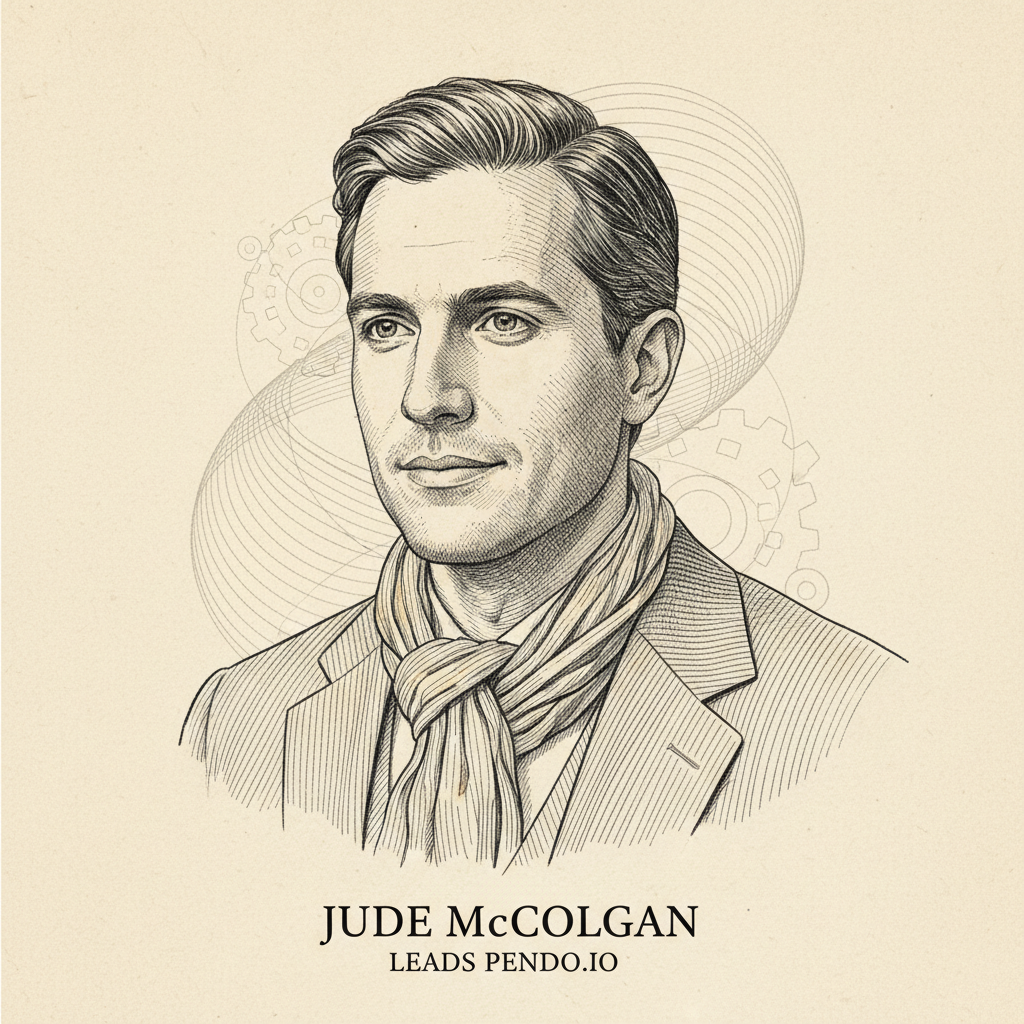
Jude McColgan
A CPO specializing in scaling enterprise SaaS products, recognized for driving significant revenue growth and market share through strategic product leadership and organizational development.
Jude McColgan is a seasoned Chief Product Officer with a distinguished career in leading product strategy and execution for enterprise SaaS companies. His expertise lies in scaling products from early stages to market leadership, consistently delivering substantial revenue growth, and building high-performing product teams.
Biography
Accomplishments
- 01Drove Nuance Communications' Enterprise Information Management division from $0 to over $250M in annual revenue between 2011 and 2016, establishing it as a significant market player.
- 02Led global product strategy and execution for a $1.2B portfolio at HP Software (2008-2011), successfully integrating acquired technologies and enhancing competitive positioning.
- 03Managed McAfee's global product lines as Senior Vice President and General Manager (2004-2008), contributing to substantial market share gains in the competitive cybersecurity landscape.
- 04Successfully scaled product organizations to support rapid growth and market expansion at multiple multi-billion dollar enterprises, including McAfee, HP, and Nuance.
- 05Consistently delivered double-digit annual revenue growth through strategic product initiatives and market expansion efforts during his leadership roles.
- 06Built and mentored multiple high-performing product leadership teams, fostering innovative cultures and efficient product development processes.
Lessons for Operators
Key Takeaways
Practical lessons distilled for operators, investors, C-levels, and capital allocators.
Scale through Specialization
As product portfolios grow, a CPO's ability to create specialized product units with clear ownership, while maintaining overarching strategic alignment, is critical for sustained growth. This prevents dilution of focus and accelerates market responsiveness.
Acquisition Integration Excellence
Successful M&A in SaaS hinges on the CPO's leadership in seamlessly integrating acquired products into the existing portfolio, ensuring continuity for customers and maximizing the value of the acquired technology and talent.
Revenue as a Product Metric
McColgan's career demonstrates that the CPO role is not just about features, but ultimately about driving measurable revenue growth and market position. Product strategy must be inherently tied to business outcomes.
Empowered Product Leadership
Building high-performing product organizations requires empowering product managers and leaders with significant ownership and the necessary resources to execute their vision, fostering accountability and innovation.
Market-Driven Product Development
Product initiatives must originate from a deep understanding of market needs and customer pain points. McColgan's track record emphasizes building products that solve real problems, which naturally leads to adoption and revenue.
Frameworks & Principles
Named frameworks and strategic principles they popularized or embodied.
Outcome-Driven Roadmapping
Aligning product features and initiatives directly to specific, measurable business outcomes (e.g., revenue growth, market share, customer retention) rather than just output (features delivered).
When to useWhen translating strategic company goals into actionable product plans and prioritizing development efforts to maximize business impact. Useful for CPOs managing large portfolios.
Two-Pizza Team Model (Scaled)
Adapting Amazon's concept of small, autonomous, cross-functional teams, but within a larger enterprise context, where these teams operate within a clearly defined scope and integrate with overall architectural guidelines.
When to useFor fostering agility and ownership in large, complex product organizations. Applicable when needing to scale product development while retaining speed and innovation, especially post-acquisition.
Product-Led Growth (PLG) Principles in Enterprise
While often associated with SMBs, McColgan's work implies applying PLG tenets like user experience, seamless onboarding, and value demonstration to enterprise products to drive adoption and expansion within large accounts.
When to useWhen designing enterprise SaaS products where user adoption and self-service capabilities can significantly reduce sales friction and expand usage within existing client bases.
Explore Related Titans
Other figures in the archive who share Jude McColgan's domain, geography, or era.
More in Technology










From United States