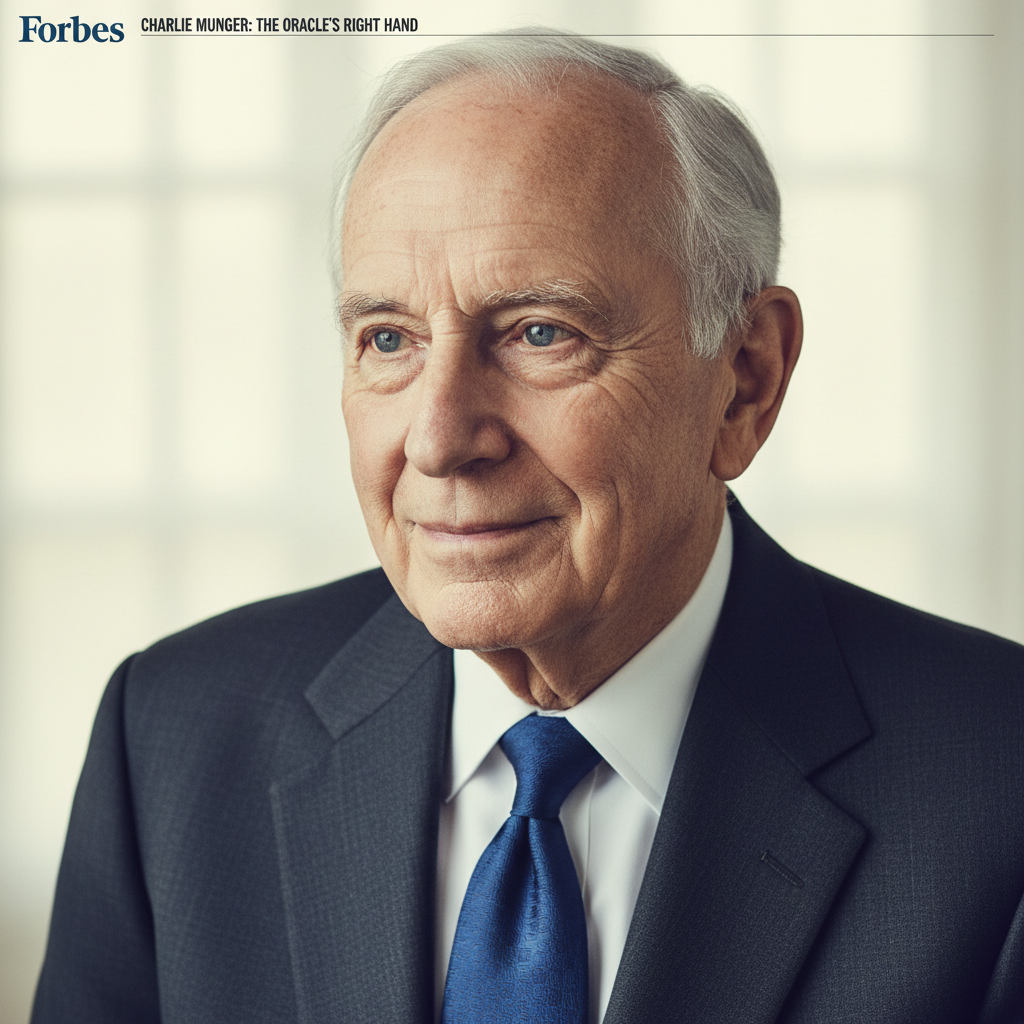
Herbert Simon
A polymath whose work on decision-making, artificial intelligence, and organizational theory reshaped understanding of rationality in business and economic systems.
Herbert A. Simon was an American polymath, economist, political scientist, and cognitive psychologist whose work encompassed artificial intelligence, information processing, decision-making, organizational theory, complex systems, and the philosophy of science. He received the Nobel Memorial Prize in Economic Sciences in 1978 for his pioneering research into the decision-making process within economic organizations, particularly his theory of 'bounded rationality'. Simon's work provided a foundational challenge to classical economic theory, emphasizing cognitive limitations and realistic decision processes over idealized rational actors.
Biography
Accomplishments
- 01Nobel Memorial Prize in Economic Sciences (1978) for pioneering research into the decision-making process within economic organizations, specifically the theory of bounded rationality.
- 02Turing Award (1975) alongside Allen Newell for fundamental contributions to artificial intelligence, the psychology of human cognition, and list processing.
- 03Developed the Logic Theory Machine (1956) and the General Problem Solver (1957) with Allen Newell, seminal programs in artificial intelligence that demonstrated symbolic reasoning.
- 04Authored 'Administrative Behavior' (1947), a foundational text in organizational theory introducing concepts like bounded rationality and satisficing, challenging classical economic models.
- 05Co-founded the field of Artificial Intelligence and made significant contributions to cognitive psychology, establishing theories of human problem-solving and memory.
- 06Prolific academic output, publishing over 1,000 papers and 30 books across multiple disciplines, shaping discourse in economics, psychology, computer science, and management.
Lessons for Operators
Key Takeaways
Practical lessons distilled for operators, investors, C-levels, and capital allocators.
Bounded Rationality, Not Perfect Optimization
Decision-makers in business do not possess infinite information or cognitive capacity. They satisfice, choosing 'good enough' options within their perceived constraints. This implies that expecting perfect optimization from teams or market participants is unrealistic; focus instead on robust, workable solutions that fit current conditions.
AI as a Cognitive Partner
Simon's pioneering AI work showed that computers could model and extend human problem-solving. For operators, this means leveraging AI to process vast datasets, identify patterns, and simulate outcomes, thereby enhancing human strategic planning and operational execution rather than merely replacing tasks.
Organizational Design Shapes Decisions
The structure of an organization directly influences how information flows, how problems are defined, and ultimately, the quality of decisions made. Enterprise leaders should consciously design their organizational charts and processes to optimize information sharing and decision authority, avoiding silos that impede rational choice.
The Power of Heuristics and Rules of Thumb
In complex, uncertain environments, relying on simple, effective heuristics (rules of thumb) can be more efficient and lead to better outcomes than exhaustive analysis. Fund managers and investors should identify and apply reliable heuristics to navigate market volatility and incomplete information, understanding their limitations.
Interdisciplinary Insight Drives Innovation
Simon's ability to integrate economics, psychology, computer science, and political science fueled his groundbreaking theories. Capital allocators and C-levels should encourage diverse perspectives and cross-functional collaboration to foster innovation and generate holistic solutions to complex business challenges.
Frameworks & Principles
Named frameworks and strategic principles they popularized or embodied.
Bounded Rationality
The theory that human decision-making is limited by the information available, the cognitive limitations of the mind, and the finite amount of time to make a decision. Instead of optimizing, individuals 'satisfice' by selecting the first acceptable option they encounter.
When to useApply when analyzing market behavior, designing organizational decision processes, or evaluating strategic choices, acknowledging that individuals and organizations aim for 'good enough' rather than perfectly optimal outcomes due to real-world constraints.
Satisficing
A decision-making strategy where an individual or organization seeks to find an acceptable or satisfactory solution to a problem, rather than searching for the absolute optimal solution. It is a direct consequence of bounded rationality.
When to useUtilize when time is critical, information is incomplete, or the cost of obtaining all possible information outweighs the potential benefit of a marginally better decision. Effective in fast-paced environments like venture investing or rapid product development.
Heuristics and Problem-Solving
Simon's work, particularly with the General Problem Solver, demonstrated how complex problems could be tackled using heuristics – mental shortcuts or rules of thumb – to efficiently navigate large problem spaces and arrive at solutions.
When to useEmploy when faced with ill-defined problems or situations with too many variables for exhaustive analysis. Develop and refine organizational heuristics for routine but complex decisions, while also recognizing potential biases they might introduce.
Cognitive Architecture of Organizations
This framework views organizations as systems for processing information and making decisions. The structure, communication channels, and division of labor all constitute an 'architecture' that shapes the cognitive processes of the collective entity.
When to useApply when designing or re-evaluating organizational structures, reporting lines, and information systems. Optimize these elements to ensure efficient and effective decision-making, minimizing information bottlenecks and cognitive overload within teams.
Recent Appearances
Latest interviews, keynotes, and press from the past half year.
 youtube.com
 youtube.com
 youtube.com
 youtube.com
 youtube.com
 youtube.com
 youtube.com
 youtube.comyoutube.com
 youtube.com
 youtube.com
 youtube.com
 youtube.com
 youtube.com
 youtube.com
 youtube.com
 youtube.com
 youtube.com
 youtube.com
 youtube.com
 youtube.com
 youtube.com
 youtube.com
 youtube.com
 youtube.com
 youtube.com
 youtube.com
Explore Related Titans
Other figures in the archive who share Herbert Simon's domain, geography, or era.
More in Technology










From United States




Contemporaries — 20th century