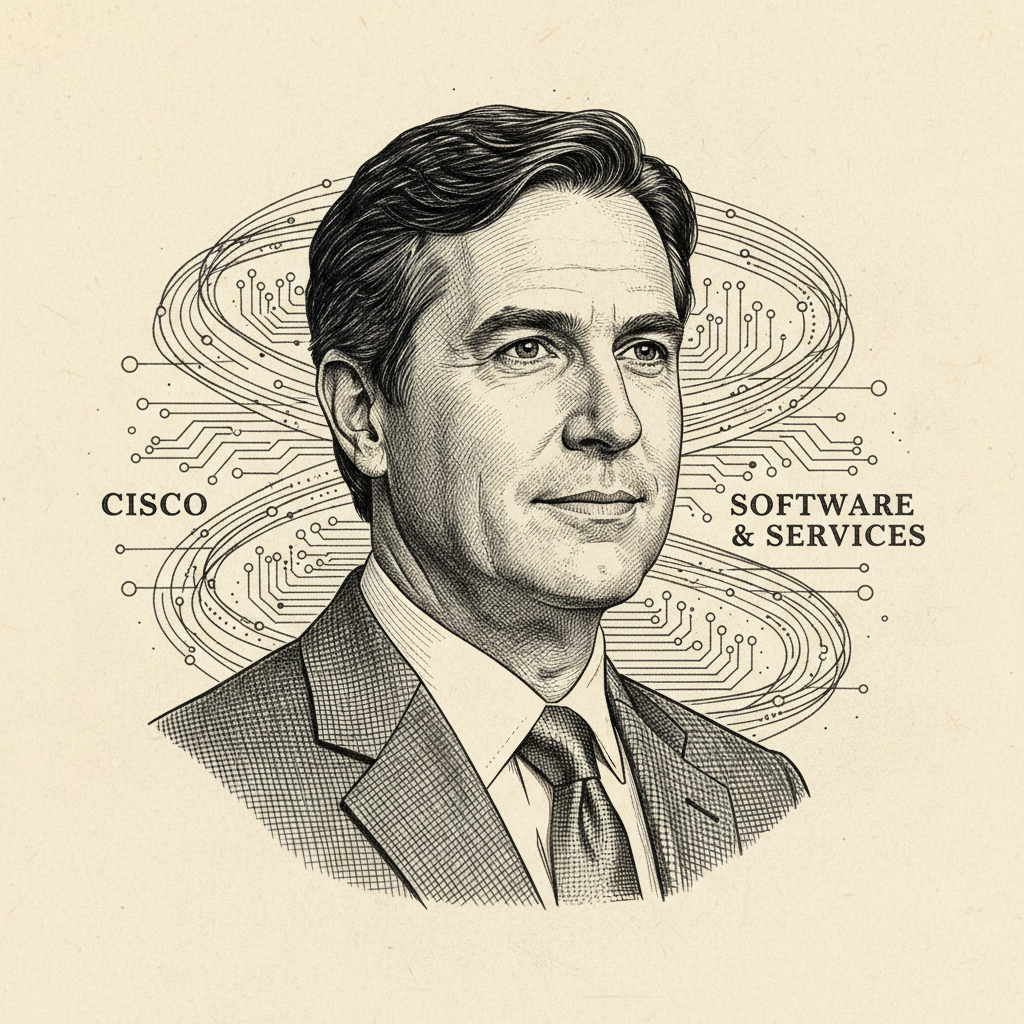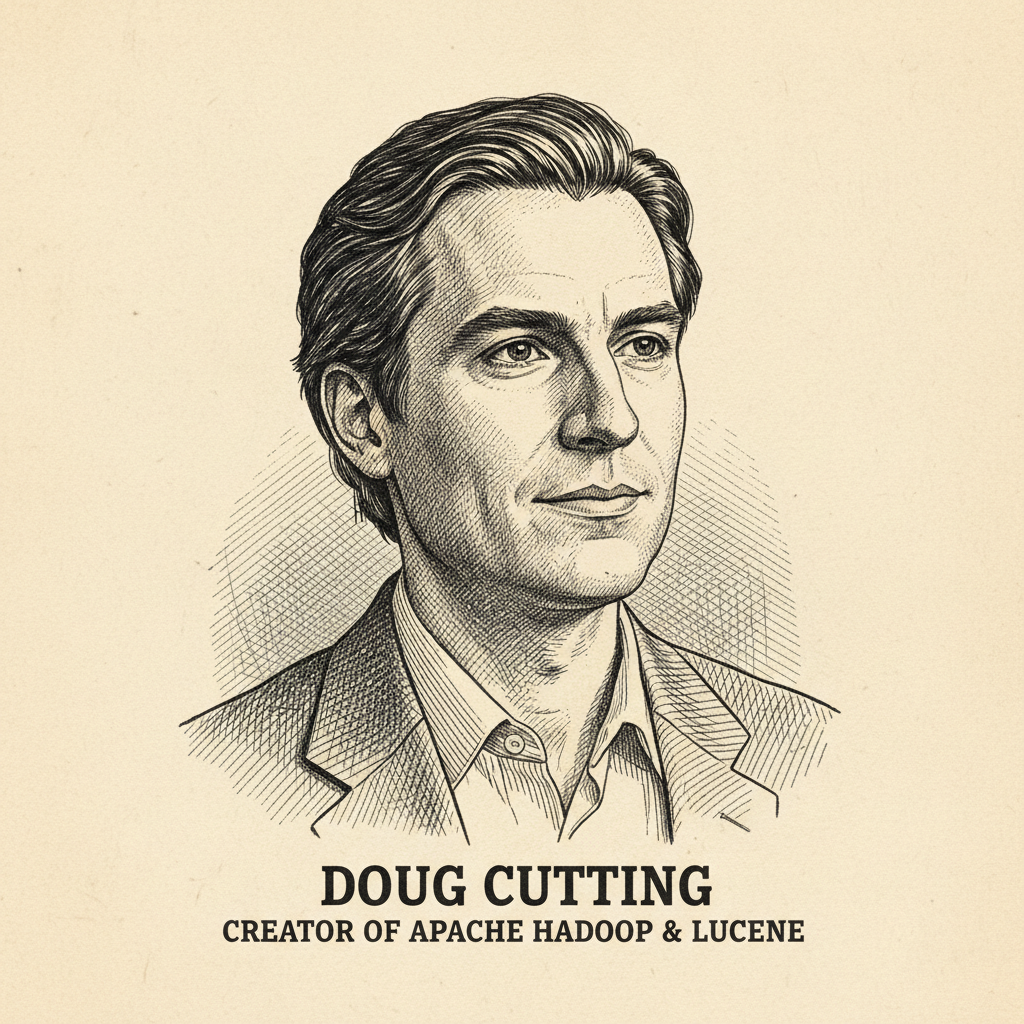
Doug Cutting
Architect of Open-Source Big Data: Doug Cutting's innovations laid the foundation for modern distributed computing and search at internet scale.
Doug Cutting is an American software engineer renowned for creating Apache Lucene, a high-performance text search engine library, and co-creating Apache Hadoop, a framework for distributed storage and processing of large datasets. His work fundamentally reshaped how enterprises handle and extract value from vast quantities of data.
Biography
Accomplishments
- 01Created Apache Lucene (1999): A seminal open-source search engine library that became the foundation for countless search applications and services, including Elasticsearch and Solr.
- 02Co-created Apache Hadoop (2005): Developed a revolutionary open-source framework for distributed storage (HDFS) and processing (MapReduce) of massive datasets, democratizing big data capabilities.
- 03Instrumental in founding Cloudera (2008): Co-founded one of the earliest and most prominent enterprise software companies focused on commercializing and supporting Hadoop.
- 04Led Hadoop's growth at Yahoo! and Apache Software Foundation: Championed the project's evolution, fostering its open-source community and driving its adoption as a de facto standard for big data.
- 05Pioneered the 'Big Data' era: His work on Hadoop enabled the practical implementation of large-scale data analytics, influencing nearly every industry sector.
- 06Developed Apache Nutch: An open-source web crawler, which provided the initial impetus and foundational components for the development of Hadoop.
Lessons for Operators
Key Takeaways
Practical lessons distilled for operators, investors, C-levels, and capital allocators.
The Power of Open-Source Infrastructure
Cutting's work exemplifies how open-source foundational software can catalyze entire industries. Hadoop's open licensing allowed universal adoption, minimizing entry barriers for big data processing and spurring a multi-billion dollar ecosystem of related tools and services. This model presents a compelling investment thesis for core infrastructure.
Scalability as a Strategic Imperative
Hadoop addressed the exponential growth of digital data, providing a scalable, cost-effective method to store and process it. For enterprises, investing in scalable data architectures is not merely technical but a strategic necessity, enabling analytics, machine learning, and competitive advantage in data-rich environments.
From Problem to Platform
Cutting identified a critical problem (large-scale data processing) and built a platform that solved it generically. This approach transforms a specific solution into a versatile toolkit, fostering innovation from countless other developers and companies. Look for platforms, not just products, when evaluating long-term value.
The Collaborative Edge of Communities
The success of Apache projects like Lucene and Hadoop underscores the immense value of collaborative development. Enterprises can benefit by actively participating in open-source communities, influencing roadmaps, leveraging collective intelligence, and reducing proprietary vendor lock-in.
Evolution of Data Architecture
While Hadoop's initial MapReduce paradigm has evolved (e.g., Spark, cloud-native solutions), its core contributions – distributed file systems (HDFS) and the concept of scale-out computing on commodity hardware – remain fundamental. Understanding these architectural shifts is crucial for technical and investment decisions in modern data stacks.
Building Blocks for AI/ML
The ability to process vast quantities of data, enabled by technologies like Hadoop, was a prerequisite for the advancements in machine learning and artificial intelligence we see today. Robust data pipelines and storage are the unseen foundation for AI capabilities, making continuous investment here critical for future innovation.
Frameworks & Principles
Named frameworks and strategic principles they popularized or embodied.
The Apache Way
A set of principles for open-source project governance, community development, and collaborative software engineering, emphasizing meritocracy, consensus, and transparency.
When to useApplicable for organizations contributing to or managing open-source projects, ensuring sustainable development, community engagement, and broad adoption. It provides a blueprint for fostering a healthy software ecosystem.
MapReduce Paradigm
A programming model for processing large datasets with a parallel, distributed algorithm on a cluster. It consists of two main phases: Map (filtering and sorting data) and Reduce (aggregating results).
When to useWhile direct MapReduce usage has declined in favor of newer engines like Apache Spark, understanding its core principles is essential for anyone dealing with batch processing of massive datasets, distributed computing, and the foundational architecture of big data systems.
Hadoop Distributed File System (HDFS)
A distributed, scalable, and portable file system written in Java for the Hadoop framework. It stores data on commodity machines, providing high aggregate data bandwidth, and resilience against node failures.
When to useCritical for architects designing storage solutions for petabyte-scale data, especially in on-premise data lakes or hybrid cloud environments where fault tolerance and high throughput for analytical workloads are paramount.
Recent Appearances
Latest interviews, keynotes, and press from the past half year.
 youtube.com
 youtube.com
 youtube.com
 youtube.com
 youtube.com
 youtube.com
Sources & Further Reading
Profiles, interviews, podcasts, and articles used to compile and verify this entry. Each link opens at the original publisher.
Explore Related Titans
Other figures in the archive who share Doug Cutting's domain, geography, or era.
More in Technology










From United States




Contemporaries — born 1960s