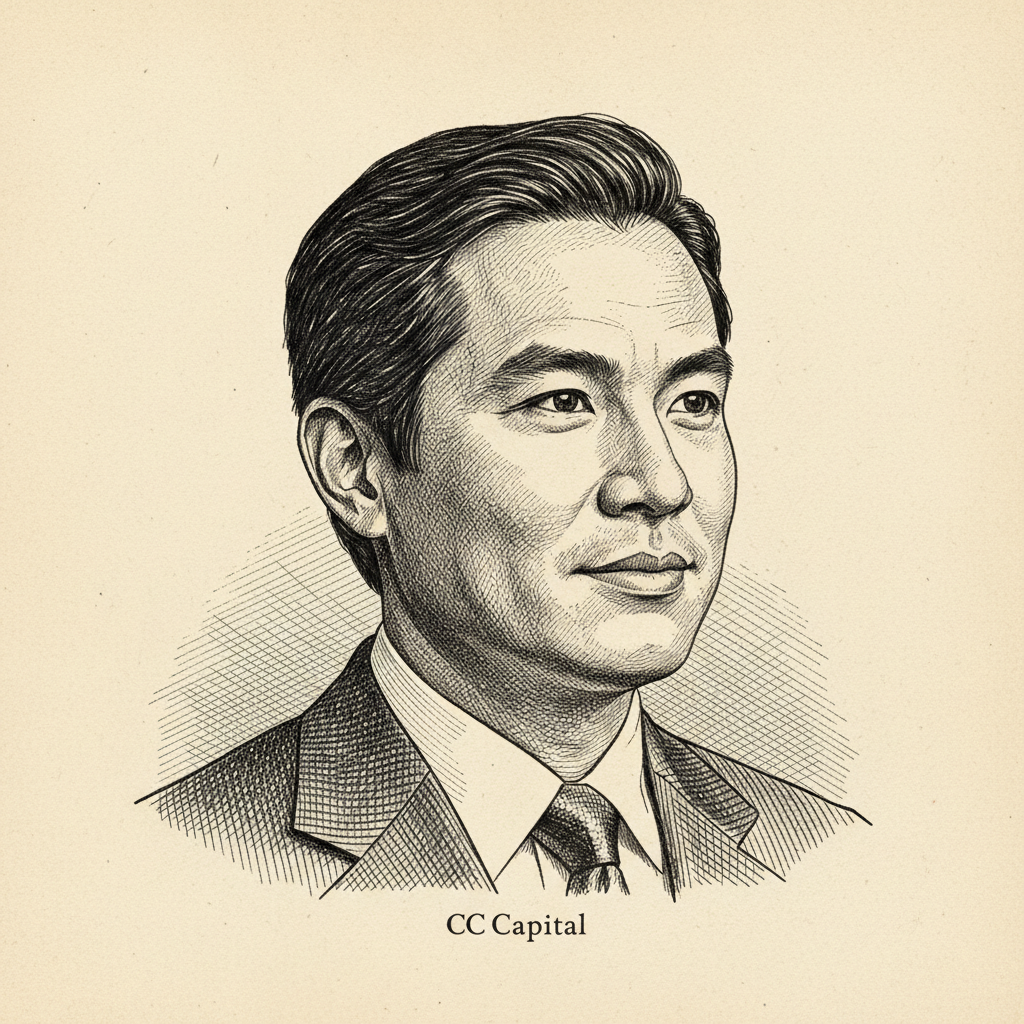
Chinh E. Chu
Chinh E. Chu: The architect behind multi-billion dollar private equity transformations, known for carving value from complex corporate carve-outs and strategic mergers.
Chinh E. Chu is a Vietnamese-American investor and dealmaker recognized for orchestrating some of the largest and most complex private equity transactions of the 21st century. As a former Senior Managing Director at Blackstone, he led the firm's private equity investments in the global industrial and healthcare sectors, culminating in the spin-off of billions in enterprise value. He subsequently founded CC Capital, a private investment firm focused on acquiring and developing businesses with substantial growth potential.
Biography
Accomplishments
- 01Led the $33 billion acquisition of Hilton Worldwide in 2007, a landmark deal that saw the hotel giant return to private ownership.
- 02Orchestrated the $18 billion acquisition of Freescale Semiconductor in 2006, one of the largest technology leveraged buyouts, guiding its successful IPO in 2011.
- 03Conceived and executed the multi-year carve-out and acquisition strategy for LSI Logic's enterprise storage division, which evolved into Avago Technologies, culminating in Avago's $37 billion acquisition of Broadcom in 2015.
- 04Founded CC Capital in 2015, establishing an independent investment platform focused on long-term value creation through strategic acquisitions and partnerships.
- 05Spearheaded the take-private and subsequent re-listing of Dun & Bradstreet Holdings, Inc. in partnership with Cannae Holdings and Thomas H. Lee Partners, demonstrating skill in public-to-private and private-to-public transactions (2019-2020).
- 06Served as a Senior Managing Director at Blackstone for over two decades, where he was responsible for leading private equity investments in the global industrial and healthcare sectors.
Lessons for Operators
Key Takeaways
Practical lessons distilled for operators, investors, C-levels, and capital allocators.
Complex Deal Architecture
Chu's career highlights a mastery of structuring highly complex transactions, often involving corporate carve-outs, public-to-private transitions, and multi-stage asset consolidations. For leaders, this suggests that deeply understanding financial engineering and legal structures can create unique investment opportunities that others might deem too difficult.
Sector Specialization & Deep Dive
His consistent focus on industrial and healthcare sectors at Blackstone, and later on information services and technology, demonstrates the power of developing deep domain expertise. This allows for more informed due diligence, better risk assessment, and a clearer vision for value creation post-acquisition.
Long-Term Value Creation
Many of Chu's successful deals, like Freescale and Avago, involved multi-year holding periods and significant operational transformations. This underscores the principle that true alpha in private equity often comes from patient, fundamental value creation rather than short-term financial engineering.
The Power of Independent Platforms
The founding of CC Capital after a successful tenure at Blackstone illustrates the appeal and potential of building an independent investment vehicle. It allows for greater strategic autonomy and the ability to pursue specific investment theses tailored to a founder's vision and capital base.
Frameworks & Principles
Named frameworks and strategic principles they popularized or embodied.
Corporate Carve-Out Strategy
A framework for identifying undervalued divisions or assets within larger, often diversified, public or private corporations. Involves separating these units, optimizing their operations as standalone entities, and recapitalizing them for growth or eventual sale/IPO.
When to useApplicable when a large company's stock is undervalued, and specific business units are not receiving adequate attention or capital, or when there's an opportunity for a spin-off to create a more focused, agile enterprise.
Leveraged Buyout (LBO) with Operational Value Add
A strategy involving acquiring a company primarily using borrowed capital (leverage), with the intention of improving its operational efficiency, market positioning, or revenue streams, and then exiting the investment at a higher valuation through sale or IPO.
When to useSuitable for mature companies with stable cash flows that can service debt, possess identifiable operational inefficiencies, or have untapped market potential that can be unlocked under private ownership.
Public-to-Private (P2P) and Private-to-Public (P2P) Cycle
A cyclical investment approach involving taking public companies private to execute strategic transformations away from public market scrutiny, followed by a re-listing when the business is optimized and market conditions are favorable for a higher valuation.
When to useUtilized when a public company is struggling with short-term pressures, requires significant restructuring, or needs a strategic overhaul that is better executed outside the public eye, with the aim of re-entering public markets at an enhanced valuation.
Recent Appearances
Latest interviews, keynotes, and press from the past half year.
 youtube.com
 youtube.com
 youtube.com
 youtube.com
 youtube.com
 youtube.com
 youtube.com
 youtube.com
 youtube.com
 youtube.com
 youtube.com
Explore Related Titans
Other figures in the archive who share Chinh E. Chu's domain, geography, or era.
More in Finance & Investing










From United States







Contemporaries — born 1960s