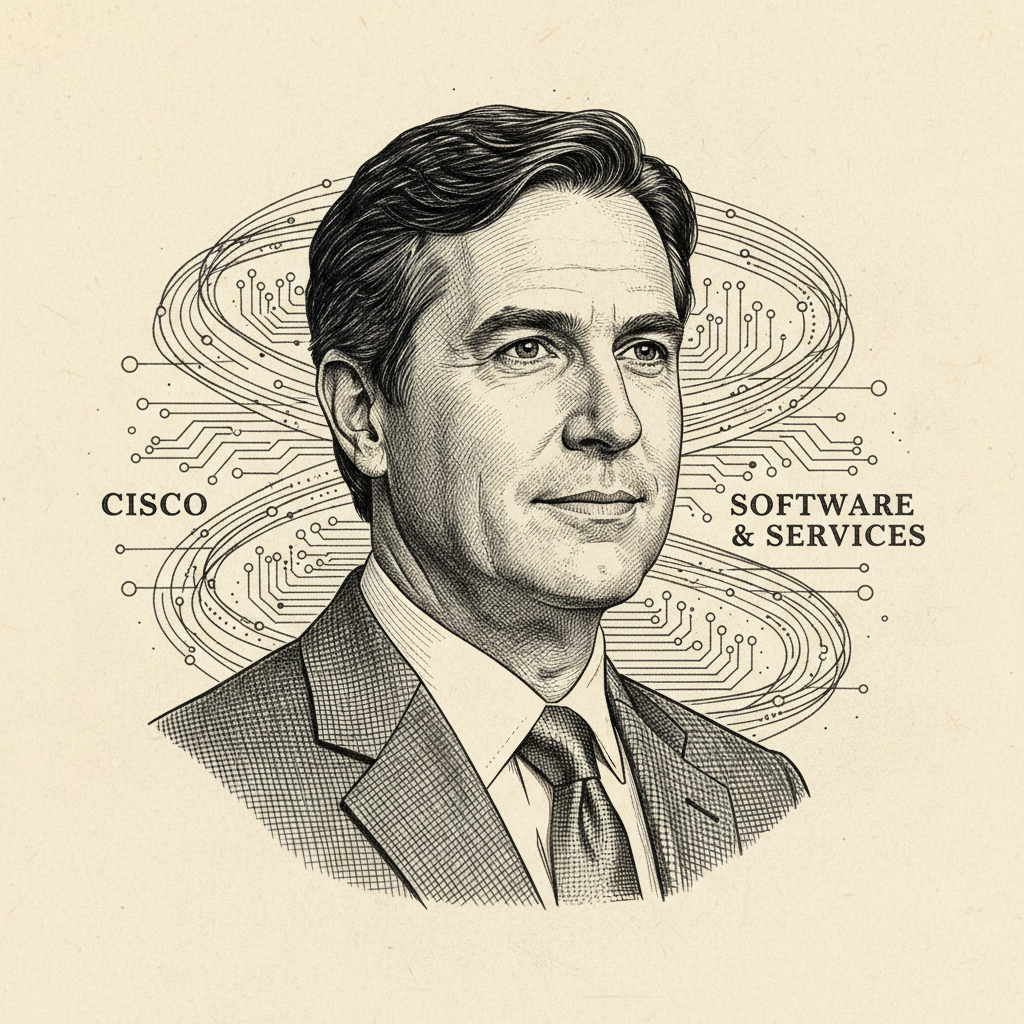
Adena Friedman
Adena Friedman: Architect of modern market infrastructure, transforming Nasdaq into a diversified technology and analytics powerhouse.
Adena Friedman is an American businesswoman who has served as the President and Chief Executive Officer of Nasdaq, Inc. since January 2017. She is the first woman to lead a major global exchange company. Friedman has significantly diversified Nasdaq's business beyond traditional trading, focusing on technology, data, and analytics, positioning the company as a leading financial technology provider.
Biography
Accomplishments
- 01First female CEO of a major global exchange company (Nasdaq, Inc.), breaking historical gender barriers in a traditionally male-dominated industry.
- 02Engineered Nasdaq's strategic transformation from a pure-play exchange into a diversified financial technology and analytics enterprise, substantially expanding its total addressable market.
- 03Oversaw the acquisition of Verafin for $2.75 billion in 2021, significantly bolstering Nasdaq's Anti-Financial Crime (AFC) technology portfolio and expanding its SaaS revenue streams.
- 04Drove Nasdaq's adoption of cloud computing, migrating key markets and services to AWS, enhancing scalability, resilience, and reducing operational costs.
- 05Successfully led Nasdaq through a period of significant geopolitical and economic uncertainty (e.g., COVID-19 pandemic, market volatility), maintaining operational integrity and financial performance.
- 06Expanded Nasdaq's offerings in Environmental, Social, and Governance (ESG) solutions, catering to growing investor demand for sustainable investing tools and data.
- 07Navigated Nasdaq's financial operations as CFO during the 2008 financial crisis, ensuring stability and strategic positioning.
Lessons for Operators
Key Takeaways
Practical lessons distilled for operators, investors, C-levels, and capital allocators.
Transformation from Exchange to Fintech
Friedman led Nasdaq's evolution from a transaction-centric stock exchange to a leading global financial technology company. This involved divesting non-core assets (e.g., U.S. fixed income) and acquiring high-growth software and data businesses (e.g., Verafin), significantly changing Nasdaq's revenue mix towards recurring SaaS and information services.
The Power of Recurring Revenue
Under Friedman, Nasdaq prioritized shifting its revenue composition toward recurring sources, such as software subscriptions, data licenses, and index services. This provides greater revenue predictability, higher margins, and less susceptibility to market volume fluctuations compared to transactional trading fees.
Technology as a Strategic Differentiator
Nasdaq's investment in cloud infrastructure, AI, and distributed ledger technology (DLT) is not just about operational efficiency but about building competitive advantage. These technologies enable faster innovation, enhanced security, and the development of entirely new market products and services.
M&A for Market Expansion
Friedman's strategic use of mergers and acquisitions, notably the Verafin acquisition, demonstrates how targeted M&A can accelerate entry into new, high-growth markets (e.g., anti-financial crime solutions) and enhance the company's overall value proposition by expanding its technological capabilities and client base.
Leadership in ESG and Market Integrity
Nasdaq under Friedman has actively promoted ESG standards, both internally and through its product offerings. This includes developing ESG data solutions and advocating for improved corporate governance, positioning the exchange as a leader in sustainable finance and reinforcing market integrity.
Focus on Client-Centric Innovation
Nasdaq's transformation prioritizes solving complex client problems through technology. By understanding the evolving needs of banks, asset managers, and corporations, Friedman directed Nasdaq to develop solutions in areas like market surveillance, anti-money laundering, and investment data analytics.
Frameworks & Principles
Named frameworks and strategic principles they popularized or embodied.
Strategic Portfolio Management
Adena Friedman's approach involves continuously evaluating Nasdaq's business segments, divesting those that are non-core or low-growth, and acquiring businesses that align with strategic priorities and offer higher growth potential and recurring revenue streams. This ensures capital is allocated efficiently to maximize long-term value.
When to useApplicable for C-level executives and strategic planners needing to optimize a diversified business portfolio, identify divestiture candidates, and target accretive acquisitions to reshape the company's strategic direction and financial profile.
Platformization Strategy
Nasdaq has been building a comprehensive financial technology platform, leveraging its core market infrastructure capabilities to offer a suite of services (data, analytics, software) to a broad range of clients. This creates network effects and allows for cross-selling opportunities across different business units.
When to useRelevant for technology leaders and product strategists in any industry seeking to move beyond discrete products to an integrated platform model, driving greater customer lock-in, scalability, and value creation through interconnected services.
Technology-Driven Business Transformation
Friedman's leadership exemplifies leveraging advanced technologies (cloud, AI, DLT) not merely for operational efficiency but as the primary catalyst for a fundamental business model change. This requires significant investment in R&D, talent, and a willingness to disrupt existing paradigms.
When to useCritical for enterprise leaders in traditional industries facing disruption, who need to understand how to harness emerging technologies to reinvent their core business, create new revenue streams, and maintain competitive relevance.
Data Monetization and Value Creation
Nasdaq, under Friedman, has recognized that its vast proprietary data (market activity, compliance, analytics) is a valuable asset. The strategy involves packaging and selling this data, as well as using it to enhance internal product offerings and provide deeper insights to clients.
When to useValuable for any organization with significant data assets looking to derive additional revenue or strategic advantage. This framework guides how to collect, refine, package, and market data products and services to internal and external stakeholders.
Recent Appearances
Latest interviews, keynotes, and press from the past half year.
 youtube.com
 youtube.com
 youtube.com
 youtube.com
 youtube.com
 youtube.com
 youtube.com
 youtube.com
 youtube.com
 youtube.com
 youtube.com
 youtube.com
 youtube.com
 youtube.com
 youtube.com
 youtube.com
 youtube.com
 youtube.com
 youtube.com
 youtube.com
 youtube.com
 youtube.com
 youtube.com
 youtube.com
 youtube.com
 youtube.com
 youtube.com
 youtube.com
 youtube.com
 youtube.com
 youtube.com
 youtube.com
 youtube.com
 youtube.com
 youtube.com
 youtube.com
 youtube.com
 youtube.com
 youtube.com
 youtube.com
 youtube.com
 youtube.com
 youtube.com
 youtube.com
 youtube.com
![PODCAST 🎙️ [Summary] 📊: Nasdaq CEO Adena Friedman](https://i.ytimg.com/vi/U7O2zi6iTBw/hqdefault.jpg) youtube.com
youtube.com youtube.com
 youtube.com
 youtube.com
 youtube.com
 youtube.com
 youtube.com
 youtube.com
 youtube.com
 youtube.com
 youtube.com
 youtube.com
 youtube.com
 youtube.comyoutube.com
 youtube.comm.youtube.com
 youtube.com
 youtube.com
 youtube.com
 m.youtube.com
 youtube.com
 youtube.com
 youtube.com
 youtube.com
 youtube.com
 youtube.com
 youtube.com
 youtube.com
 youtube.com
 youtube.com
 youtube.com
 youtube.com
 youtube.com
Sources & Further Reading
Profiles, interviews, podcasts, and articles used to compile and verify this entry. Each link opens at the original publisher.
Explore Related Titans
Other figures in the archive who share Adena Friedman's domain, geography, or era.
More in Technology










From United States




Contemporaries — born 1960s