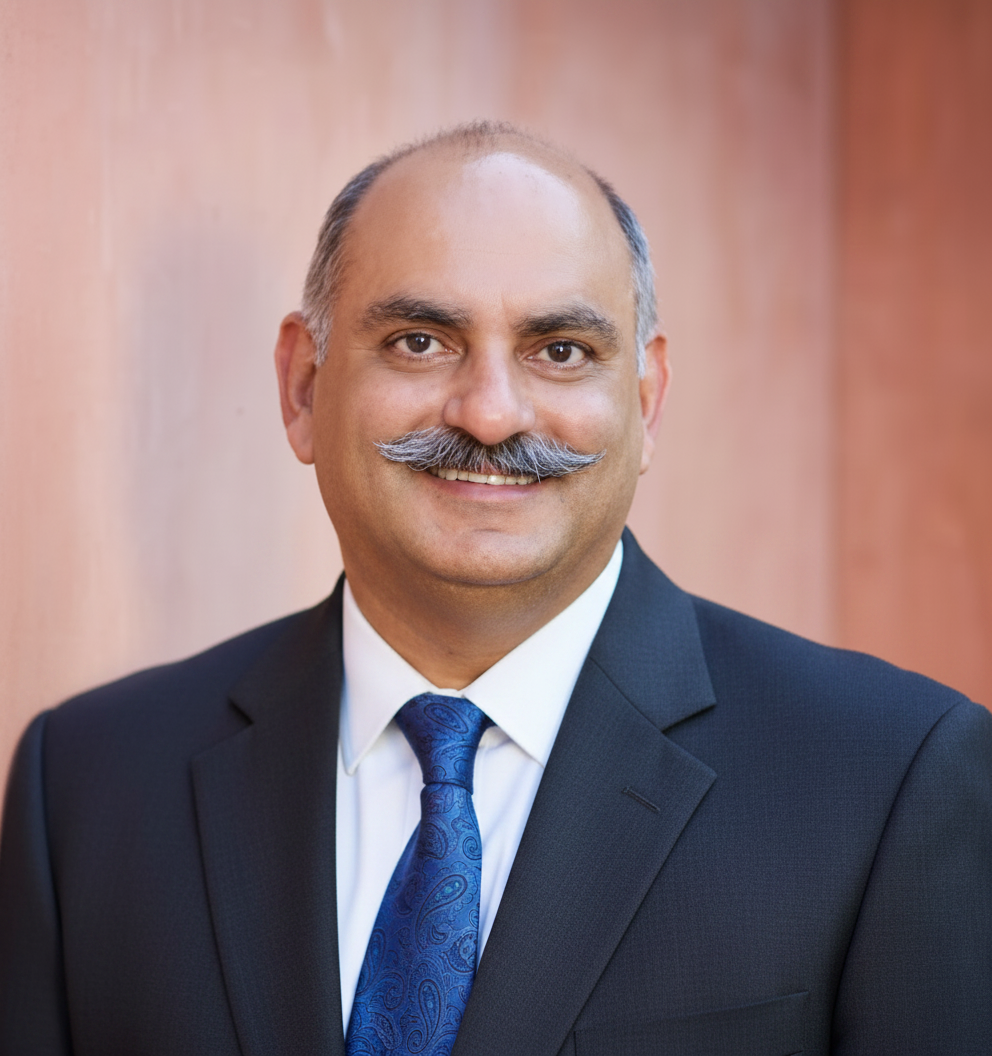
Renduchintala Murthy
A leading architect of semiconductor and product strategy, instrumental in driving major technological and business transitions at Intel and Qualcomm.
Murthy Renduchintala is a distinguished executive in the semiconductor industry, recognized for his profound impact on product development, engineering leadership, and strategic execution at both Qualcomm and Intel. His career is marked by guiding multi-billion dollar business units and navigating critical technological shifts, particularly in mobile and data center architectures.
Biography
Accomplishments
- 01Led Qualcomm's Snapdragon processor line to market dominance, expanding its application across mobile devices and embedded systems (2004-2015).
- 02Orchestrated significant product portfolio diversification at Qualcomm, leading the company beyond cellular modems into broader mobile computing platforms and automotive sectors (2004-2015).
- 03Served as Intel's Chief Engineering Officer and President of the Client, IoT, and System Architecture Group (CISA), overseeing a multi-billion dollar portfolio and driving critical product and architectural shifts (2016-2020).
- 04Implemented strategic initiatives at Intel to enhance product competitiveness, including efforts to integrate new architectural paradigms and improve manufacturing methodologies (2016-2020).
- 05Played a key role in Intel's transition and strategy development amidst challenging competitive environments and process technology delays, particularly in CPU and foundry operations (2016-2020).
- 06Successfully led large global engineering and business organizations, managing complex product roadmaps and strategic partnerships across multiple geographies.
- 07Instrumental in driving the architectural evolution of leading semiconductor products, impacting billions of devices globally.
Lessons for Operators
Key Takeaways
Practical lessons distilled for operators, investors, C-levels, and capital allocators.
Holistic Product-Engineering Synthesis
Successful technology companies integrate their product strategy directly with their engineering leadership. Renduchintala's roles at both Qualcomm and Intel exemplify how unifying these functions drives more coherent and impactful market offerings. For C-levels, this means collapsing organizational boundaries between product management and core engineering.
Strategic Diversification & Market Dominance
Qualcomm's shift from being primarily a modem company to a leader in mobile platforms under his influence highlights the power of strategic diversification. Operators and investors should evaluate management's ability to identify and execute on new growth vectors, leveraging core competencies to capture adjacent markets.
Resilience in Industry Headwinds
Renduchintala navigated significant challenges at Intel, including fierce competition and manufacturing delays. His experience underscores that leaders must clearly communicate strategic responses to setbacks and maintain focus on long-term technological roadmaps, even amidst short-term pressures. This is crucial for investor confidence during volatile periods.
The Enduring Value of Core IP
Whether it's Qualcomm's fundamental wireless technologies or Intel's x86 architecture, Renduchintala's career demonstrates that deep investment in foundational intellectual property and architectural excellence forms the bedrock of sustainable competitive advantage in semiconductors. Capital allocators should prioritize companies with strong IP portfolios and a track record of innovation.
Leadership Through Organizational Transformation
His return to Intel into a newly created super-group role, and subsequent departure during another restructuring, illustrates the dynamic nature of leadership within large tech corporations. Executive leaders must be adept at both implementing and adapting to significant organizational changes, ensuring strategic continuity while evolving structures.
Balancing Legacy and Innovation
Renduchintala's work often involved managing Intel's entrenched x86 architecture while simultaneously pushing for new paradigms (e.g., discrete graphics, AI integration). This balance is critical for established businesses: honoring existing strengths while aggressively pursuing future technologies. Fund managers should look for this dual capability in leadership teams.
Frameworks & Principles
Named frameworks and strategic principles they popularized or embodied.
Integrated Product Development Model (IPDM)
Aligning product management, engineering, and architecture teams under a unified leadership structure to ensure seamless execution from concept to market. This model prioritizes cross-functional collaboration and shared accountability for product success.
When to useApplicable for C-levels in complex technology companies seeking to accelerate product cycles, improve engineering efficiency, and ensure market relevance by tightly coupling strategic vision with operational execution, especially in industries with rapid technological change (e.g., semiconductors, software).
Strategic Growth Vector Analysis (SGVA)
A framework for identifying, evaluating, and prioritizing new market segments or technological applications where a company's core competencies can be leveraged for growth. This involves assessing market size, competitive landscape, internal capabilities, and potential ROI.
When to useUsed by operators and investors when considering diversification strategies, evaluating M&A targets, or assessing a company's ability to enter new high-growth areas. Renduchintala's efforts at Qualcomm to expand Snapdragon beyond traditional mobile phones exemplify this.
Architecture-to-Market (ATM) Cycle Management
A strategic approach that emphasizes the critical link between fundamental architectural decisions (e.g., CPU, GPU, interconnects) and market viability/competitiveness. It focuses on long-term architectural roadmapping, intellectual property development, and ensuring these translate into commercially successful products.
When to useEssential for enterprise leaders in deep tech industries (semiconductors, aerospace, advanced materials) where core technological architecture dictates product performance and market positioning for decades. Guides long-term R&D investment and IP strategy.
Explore Related Titans
Other figures in the archive who share Renduchintala Murthy's domain, geography, or era.
More in Technology







From United States