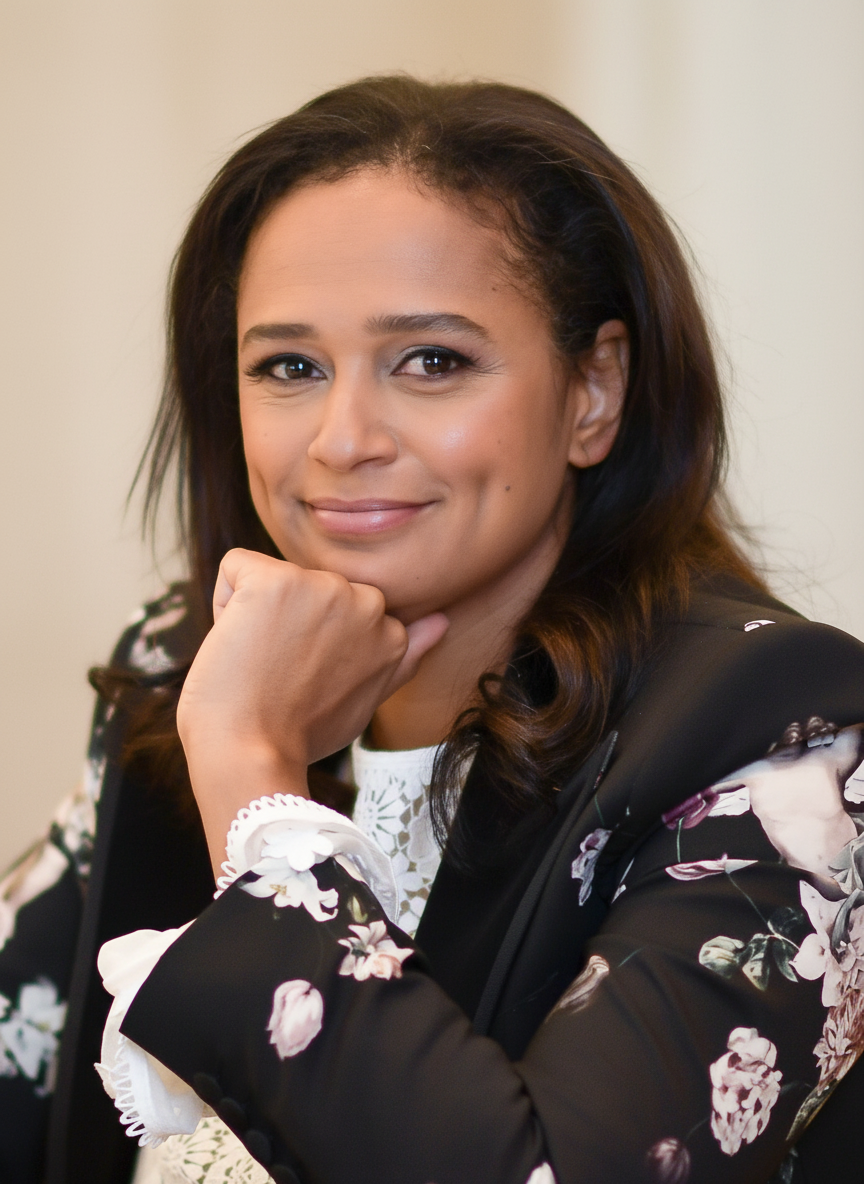
Isabel dos Santos
The Controversial Conglomerate Architect: Navigating Growth and Scrutiny in African Markets
Isabel dos Santos is an Angolan businesswoman who built a vast business empire spanning telecommunications, finance, media, retail, and energy. Daughter of former Angolan President José Eduardo dos Santos, her fortune and business dealings have been subject to intense scrutiny regarding their origins and legality. She became Africa's richest woman, leveraging strategic acquisitions and political connections.
Biography
Accomplishments
- 01Co-founded Unitel, Angola's first private mobile network operator, in 2000, achieving significant market penetration and profitability.
- 02Formed a diversified portfolio of investments across critical sectors including banking (e.g., EuroBic, BancoBIC), telecommunications (e.g., Unitel, NOS), media, and retail.
- 03Appointed Chairwoman of Sonangol, the state oil company of Angola, in 2016, with a mandate to reform and increase efficiency.
- 04Pioneered the establishment of large-scale retail chains in Angola, such as Candando supermarkets, introducing modern retail standards to the market.
Lessons for Operators
Key Takeaways
Practical lessons distilled for operators, investors, C-levels, and capital allocators.
Strategic Market Entry & Scale
Isabel dos Santos demonstrated a clear strategy of entering burgeoning markets (e.g., telecommunications in Angola) early, often through joint ventures that provided local expertise and facilitated rapid scaling. This approach is critical for operators looking to capitalize on high-growth, underdeveloped economies.
Sectoral Interdependence
Her investment strategy focused on building foundational businesses across interdependent sectors like finance (Bancobic, EuroBic) and telecommunications (Unitel, NOS). This creates a self-reinforcing ecosystem, enabling cross-promotion, shared infrastructure, and reduced reliance on external services, proving valuable for conglomerate builders.
Political Acumen & Risk
Her career highlights both the advantages and perils of close political ties in emerging markets. While such connections can unlock opportunities (e.g., Sonangol chairmanship), they also introduce significant governance risks and can lead to rapid reversals of fortune when political tides shift. Capital allocators must weigh political stability and related governance risks carefully.
Transparency and Accountability Imperative
The fallout from the 'Luanda Leaks' underscores the non-negotiable demand for transparency and accountability in modern global business. Operators and investors, particularly those in high-risk jurisdictions, must adhere to international compliance standards to safeguard assets, maintain investor confidence, and avoid regulatory and legal ramifications.
Reputational Durability
Wealth accumulation without robust ethical frameworks and verifiable legitimate business practices can be brittle. Sustained business success and investor trust require a durable reputation, built on transparent dealings and adherence to global best practices, especially when operating in public view.
Frameworks & Principles
Named frameworks and strategic principles they popularized or embodied.
Emerging Market Conglomerate Strategy
This framework involves building a diversified group of businesses in rapidly developing economies, often across foundational sectors like telecom, finance, and consumer goods. The goal is to capture broad economic growth and leverage inter-company synergies. Dos Santos exemplified this by building an empire across multiple crucial sectors in Angola and Portugal.
When to useApplicable for investors and operators targeting high-growth emerging markets with nascent industries, where diversification across essential services can mitigate risk and maximize penetration.
Political Economy Risk Assessment
A structured approach to evaluating how political decisions, stability, and corruption levels can impact business operations and investments. It involves analyzing government policies, regulatory changes, and the influence of ruling elites. Dos Santos's trajectory is a case study in both benefiting from and being undone by political shifts.
When to useEssential for any business contemplating significant investment in politically volatile or developing nations, requiring thorough due diligence on governance, rule of law, and potential for state interference or asset appropriation.
Sources & Further Reading
Profiles, interviews, podcasts, and articles used to compile and verify this entry. Each link opens at the original publisher.
Explore Related Titans
Other figures in the archive who share Isabel dos Santos's domain, geography, or era.
More in Technology









Contemporaries — born 1970s