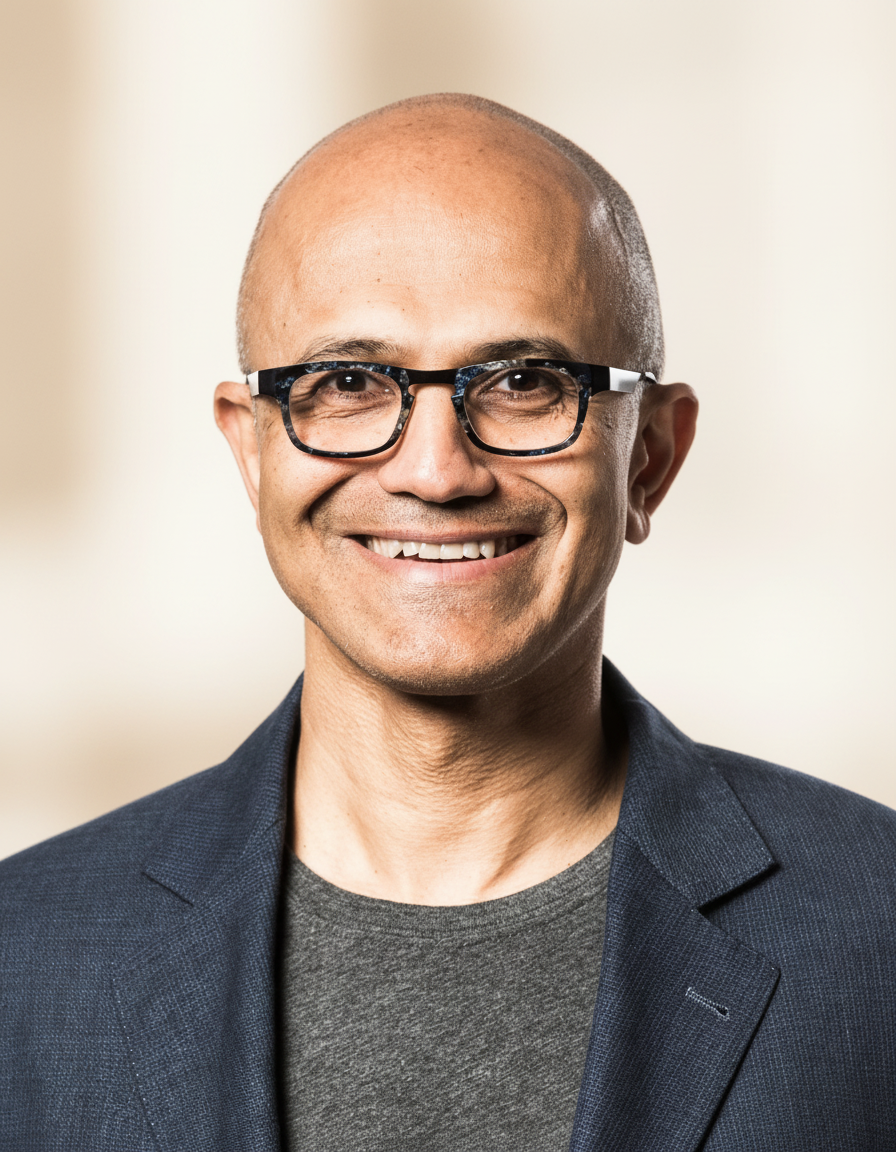
Portrait of Jan Koum
Modern Architect · 1976 — Present

Jan Koum

Co-founder of WhatsApp, Jan Koum revolutionized global mobile messaging with a focus on simplicity, security, and user experience.

Country
Ukraine
Continent
Europe
Industry
Technology, Telecommunications
Role
Entrepreneur, Engineer, Co-founder

Jan Koum is a Ukrainian-American entrepreneur best known as the co-founder and former CEO of WhatsApp, a mobile messaging application acquired by Facebook in 2014 for approximately $19 billion. His focus on creating a secure, ad-free, and straightforward communication tool reshaped global digital interaction.

Biography

Jan Koum was born in 1976 in Fastiv, Ukrainian SSR. He emigrated to the United States with his mother and grandmother in 1992, settling in Mountain View, California, and facing initial economic hardship. Koum's early career included a stint as a security tester at Ernst & Young before joining Yahoo! in 1997 as an infrastructure engineer. He spent nearly a decade at Yahoo!, where he met Brian Acton. After leaving Yahoo! in 2007, Koum and Acton spent time traveling. In January 2009, Koum purchased an iPhone and recognized the nascent potential of the App Store. He conceived of an application that would display status updates next to individual names in a digital address book. On February 24, 2009, he incorporated WhatsApp Inc. in California. The initial version of WhatsApp, while buggy, gained traction after Apple introduced push notifications in June 2009, allowing users to be pinged when a status changed. This evolved into instant messaging. Brian Acton joined Koum in October 2009, bringing his industry experience and securing initial seed funding. WhatsApp's philosophy centered on a 'no ads, no games, no gimmicks' approach, prioritizing user privacy and a minimalist interface. This ethos resonated globally, leading to rapid user growth. By early 2014, WhatsApp had over 450 million monthly active users. Facebook acquired WhatsApp in February 2014 for approximately $19 billion in cash and stock, a deal that remains one of the largest technology acquisitions in history. Koum joined Facebook's board of directors as part of the acquisition agreement but eventually resigned in April 2018, reportedly due to disagreements over data privacy and monetization strategies.

Accomplishments

  • 01Co-founded WhatsApp in 2009, growing it into the world's most popular messaging application.
  • 02Led WhatsApp to over 450 million monthly active users before its acquisition by Facebook.
  • 03Engineered and maintained a privacy-centric, ad-free business model for WhatsApp, challenging industry norms.
  • 04Successfully negotiated and executed the sale of WhatsApp to Facebook for approximately $19 billion in 2014, one of the largest tech acquisitions.
  • 05Served on the Board of Directors of Facebook post-acquisition, influencing strategic decisions within one of the world's largest tech companies.
  • 06Pioneered the widespread adoption of end-to-end encryption in consumer messaging applications, enhancing user data security.

Lessons for Operators

Prioritize user experience and core utility over feature bloat: WhatsApp's success stemmed from its singular focus on fast, reliable, and private messaging, eschewing advertising and extraneous features.
Privacy and security can be powerful differentiators: In an era of data exploitation, a commitment to user privacy (e.g., end-to-end encryption) built trust and loyalty, attracting a massive user base.
Simplicity drives adoption: A straightforward, intuitive interface with minimal distractions reduced friction for users, accelerating global penetration.
Strategic timing for market entry: Identifying a clear market need (reliable, cross-platform messaging) and leveraging emerging mobile platforms (iPhone App Store, push notifications) was critical.
Patience in monetization: Delaying aggressive monetization strategies can allow for greater market penetration and network effect before introducing revenue models, if at all.
Culture matters in M&A: Post-acquisition friction over core values (privacy, ad-free model) can lead to executive departures and potentially impact product direction. Align on these early.
The Operator's Playbook

Key Takeaways

Practical lessons distilled for operators, investors, C-levels, and capital allocators.

Lesson 01

Product Focus Drives Value

Koum's unwavering commitment to WhatsApp's core functionality—reliable, private messaging—demonstrates that deeply solving a fundamental user problem can create immense value, even without an immediate monetization strategy. Operators should evaluate whether their product truly addresses a critical user need before adding complexity.

Lesson 02

Privacy as a Competitive Edge

In a digital economy increasingly concerned with data privacy, WhatsApp's early adoption of end-to-end encryption and its 'no ads' policy cultivated deep user trust. Investors and C-levels should consider how robust privacy policies can be a significant competitive differentiator and brand builder, rather than a mere compliance burden.

Lesson 03

Simplicity Scales

The minimalist design and straightforward user experience of WhatsApp facilitated its rapid global adoption across diverse demographics and technical proficiencies. Enterprise leaders should apply this principle to product development and internal tools, recognizing that ease of use reduces training costs and increases engagement.

Lesson 04

M&A Integration of Core Values

Koum's eventual departure from Facebook highlights the challenges when an acquired company's foundational values (e.g., privacy, ad-free model) conflict with the acquirer's business model. Fund managers and capital allocators should scrutinize cultural and strategic alignment during M&A due diligence, as misalignment can erode long-term value and talent retention.

Lesson 05

The Power of Network Effects in Communications

WhatsApp's utility grew exponentially with each new user, creating a powerful network effect that became difficult for competitors to overcome. Operators should strategize how to cultivate and accelerate network effects in their products, as this creates defensibility and exponential growth opportunities.

Mental Models

Frameworks & Principles

Named frameworks and strategic principles they popularized or embodied.

01

Lean Startup Methodology (Applied)

While not formally adhering to the 'build-measure-learn' loop in the academic sense, Koum's approach to WhatsApp embodied Lean principles: starting with a minimum viable product (MVP) focused on a single core problem (status updates), iterating based on user feedback (evolving to messaging), and scaling a proven solution.

When to useApplicable for startups and new product initiatives within established companies seeking to validate market needs and optimize resource allocation by building only what is essential and learning from early users.

02

Privacy by Design

WhatsApp's architecture was built from the ground up with user privacy and data security as foundational tenets, rather than add-on features. This included end-to-end encryption and a staunch refusal to collect excessive user data for advertising.

When to useEssential for any product or service handling sensitive user data, particularly in industries subject to stringent regulations (e.g., healthcare, finance) or where user trust is a primary competitive differentiator.

03

Network Effects Strategy

Koum understood that for a communication app, the value increases exponentially with the number of users. WhatsApp focused intensely on acquiring users and making the product indispensable, rather than generating revenue early, to maximize this effect.

When to useCritical for businesses in social media, communication, marketplaces, and platforms where user-base size and interconnectedness directly translate to product utility and competitive advantage.

Citations

Sources & Further Reading

Profiles, interviews, podcasts, and articles used to compile and verify this entry. Each link opens at the original publisher.

Adjacent Minds

Explore Related Titans

Other figures in the archive who share Jan Koum's domain, geography, or era.

Technology

More in Technology

Browse all →
Portrait of Jeff Bezos
UNITED STATES / TECHNOLOGY, RETAIL, LOGISTICS, CLOUD COMPUTING, SPACE EXPLORATION
Jeff Bezos
Founder of Amazon, orchestrator of an e-commerce and cloud computing empire, and pioneer in space exploration.
Portrait of Steve Jobs
USA / TECHNOLOGY
Steve Jobs
Co-founder of Apple Inc. and visionary credited with transforming multiple industries.
Portrait of Elon Musk
SOUTH AFRICA / AEROSPACE, AUTOMOTIVE, ARTIFICIAL INTELLIGENCE, ENERGY, TELECOMMUNICATIONS
Elon Musk
Elon Reeve Musk: Visionary entrepreneur leading advancements in aerospace, automotive, and artificial intelligence.
Portrait of Satya Nadella
INDIA / TECHNOLOGY
Satya Nadella
The architect of Microsoft's cloud-first, AI-centric transformation and culture revival.
Portrait of Bill Gates
UNITED STATES / SOFTWARE, TECHNOLOGY, PHILANTHROPY
Bill Gates
Co-founder of Microsoft, architect of the personal computing revolution, and global philanthropist.
Portrait of Jensen Huang
TAIWAN (NATURALIZED AMERICAN CITIZEN) / SEMICONDUCTORS, ARTIFICIAL INTELLIGENCE, COMPUTING
Jensen Huang
Co-founder, President, and CEO of NVIDIA, a pioneering force in graphics processing units (GPUs) and artificial intelligence.
Portrait of Sam Walton
UNITED STATES / RETAIL
Sam Walton
The architect of modern retail, pioneering discount merchandising and logistical efficiency to establish the world's largest retail corporation.
Portrait of Mark Cuban
UNITED STATES / TECHNOLOGY, MEDIA, SPORTS, HEALTHCARE
Mark Cuban
Mark Cuban: The Prolific Disrupter – From Software Startups to Sports Franchises and Pharmaceutical Innovation, Leveraging Technology and Direct-to-Consumer Models.
Portrait of Walt Disney
UNITED STATES / ENTERTAINMENT
Walt Disney
Co-founder of The Walt Disney Company, pioneering animation, theme parks, and diversified entertainment.
Portrait of Jack Ma
CHINA / E-COMMERCE, TECHNOLOGY, FINANCE
Jack Ma
Co-founder of Alibaba Group, pioneering e-commerce and digital finance in China.
Same Era

Contemporaries — born 1970s

Browse all →
Portrait of Elon Musk
SOUTH AFRICA / AEROSPACE, AUTOMOTIVE, ARTIFICIAL INTELLIGENCE, ENERGY, TELECOMMUNICATIONS
Elon Musk
Elon Reeve Musk: Visionary entrepreneur leading advancements in aerospace, automotive, and artificial intelligence.
Portrait of Larry Page
UNITED STATES / TECHNOLOGY
Larry Page
The architect of PageRank and co-founder of Google, who scaled a search engine into a global technology conglomerate.
Portrait of Wael Sawan
LEBANON / ENERGY
Wael Sawan
Wael Sawan: Steering Shell through the energy transition, balancing traditional energy demands with strategic decarbonization.
Portrait of Khaldoon Khalifa Al Mubarak
UNITED ARAB EMIRATES / SOVEREIGN WEALTH FUND MANAGEMENT
Khaldoon Khalifa Al Mubarak
Architect of Abu Dhabi's diversified economic future through strategic sovereign wealth management and international engagement.
Portrait of Houtan Homayounpour
FRANCE / PUBLIC POLICY & INTERNATIONAL DEVELOPMENT
Houtan Homayounpour
Architect of impactful labor policy and social justice initiatives across diverse international landscapes.
Portrait of Kirsten Green
UNITED STATES / VENTURE CAPITAL, CONSUMER TECHNOLOGY, E-COMMERCE
Kirsten Green
Pioneering venture capital investor in consumer technology and e-commerce, known for early-stage bets on category-defining brands.
Portrait of Jason Kilar
UNITED STATES / MEDIA & ENTERTAINMENT, TECHNOLOGY
Jason Kilar
Architect of disruptive media strategies and visionary leader in digital entertainment.
Portrait of Daniel Dines
ROMANIA / SOFTWARE, ROBOTIC PROCESS AUTOMATION (RPA), ARTIFICIAL INTELLIGENCE
Daniel Dines
The visionary founder and CEO of UiPath, a global leader in Robotic Process Automation (RPA), transforming enterprise operations through software robots.
Portrait of Michelle Zatlyn
CANADA / CYBERSECURITY, INTERNET INFRASTRUCTURE, CLOUD COMPUTING
Michelle Zatlyn
Co-founder, President & COO of Cloudflare, a leading internet infrastructure and cybersecurity company.
Portrait of Mikkel Svane
DENMARK / SOFTWARE AS A SERVICE (SAAS), CUSTOMER RELATIONSHIP MANAGEMENT (CRM), CUSTOMER SERVICE SOFTWARE
Mikkel Svane
Architect of Zendesk: From help desk software to customer experience platform, demonstrating enduring SaaS innovation.